There is no denying that Dungeons & Dragons Fifth Edition is a versatile experience. One of the factors behind TTRPGs’ immense popularity is that they’re far less restricted than video games.
However, D&D 5e has limits to what it can run well. Its rules are built from the bottom up for combat-heavy fantasy roleplaying. DMs can add new rules or twist the game experience to provide sci-fi, modern-day, or dating simulator gameplay, but it doesn’t play to the system’s strengths.
D&D 5e is at its best when running fantasy stories. However, that doesn’t have to be a severe limitation. Fantasy is a versatile genre that takes many different forms.
For DMs looking to try something new with their next D&D 5e campaign or one-shot, branching out into a different form of fantasy can be ideal.
This can work whether the DM simply wants to adopt the surface trappings of the genre (a valid way to play a straightforward D&D 5e game) or delve deep into the themes and ideas behind it. On top of that, most of the examples that work best with the system have plenty of existing literature and even D&D campaigns for DMs to reference.
Heroic Fantasy is D&D 5e’s Base Assumption
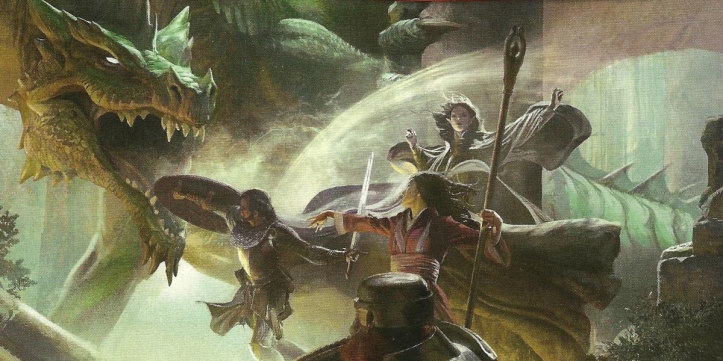
Heroic fantasy is the closest thing D&D 5e has to a default genre, but that doesn’t make it a bad thing. With so many campaigns, sourcebooks, and stories looking to push the game’s boundaries, many players and DMs enjoy returning to basics.
Heroic fantasy is a very medium take on the fantasy genre as a whole. Heroes burst in through the door and save the day. Villains weave evil schemes and often cackle to themselves as they do. Artifacts serve as just rewards more often than sources of immoral temptation.
The scale is usually limited. The heroes don’t fight to save the world. Instead, there’s a city, organization, or kingdom that sorely needs their help. The villains of these D&D 5e campaigns often have more personal plots, over megalomaniacal designs.
That said, heroic fantasy doesn’t mean boring or milquetoast. It’s what many players are there to explore with D&D. There’s no harm in travelling back to the basics, kicking open a dungeon door, and taking the fight to the evil sorcerer.
Heroic Fantasy Elements in D&D 5e
Mighty warriors. Enigmatic magicians. Ruined castles occupied by monsters. Blushing maidens (or gents, depending on preference). Magical swords. A band of slightly grizzled adventurers.
Themes and Ideas in Heroic Fantasy
Good against evil. Overcoming one’s flaws. Growing in power. Fulfillment through danger and reward. The excitement of adventuring life.
Examples of Heroic Fantasy Stories
The Princess Bride (the movie). The Hobbit. Star Wars Episode IV: A New Hope (adjusted for scale). Critical Role‘s first campaign. Xena: Warrior Princess (particularly earlier seasons).
Heroic Fantasy D&D 5e Campaigns
Lost Mine of Phandelver. Storm King’s Thunder. Check them out, they both rule (and one can segue into the next).
Sword and Sorcery Takes Things to a Grittier Level
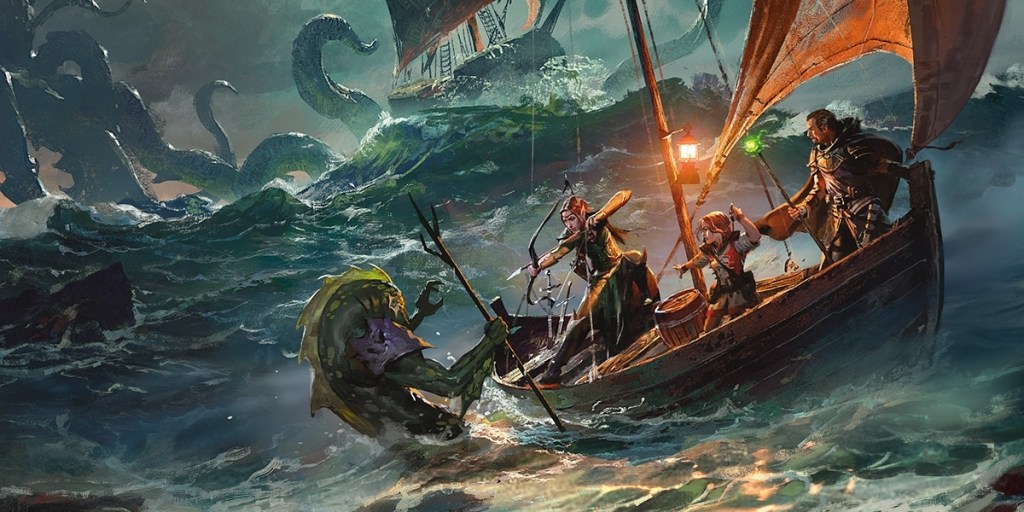
Sword and sorcery is a closely related cousin of heroic fantasy, to the point that the two are often conflated. The main point of difference is their view on morality.
Heroic fantasy doesn’t have to be straightforward black-and-white in its morals, but it has the option. Even if flawed, its heroes usually fall on the side of good. Its villains are usually redeemable or evil.
Sword and sorcery doesn’t have this option. It’s defined by its grittiness and grey morality. To match, its stories are often even more small-scale and personal, with the heroes often having self-interest at heart, rather than the good of others.
This extends to other characters, such as D&D 5e NPCs. The player characters should have allies in most campaigns, but those in sword and sorcery D&D 5e campaigns might be less trustworthy, morally dubious, or in a very perilous position.
Sword and sorcery is one of the best genres for a D&D 5e campaign because it fits well into the system’s base assumptions. The difference is mainly in roleplaying and storytelling. Characters are more likely to fit into neutral or chaotic sections of the alignment grid, sometimes even straying into evil.
That said, throwing a D&D 5e Paladin in there is always entertaining.
Sword and Sorcery Elements in D&D 5e
Rogues. Thieves’ guilds. Corrupt officials. Barbarians. Deceit or violence being go-to options. A high risk of death. Supernatural villains fought by more mundane heroes.
Themes and Ideas in Sword and Sorcery
Battle being both glorious and deadly. Self-sufficiency. Outsiderhood. Pragmatism. Self-interest and whether it can help others.
Examples of Sword and Sorcery Stories
Conan the Barbarian. The Witcher (early novels and games moreso than anything else). God of War (the original game). Critical Role‘s second campaign. Baldur’s Gate 3‘s first act.
Sword and Sorcery D&D 5e Campaigns
Princes of the Apocalypse, although it can easily veer into heroic fantasy. Ghosts of Saltmarsh.
Fantasy-Exploration Highlights the Unknown

Fantasy-exploration is another D&D 5e genre that overlaps heroic fantasy to a significant degree. In its case, the difference is more in what the heroes do, rather than the contents of their character.
As the name suggests, fantasy-exploration is much more about plunging into the unknown to discover what secrets lurk just beyond human reach.
The player characters of a fantasy-exploration campaign might set out into uncharted lands, be the first to return to an abandoned area after centuries, or even travel across D&D 5e‘s many planes of existence on an epic quest.
Fantasy-exploration is much less about fighting the forces of evil and much more about questing to new locations and seeing the unexpected sights there. Older versions of D&D often used this genre, as did D&D Fourth Edition and its default ‘points of light’ setting.
Fantasy-Exploration Elements in D&D 5e
Lost cities. Fallen civilizations. Uncharted maps. Adventurers’ guilds as the furthest bastion of society. A wide variety of monsters. Hazards in the natural environment.
Themes and Ideas in Sword and Sorcery
The unknown as a source of beauty and danger. Fortune or death. Man vs. nature. Breaking new ground and making your mark. Colonialism can be a significant theme (not least as most ‘unexplored frontiers’ in real life have been very inhabited), but it might be overly heavy for many D&D 5e tables.
Examples of Fantasy-Exploration Stories
The Voyage of the Dawn Treader. Dragonriders of Pern. Gulliver’s Travels. Journey to the Centre of the Earth.
Fantasy-Exploration D&D 5e Campaigns
Tomb of Annihilation is a ludicrously bleak take on this sort of story. Its bulk is a hexcrawl across the continent of Chult.
Dark Fantasy Flirts with Horror Elements
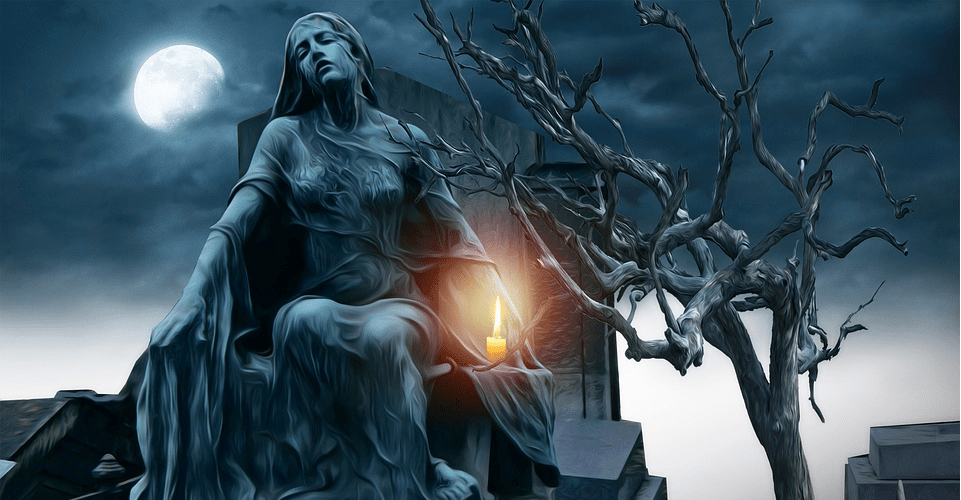
D&D 5e is an unfortunately poor choice for horror campaigns. Despite some optional rules in the Dungeon Master’s Guide, the game is far too much about smashing threats in the face to do psychological horror well. Call of Cthulhu is a much better bet, as are many other games (Don’t Rest Your Head, Dread, Alien RPG, Ten Candles, Chronicles of Darkness, et al).
That said, D&D has had horror elements since the very beginning. Many of its monsters and adventures draw on nightmarish folklore, classic gothic horror, and even weird fiction like H. P. Lovecraft’s Cthulhu Mythos (minus the racism).
Dark fantasy is the way to unsettle your players while offering them the classic D&D 5e feel that works well with the game’s mechanics.
It’s relatively easy to make a dark fantasy story in D&D 5e. You take an ordinary fantasy world and make everything grimmer and bleaker. Much harder is doing so without falling into cliche, overwrought unpleasantness, or scary things stapled onto a standard fantasy story.
Dark fantasy should press the players, having them outgunned from the start. The D&D 5e villain should be powerful, capable, and possibly something unknowable. The world itself should be a hard place struggling to survive against the forces of darkness.
Dark fantasy shares its grittiness with sword and sorcery as a genre for D&D 5e. However, it is often much grander and less personal, with the unpleasantness being on a kingdom-wide or global scale rather than personal.
A world or setting where the villain has already won is a classic way to play dark fantasy as a D&D 5e campaign genre.
Dark Fantasy Elements in D&D 5e
Vampires. Lots of vampires. Liches. Ghosts. Demons. Unstoppable villains. Eldritch monstrosities. Powerless heroes or civilisations. Curses. Evil empires standing against worse threats. Dark versions of fantasy or fairy tale tropes.
Themes and Ideas in Dark Fantasy
Corruption, both magical and personal. Weakness. A choice between two evils. Fear as a motivator. Temptation, almost always for the worse. Humanity and inhumanity. Futility. Fighting despite futility.
Examples of Dark Fantasy Stories
Warhammer Fantasy. The Broken Empire trilogy. Dark Souls (and Elden Ring). The Elric Saga. Diablo. Castlevania. Baldur’s Gate 3‘s second act.
Dark Fantasy D&D 5e Campaigns
Curse of Strahd is considered one of the best premade campaigns in D&D 5e for its dark and horror-themed storyline. Icewind Dale: Rime of the Frostmaiden leans on horror even more.
Epic Fantasy Turns Things Up To Eleven
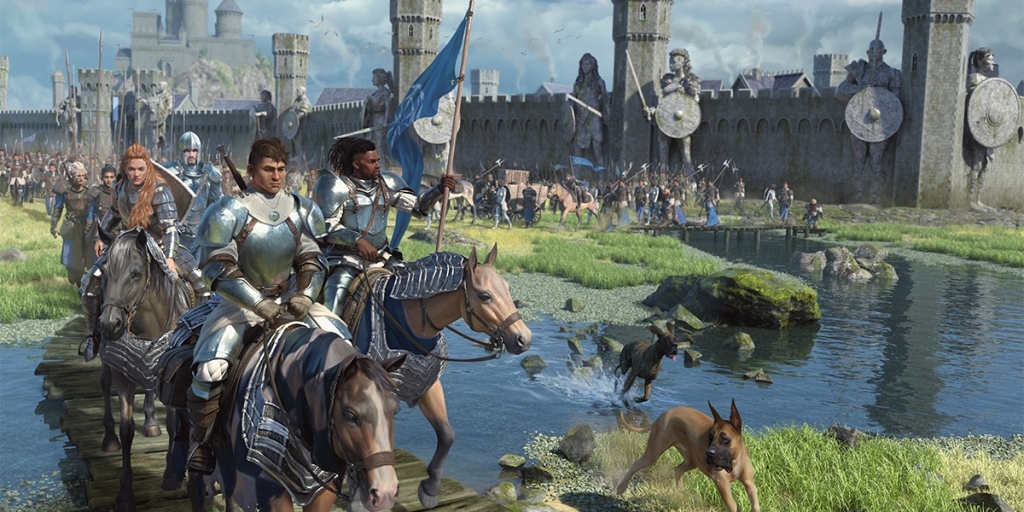
Fantasy is inherently a larger-than-life genre. It introduces fantastical elements that make things decidedly more impactful and high-octane than they are in reality.
Epic fantasy takes this tendency and doubles, triples, or dodecatuples it (that’s definitely a word).
Everything gets bigger, grander, and more impressive. It’s not just the fate of a kingdom at stake, it’s the whole world. The magic shakes the earth’s very foundations. The magical artifacts can obliterate entire civilisations. And there are almost always vast armies.
Epic fantasy can be hard to manage with the scale of a typical D&D 5e campaign. The game revolves around controlling individual characters in a dungeon, not entire armies battling over a nation.
However, epic fantasy is one of the best genres for D&D 5e because it follows the game’s natural progression. As the player characters level up and acquire more status, magic items, and allies, the threats have to grow to match them.
Many D&D 5e campaigns can begin as heroic fantasy (or another genre) and spiral into epic fantasy by the end.
Epic Fantasy Elements in D&D 5e
Absolute good and absolute evil. Kings, Queens, and kingdoms. Villainous overlords. World-changing magical artifacts. Armies and all-out war. Gods taking an active hand in events.
Themes and Ideas in Epic Fantasy
The influence a small group of people can have on vast events. The human(oid) cost of war. Unity and fracture. High magic and its consequences. Evil as an absolute concept. Prophecy.
Examples of Epic Fantasy Stories
The Lord of the Rings (you might have heard of it). The Chronicles of Narnia (to a lesser extent). The Belgariad. A Song of Ice and Fire (the darkest possible version, with a much more relative take on good and evil). Baldur’s Gate 3‘s third act gets close.
Epic Fantasy D&D 5e Campaigns
Dragonlance: Shadow of the Dragon Queen fits this to a tee. It even includes excellent rules for doing mass battles on a player-character scale. The Rise of Tiamat comes close but is much worse as a campaign.
These have been five of the best genres for D&D 5e that stick to the game’s fantasy roots. There are more, but these all work across a broad swathe of stories.
If you want more in your D&D 5e campaign for some reason, check out ‘D&D 5e: Five Tips For Creating Memorable Moments As A Dungeon Master‘ for how to stun your players regardless of genre trappings.
If you’re a player looking to survive your DM’s epic or dark fantasy campaign, ‘The Five Best Races and Lineages in D&D 5e‘ might just help you succeed.
If you’ve enjoyed this article, please leave a like and check out some other Artificial Twenty pages. I’d also really appreciate it if you could share it with your friends.
 Artificial Twenty