Imitation is the sincerest form of flattery. By that logic, Dungeons & Dragons Fifth Edition DMs and players are some of the most silver-tongued people around.
It’s perfectly normal in any creative process, including D&D 5e character creation, to take inspiration from works you enjoy. Many players go even further than this, hoping to recreate their favourite characters from fiction almost exactly.
Pre-existing characters are an ideal place to find the seed of a character idea in D&D 5e. Furthermore, trying to recreate abilities from non-D&D sources is a fun building challenge that can lead to unexpected places.
However, there is a flipside to this. D&D 5e is a versatile system with many different player options. However, it is still bound by its own limits, whether mechanically or by the conventions of its storytelling and gameplay.
As a result, when players attempt to recreate fictional characters in D&D 5e, they should strive to avoid certain common pitfalls.
Trying to Recreate the Character Exactly

Inspiration and copying are two very different beasts. One provides a spark of creativity. The other provides a straitjacket that will constrain you far more than it will reward you.
You’re never going to make a one-to-one replication of your fictional icons during D&D 5e character creation. The game’s rules are not open enough (although other systems like Mutants & Masterminds go out of their way to make almost anything possible).
There are issues besides practicality. Most significantly: what’s the point? That character is already being done, having their story told elsewhere. That place is not your Dungeons & Dragons table.
You might really love Jinx from League of Legends or Aragorn from The Lord of the Rings. We all do. Use that love to create something new with the same heart, rather than trying to fit the squarest of pegs in the roundest of holes.
If the character’s abilities are what speaks to you, give your D&D 5e character a different personality and see how the contrasts work. If there’s something about their personality or arc that you love, build it into something new.
Or, at the very least, combine two different characters so you look original.
Using Homebrew to Feel Closer to Your Inspiration
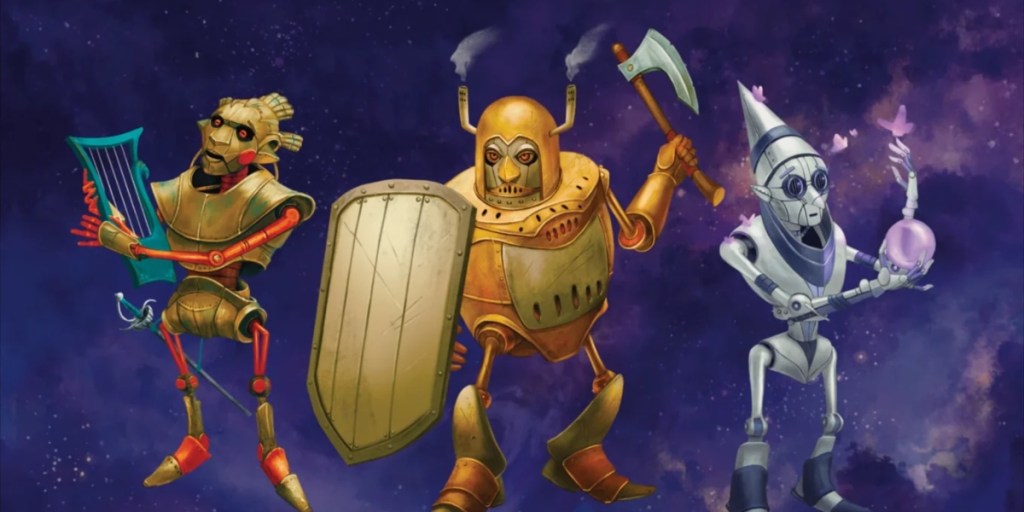
This ties in with the previous point. You’re never going to be able to perfectly recreate your favourite character’s origins and abilities in D&D 5e. This is something to accept, sooner or later. If you’re trying to convoluted homebrewing to make it fit, please really accept it sooner.
Homebrewing in D&D 5e is a challenge in its own right, even when working with a blank canvas. Presenting homebrew to try and make a Superman build in D&D 5e is going to make the DM’s life harder and still probably not scratch the itch for you.
Almost any D&D 5e homebrew, particularly if it’s trying to match a character outside the game’s power scale, is going to be a nightmare to balance.
Close enough really is close enough. D&D 5e‘s ruleset is fairly open and covers many different fantasies. If you don’t let good become the enemy of great, you’ll be able to find something that evokes a similar feel for your character without plumbing the depths of homebrew.
At the same time, don’t feel restricted in your creativity. I’ve played a D&D 5e character loosely inspired by Barak from David Eddings’ The Belgariad series (among other sources).
Similar to Barak, this D&D 5e Paladin changed into an inhuman monster when one specific person was threatened. Did I come up with some complex homebrew system to achieve this? No, I made her with the Shifter race and worked with the DM to only use the ability when the other character was in trouble.
Another tip if you do want to bend D&D 5e character creation to match your inspiration: DMs much prefer voluntary limitations to free stuff.
Expecting to Play a Full-Power Character From Level 1

D&D 5e is a power fantasy, there’s no denying that. Many players enjoy playing somebody who can shake the world, kill dragons, and look good doing it.
By the same token, many characters that D&D 5e players want to recreate have power fantasy elements. This is good, fine, and even normal.
What does cause problems is expecting to live that power fantasy from first level, third level, fifth level, or whatever level your D&D 5e campaign starts at.
At its heart, D&D 5e is a game about escalation and growth. Your character starts out fairly weak, liable to be killed by a lucky goblin arrow (thanks, Lost Mine of Phandelver). The game’s power scaling feels good because there’s so much to grow into.
So no, you cannot start your campaign with the equivalent of an Aragorn, Boromir, or Gandalf build in D&D 5e. You’re more likely to start as Merry and/or Pippin, and they’re awesome by The Return of the King.
This will likely match your inspiration as well. The Mandalorian‘s Din Djarin had a long career before he got his overpowered Beskar armour. Harry Dresden of The Dresden Files spent several books getting the utter tar beaten out of him before about eight sequential power-ups.
Most players leaning on outside influences want to get the feeling of their character at full power from the off. However, this isn’t how most D&D 5e campaigns work. Higher-level one-shots might be a safer bet.
Constraining Yourself to D&D-Like Fiction
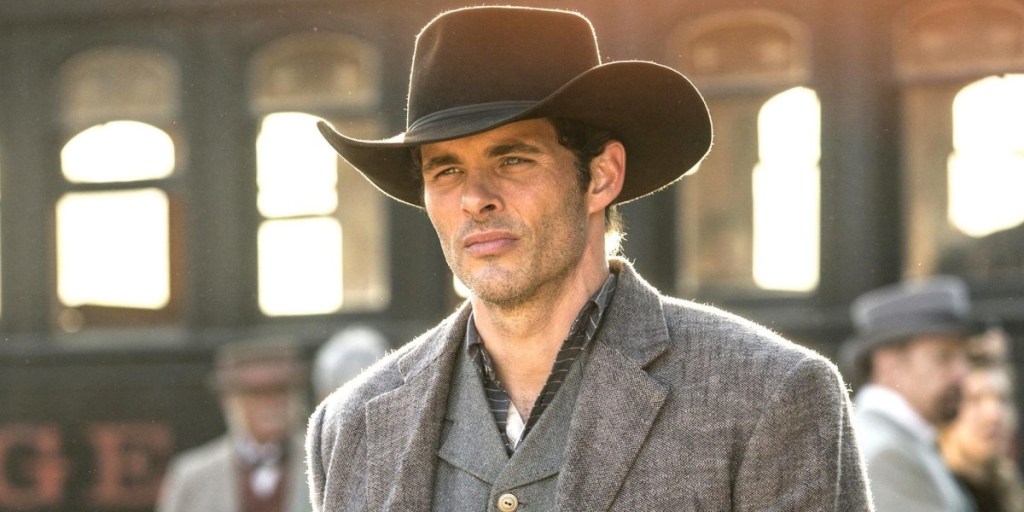
Not everything can be done in D&D 5e. Despite some half-hearted rules in the Dungeon Master’s Guide, it is a medieval fantasy game about violence and adventuring through and through.
It’s easy, from there, to assume that only similar pieces of work can make for good inspiration.
And they do. Game of Thrones has pioneered many a beloved D&D 5e character, as have Vikings, The Witcher, Dark Souls, and the eternal elephant (or oliphaunt) in the room, The Lord of the Rings.
The beautiful thing about inspiration, however, is that it can come from anywhere.
One of the best ways to create an original, distinctive, and memorable D&D 5e character is to take elements of a character from a different genre. From there, figure out how they’d work within the rules and settings of Dungeons & Dragons.
Hell, the game itself has done this. Or are we all still presenting that the D&D 5e Armorer Artificer isn’t 90% Iron Man?
Particularly if you’re taking this article’s advice (and why thank you, if you are) and not ripping off characters wholesale, your inspiration can come from almost anywhere.
Fantasy. Sci-fi. Westerns. Crime dramas. Pulp. Adventure movies. Literary fiction. Mythology. Check out your favourite religious text, you’ll find the core of a D&D 5e character there.
Taking the Bits That Don’t Work Well For D&D
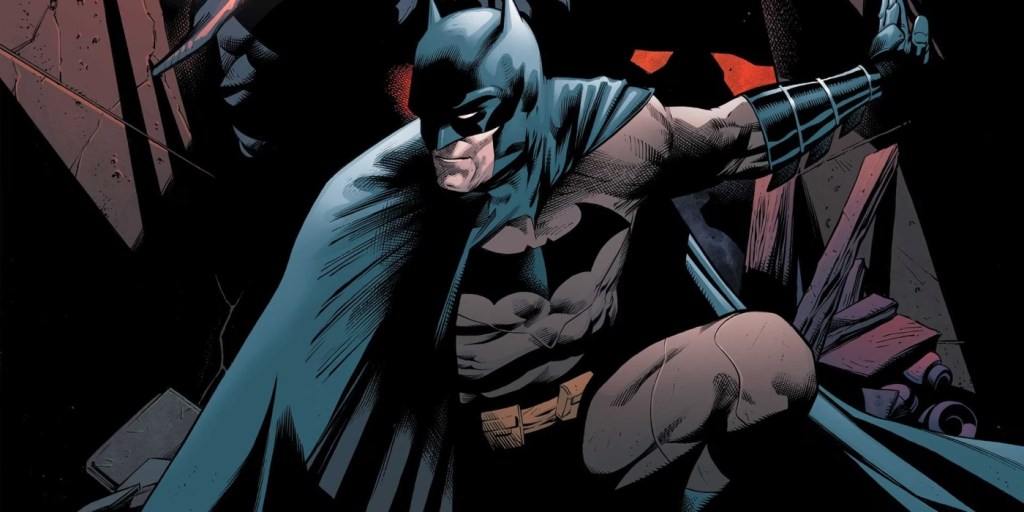
Positive character traits, much like beauty, are in the eye of the beholder. Every consumer of fiction has a unique relationship with the characters within. Certain character traits speak to certain people far more than others.
Inspiration can come from any of these traits. However, it’s important to focus on the ones that work in a typical D&D 5e campaign. This is especially true when it comes to personality.
D&D 5e is, first and foremost, a team-based game. Everyone loves the edgy loner character who does everything by themselves. However, creating this character is one of the most common sins of new D&D players.
Your character has to be a positive presence for the party as a whole, not just you.
You might think Batman is awesome because he’s the stoic and aloof Dark Knight who broods alone on rooftops (and you’d have a point). However, Batman is perfect in Justice League because he’s the analytical and pragmatic member of the team who provides a perspective other members can’t.
Similarly, Littlefinger’s manipulative schemes and ever-changing allegiances have endeared him to many Game of Thrones watchers. However, nobody around the table is going to be impressed if you betray them as part of a master plan. Instead, consider his intelligence and tendency toward psychological warfare as potential D&D 5e character traits.
These have been five tips for when you, like all of us, inevitably decide to rip off another fictional work as part of D&D 5e character creation. Hopefully, by following them, you can create something original and entertaining to play that still carries the soul of its inspirations, rather than something that prompts eye-rolls around the table.
If you want to focus more on the mechanical side of D&D 5e character creation, check out ‘The Five Best Gish Subclasses in D&D 5e‘.
If you’re a DM who’s also searching for inspiration, ‘Five Fantasy Genres to Explore in D&D 5e Campaigns‘ might be for you.
If you’ve enjoyed this article, please leave a like and read some more Artificial Twenty content! I’d really appreciate it if you could share it around with your D&D 5e-loving friends.
 Artificial Twenty