Dungeons & Dragons is a game of limitless imagination. However, that doesn’t mean the Dungeon Master has to come up with a brand-new story every time. D&D Fifth Edition has seen many campaigns made over its lifetime to give tables something to enjoy.
The best premade D&D 5e campaigns ease much of the DM’s work of preparing and balancing content, instead letting them focus on minute-to-minute gameplay. They also provide thrilling premises, unique locations and challenges, and endless potential for memorable moments.
The worst don’t offer any of these, but we’re not looking at those today.
With the announcement of Vecna: Eve of Ruin as the capstone campaign for D&D 5e, I thought I’d take a look back over the prior offerings. In the spirit of positivity, I wanted to look at the very best on offer and why they work so well.
Icewind Dale: Rime of the Frostmaiden Keeps Things Spooky
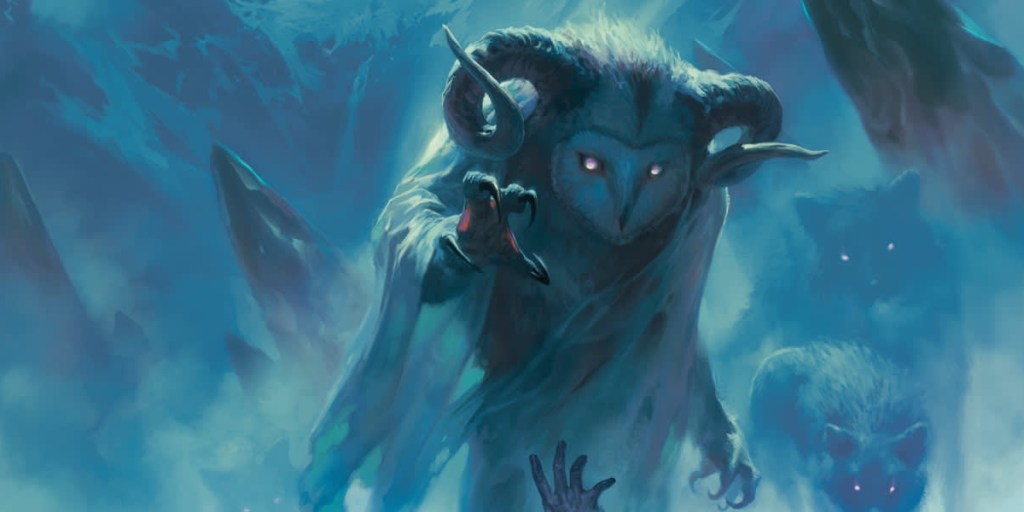
Icewind Dale: Rime of the Frostmaiden is the most overtly horror-themed D&D 5e campaign. It’s the darkest of dark fantasy, taking plenty of its cues from beloved horror tales like The Shining and The Thing.
This grim tone pervades all of Icewind Dale: Rime of the Frostmaiden in D&D 5e. The game as a whole is a bad fit for horror, but the sheer bleakness of the campaign goes a long way to making it memorable.
The players fight to defeat the goddess Auril and end the perpetual winter she has inflicted on the (already chilly) Icewind Dale. Along the way, they’ll come up against countless other threats that lurk within the endless ice and snow.
Icewind Dale: Rime of the Frostmaiden is a top-tier D&D 5e campaign for players who want something harder, scarier, or more focused on environmental threats than other offerings. DMs get to enjoy playing genuine evil and uncaring hostility, while the players get to enjoy overcoming them.
Obviously, Icewind Dale: Rime of the Frostmaiden isn’t without its flaws. Some of its quests can get muddled and its pacing can best be described as ‘unconventional’.
Nonetheless, it offers a standout tone and many beloved moments, locations, and encounters for the group to enjoy. Icewind Dale: Rime of the Frostmaiden is often a bleak and challenging D&D 5e campaign, but it’s never forgettable.
Lost Mine of Phandelver Starts Things Right
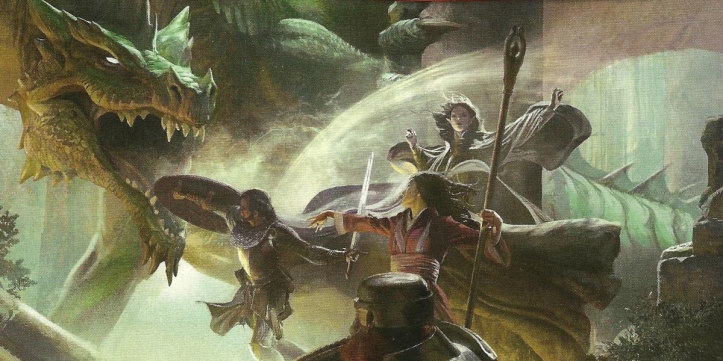
Lost Mine of Phandelver is a name known to most D&D 5e players. It’s the mini-campaign included in the D&D 5e Starter Set. Even though it’s meant to onboard new players, it’s also a fond favourite of many experienced groups.
Lost Mine of Phandelver isn’t winning any awards for originality as a D&D 5e campaign. It has straightforward villains, innocent civilians in need of saving, taverns, thugs, dungeons, and even dragons.
Instead of trying to be experimental or off-the-wall, Lost Mine of Phandelver delivers exactly what a D&D campaign is meant to. Despite its short length, it is stuffed with entertaining dungeons, well-liked setpieces, and just enough freedom to keep players hooked on the potential D&D offers.
Lost Mine of Phandelver is so well-crafted as a standalone experience that many DMs find its expanded update, Phandelver and Below: The Shattered Obelisk, to be genuinely disappointing in comparison.
Even better, ending at level five means players can go onto something else. Lost Mine of Phandelver can lead excellently into Curse of Strahd, Storm King’s Thunder, or a homebrew D&D 5e campaign.
Just be careful of the campaign’s vicious low-level combat. Those goblins have claimed more D&D character lives than almost anybody else.
Critical Role: Call of the Netherdeep Brings Exandria to Life
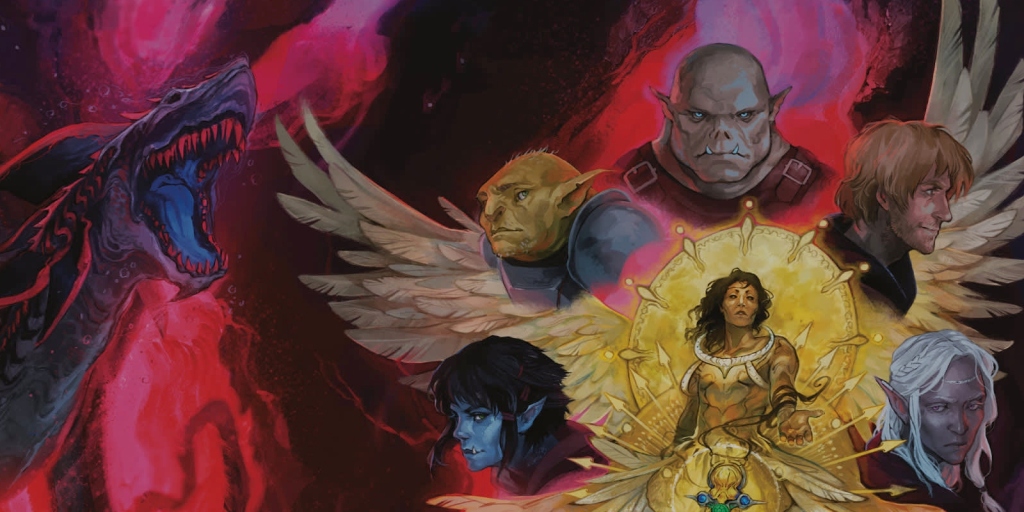
Critical Role is the single most popular D&D 5e actual play show and a regular partner of Wizards of the Coast. This even extends to its own official campaign set in the world of Exandria.
Critical Role: Call of the Netherdeep is more than just a guided tour of Exandria, however. It does let players explore one of the most recent iconic worlds in TTRPGs. At the same time, it offers them a unique D&D 5e narrative.
One of Critical Role: Call of the Netherdeep‘s strengths is its flexible structure. The players follow a similar journey to a group of NPCs, with a significant artefact at the story’s centre. The campaign is set up to accommodate many different relationships with this rival adventuring party, and the players’ success and failure at several points.
Players can shape Critical Role: Call of the Netherdeep with their actions, while the DM gets to enjoy some of the most nuanced and deep NPCs put into a D&D 5e book.
Beyond just storytelling, it offers several memorable setpieces and well-crafted dungeons, such as the Netherdeep itself. The end result is a premade D&D 5e campaign that is unmatched for diehard Critical Role fans without leaving others behind.
Dragonlance: Shadow of the Dragon Queen Is Simply Epic
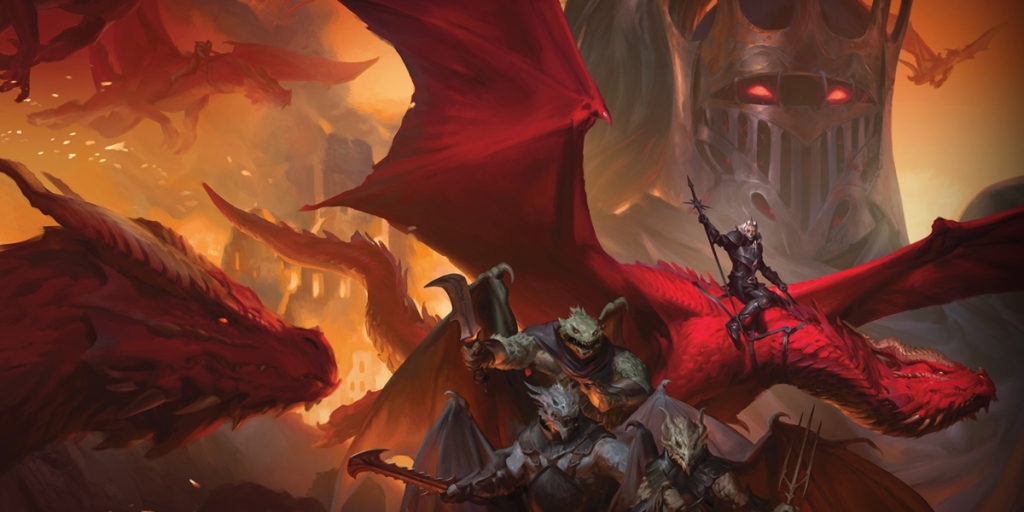
Dragonlance has long been one of D&D‘s most beloved settings, and far and away its most epic. It deals with events on a scale and majesty that many other settings in D&D 5e could only dream of. The Dragonlance: Shadow of the Dragon Queen D&D 5e campaign continues this proud tradition.
You don’t fight a villain or a plague in Dragonlance: Shadow of the Dragon Queen. You fight an entire war, accompanied either by a unique tabletop wargame or some unique D&D 5e rules to reflect mass warfare without slowing things down.
The campaign is more than just spectacle. Dragonlance: Shadow of the Dragon Queen starts off slowly, but then leaps into a plot that is rewarding for Dragonlance veterans and a compelling entry point for novices to the setting.
It has heart, character, lore, shock twists, tragedy, and more. Dragonlance: Shadow of the Dragon Queen‘s story never loses sight of the small-scale humanity D&D revolves around, while still doing justice to its iconic, large-scale setting.
The main complaint is that Dragonlance: Shadow of the Dragon Queen is significantly more railroaded than most premade D&D 5e campaigns. This fits the setting’s history and honestly isn’t always a weakness. Some groups appreciate a more streamlined story in their campaign.
And, trust me, the Fray mechanic alone is worth checking out for other D&D 5e campaigns that might feature a war.
Tomb of Annihilation Is a Brutal Meat Grinder

D&D 5e‘s premade campaigns fit many tastes. Some are perfect for fans of hijinks or deep story who prefer to avoid brutal combat. Tomb of Annihilation is not for these players to an incredible degree.
Tomb of Annihilation has thoroughly earned its reputation as one of D&D 5e‘s hardest campaigns. This is little surprise, given it takes inspiration from the iconic Tomb of Horrors D&D dungeon.
In the Tomb of Annihilation campaign in D&D 5e, players have to explore their way through Chultan wilderness, looking for the Lost City of Omu and the Tomb of the Nine Gods. This is far from safe. Conditions are harsh, Chult is dangerous, and undead roam the terrain in vast hordes.
And that’s the easy part.
Tomb of Annihilation also has some of D&D 5e‘s best dungeons, at the cost of these being merciless. Players have to be on top of their game, using their abilities and instincts flawlessly to survive. On top of that, resurrection is a questionable idea at best.
It’s D&D 5e‘s best campaign for players and DMs who want lethal challenge and satisfying victory. For all others: buyer beware.
The Wild Beyond the Witchlight Does Things Differently
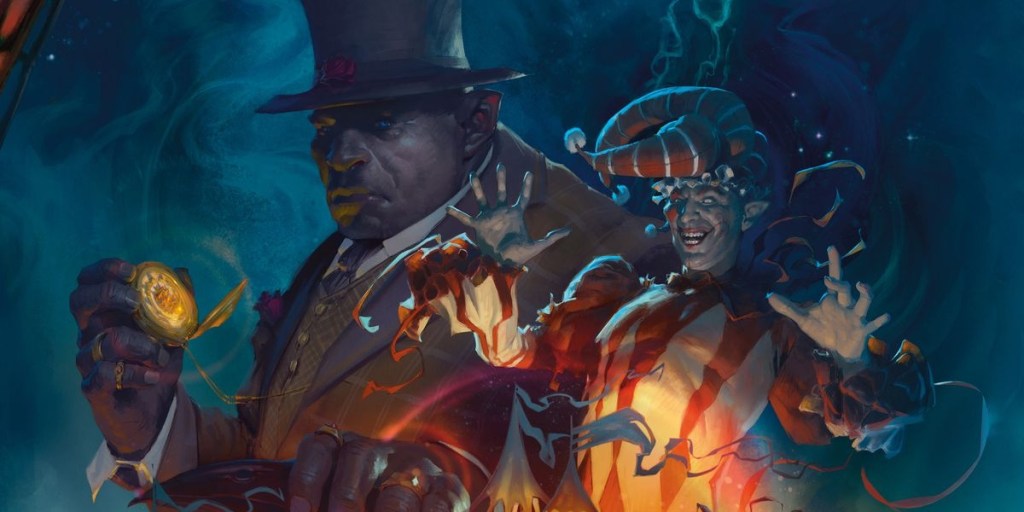
D&D 5e is more than a combat game, but there’s no denying it’s significantly a combat game. The majority of the in-depth rules surround violence in its many forms. Its balance works best around several fights per adventuring day.
The Wild Beyond the Witchlight is a D&D 5e campaign that dares to imagine alternatives to combat.
I’m being hyperbolic. Many premade campaigns in D&D 5e do not force players through an endless gauntlet of mandatory fights. However, none provide an alternative (or several) to every single combat encounter in the way The Wild Beyond the Witchlight is.
The campaign is built from the ground up to reward conversation, information-gathering, and stealth as much as combat.
Obviously, The Wild Beyond the Witchlight isn’t the right D&D 5e campaign for every group. Those who prefer a direct solution to their problems might not appreciate its structure. However, it’s an experiment that, while sometimes clunky, is very rewarding to play.
On top of its unique premise, The Wild Beyond the Witchlight excels with its Feywild setting. The fairy tale tone and surprisingly disturbing bursts keep players constantly on their toes without feeling gratuitous. Its heavy focus on conversation truly lets its story shine through.
At the very least, I would recommend all D&D 5e DMs read someone else’s copy of The Wild Beyond the Witchlight. Your campaign probably rules, but seeing so much flexibility in a game can be eye-opening.
Curse of Strahd Remains a Juggernaut Years Later
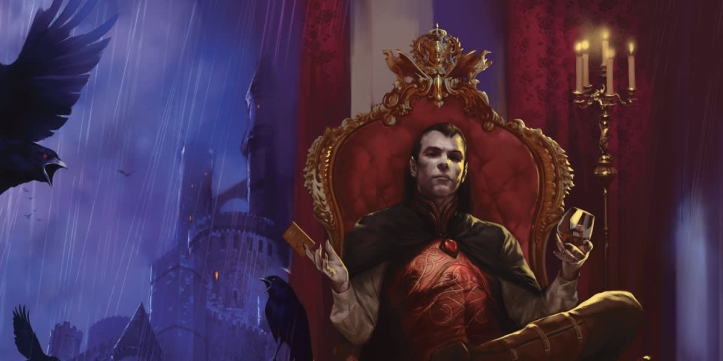
Curse of Strahd enjoys a near-reverence among the D&D 5e community. It tops many lists of the best campaigns for D&D 5e and is the first recommendation from many online.
It more than earns this status. Curse of Strahd is a reimagining of the iconic I6: Ravenloft module that expands it into a fully-fledged level 1-10 campaign. Players once more have to retrieve the foretold artifacts and defeat Strahd von Zarovich, but now there is much more on the side.
Curse of Strahd shines in every way. Its setting of Barovia, a central part of D&D‘s beloved Ravenloft, is a perfect small-scale sandbox. Strahd is an impressive enough villain to helm an entire campaign, even as public opinions falls more on him being an incel than a tragic villain.
The adventuring locations and characters in Curse of Strahd are all memorable and just a little off-kilter, contributing to the ideal dark fantasy tone.
I will admit, I am somewhat biased in that Curse of Strahd is my single favourite D&D 5e campaign. However, it’s reached that spot for a reason.
Curse of Strahd has a solid base, with heaps of advice and updates online to help DMs take it even further.
If you want something dark and gothic with genuinely emotive storytelling and an iconic cast of characters, Curse of Strahd might be the best D&D 5e campaign for you.
These have been the best of the best for D&D 5e campaigns. However, there are many more campaigns and anthology books out there well worth exploring. All of them have something that appeals to somebody.
If you’re eager for the next big D&D 5e campaign, check out ‘Five Things to (Possibly) Expect from the Vecna: Eve of Ruin D&D 5e Campaign‘ for my own speculation on it.
If you’re more of a homebrewer than a book DM, ‘Five Fantasy Genres to Explore in D&D 5e Campaigns‘ might be a good source of inspiration.
Please do like this article and check out my other work. Share it around with your other D&D-loving friends. Thank you very much!
 Artificial Twenty