Dungeons & Dragons Fifth Edition is more than a combat game. Nonetheless, combat is usually a big part of the game. Fantasy adventuring often leads to swords drawn, and barely a day goes by when a D&D 5e character doesn’t hit or cast a spell at something.
Despite this, D&D 5e combat has a bit of a reputation for dragging. It’s relatively complex (despite being more straightforward than many prior D&D editions). Furthermore, it can drag if one side fails to batter the other hard enough or players take too long to decide their actions.
Many quality-of-life issues with D&D 5e combat can be resolved through discipline from the players and DM. Keeping an eye on the battlefield, planning moves in advance, and knowing the core basics of your character/enemy statblock keep things moving and prevent stalling.
However, none of these will solve the problem if your D&D 5e campaign’s combat is actively monotonous.
On top of everything else the DM has to do, they do have to construct and run varied combat encounters. If everything is the same, it will begin to feel that way very quickly. Luckily, there are some easy ways to improve combat in D&D 5e.
Use Entertaining and Rare D&D 5e Monster Abilities

Monster design is a noted weakness of D&D 5e. Many statblocks have been reduced to little more than hit points and melee attacks, sometimes with resistances, unusual movement speeds, or lone abilities.
This sort of D&D 5e enemy has a genuine purpose in being easy to balance and easy to understand, providing meat for a fight that both the DM and players can enjoy. However, it’s possible to overdo it.
One of the easiest tips for running combat in D&D 5e is to go through your book and find the monsters with the coolest abilities. Despite how many foes feel standard and vanilla, every monster book does have its fair share of entertaining ones.
Spellcasting is a go-to trick for D&D 5e monsters. However, it’s far from the only one.
Consider the D&D 5e Ochre Jelly’s ability to split into multiples of itself when it takes slashing or lightning damage. This is a good way to surprise and unnerve players which they can exploit for tactical gain if they’re canny enough.
Or, for other cool monster abilities in D&D 5e, consider the Troll. It appears to be a beatstick with hit points and a basic attack. However, it’s functionally immortal unless it takes fire damage (with other varieties changing the damage type). Instantly memorable for players who expect something easy.
There are dozens more diamonds hidden in the rough, ranging from deceptively challenging mooks to incredible Mythic Monster boss fights in D&D 5e.
Not every enemy you use as a DM needs to have strange abilities. Likewise, not every fight needs something the players have never seen before. In fact, I’d say it’s better to reuse enemies. It’s more believable and lets the players build on past experience.
Nonetheless, giving your players something new to fight with cool D&D 5e monster abilities is an easy way to make a combat unforgettable.
Make Terrain an Active Part of Combat

Throwing a veritable menagerie of weird D&D 5e monsters at your players won’t stay fun forever if they only fight them in a grey void.
On top of everything else a DM has to do, it’s easy to forget that combat happens somewhere. It’s not impossible for your players to fight enemies in a large, featureless, perfectly flat space. However, it’s weird if it happens a lot.
Your D&D 5e party are more likely to fight in a forest, a ravine, a cell, an active volcano, a palace banquet, or any other number of locations. It varies immensely from campaign to campaign (and session to session), but terrain can always be a vital part of D&D 5e combat.
This can be elaborate. A volcano with a progressing lava flow presents obstacles and opportunities in equal measure. So too does a collapsing tower where the floor gives out little by little each turn. A D&D 5e combat between two ships on the ocean allows for swinging on ropes, firing cannons, and weaponising fire in hideous ways.
At the same time, simple terrain can be great for D&D 5e combat. A fast-flowing river comes with peril. A broken bridge lets some combatants blast with near-impunity. Trees allow for ambushes and escapes for either side.
As a DM, you don’t need to have a specific purpose in mind for the environment in a D&D 5e combat. Canny players will inevitably come up with something.
You can put in high-concept gimmicks you want to explore, that’s excellent. At the same time, you can flesh out an area with what would logically be there, and your players will likely shock you with what they devise.
A note with terrain in D&D 5e combat: Do try and keep things fair. With terrain naturally being an obstacle, it’s easy to unintentionally create endless battles that punish melee fighters and reward ranged characters and spellcasters more (see the broken bridge example above).
For every fight in D&D 5e with a natural barrier between the sides, put one in close quarters or filled with low cover to impede archery.
Give Active Objectives Besides Murder

Your D&D 5e combats are now in varied environments with cool monsters. Worry not, they can still grow monotonous, especially if you’re using 6-8 per adventuring day like the game assumes.
Seriously, why 6-8? 3-4 D&D 5e combats per day is so much more reasonable (hint: aim for ‘hard’ fights, not ‘normal’).
Given how every character in a D&D 5e combat has hit points, and how most video game combat ends when hit points reach zero, it’s easy to wind up in the trap of everything turning into a slugfest where all sides fight to the death.
This is a valid way to end combat, particularly in more incidental fights. There’s nothing wrong with violence being an end goal. However, you can improve your D&D 5e combat by putting other end goals or even side objectives in from time to time.
Rather than wiping out all the enemies, what if the player characters need to hold the line or protect a vital NPC until a ritual can take place? Or destroy a crucial bridge to prevent enemies from crossing? What about a D&D 5e combat to assassinate one officer before beating a hasty retreat? Or to steal a handful of items and make it out alive?
As soon as initiative is rolled, many D&D 5e enter an “it’s me or them” state of mind and fight to the death. The more you introduce other objectives, the more they’re likely to think of other things to do themselves.
This is actually where I’ve found running other RPGs can improve my D&D 5e DMing. Chronicles of Darkness mandates both parties stating their intentions ahead of the fight (and points out how, in real life, “murder them” is a rare end goal). The Star Wars Roleplaying Game encourages the GM to incorporate other objectives so non-combat characters can still contribute.
Describe Things in Epic Fashion
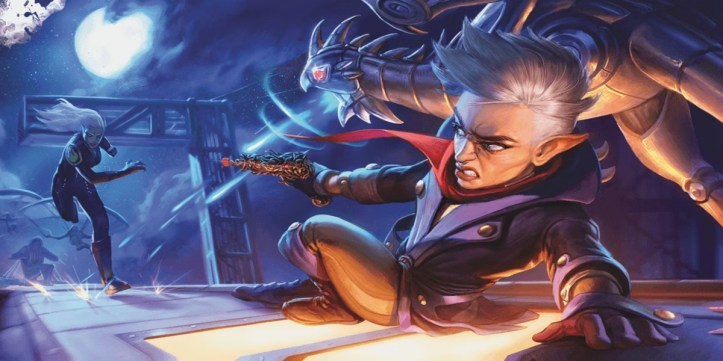
The DM’s duties never end in D&D 5e. As well as being a referee, arbiter, (often) scheduler, scheming villain, and lorekeeper, you need to be a damn narrator as well.
Particularly in a more mechanical part of D&D 5e, such as its combat, it’s easy to drop this priority from your mind. There are so many dice being rolled and rules to keep track of, narration can feel superfluous.
Actually, I’d say narration is more important in D&D 5e combat than anywhere else. This is the crux of the game, where epic things can happen every turn. They need to be done justice.
Imagine The Lord of the Rings if the Orcs attacked, the Gondorans attacked, the Rohirrim attacked, the Witch-King attacked, and then Merry and Eowyn attacked. Now go re-read the Battle of the Pelennor Fields and realise how much cooler it is.
Does the Monk hit the Bandit for eight damage, who doesn’t look bloodied? Or do they plant their feet, finding their inner quiet among the carnage, before lashing out with a blow to the Bandit’s weak core, maybe yelling as it lands? At which point the Bandit tenses, shaken even if not wounded, and spits on the floor as they redouble their desire to kill?
You can do this for any move any figure on either side of the battle makes. D&D 5e is full of evocative abilities that the DM can make even cooler. With spellcasters, try discussing with the player (or yourself, if they’re an NPC) a general thematic motif for their spell visuals. It will sound awesome.
A tip for this approach to D&D 5e combat: Be restrained with it. Nobody likes hearing “you hit for six damage, next turn.” At the same time, people will roll their eyes if you give a monologue for each attack.
There is a time and a place for more low-key descriptions that avoid slowing things down. Also, it means you’re less likely to run out of new adjectives. You will still run out of new adjectives.
Another tip: Also look to your players for help in this. D&D 5e combat is their time to shine. As you describe things more, look to see if your players do the same. They have a better idea of what is cool to them than you do.
If they’re hesitant, try prodding them (but do pull back if they don’t want to). Critical Role DM Matthew Mercer’s “How do you want to do this?” is a fantastic example of this nudging.
Try Dragonlance’s Fray Mechanic
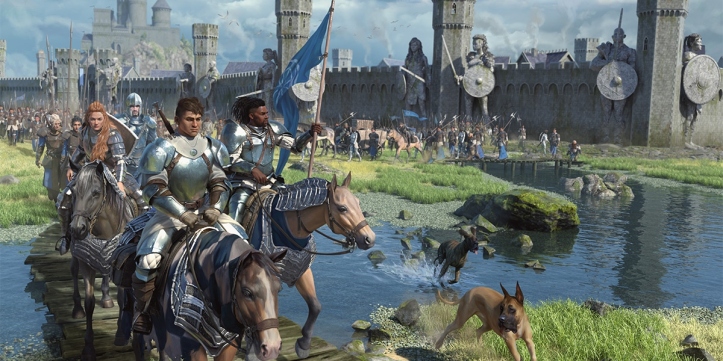
This tip for D&D 5e combat is a little unusual, in that I’m actually recommending one specific, situational mechanic from a rulebook. People design D&D 5e books for a living, and sometimes mechanics absolutely knock it out of the park.
The ‘Fray’ mechanic from the Dragonlance: Shadow of the Dragon Queen D&D 5e campaign represents epic battles without using the companion board game or the system’s more abstract mass battle rules.
Players still fight on a person-to-person, small-scale basis, against roughly equivalent enemies. Much of the wider carnage is relegated off-screen. However, elements of it leak into the players’ D&D 5e combat.
With the Fray system, there is a border around the (relatively small) battlefield. On every round, and (potentially) whenever a character enters that area, a random event happens.
These random events can include reinforcements, arrow storms, wounded soldiers (from either side) staggering into the encounter, spells going off nearby, and more.
This is a genuinely fantastic system to add to a more manic D&D 5e combat. It perfectly represents the idea of fighting your own little corner of violence but being affected by the mass chaos going on around you.
Dragonlance: Shadow of the Dragon Queen offers several examples, with plenty of inspiration for DMs to make their own. This mechanic isn’t always suitable, but it’s fantastic for any D&D 5e combat of the right scale.
These have been five ways to make D&D 5e combat more interesting, ranging from design to mechanics to simple storytelling. If you want to remember that DMing is about more than violence, try reading ‘D&D 5e: Five Tips For Creating Memorable Moments As A Dungeon Master‘.
For a game that does combat fantastically, check out ‘Five Things D&D 5e DMs Can Learn From Baldur’s Gate 3‘ for more tips.
 Artificial Twenty