Spellcasting is one of the most varied abilities in all Dungeons & Dragons Fifth Edition. Almost any character can come to wield a dazzling array of magical tools, with effects ranging from minor damage to rewriting the rules of reality.
Not every spell is made equal. D&D 5e has plenty of powerful spells that every fan knows and are go-tos in most casters’ repertoires. Spells like Haste, Magic Missile, and the indomitable Fireball need no introduction.
However, other spells go unsung. Despite their significant effects, they’re left to languish in the ‘rarely-used’ section with D&D 5e‘s worst magic like Find Traps and True Strike (don’t try and make either of these work, you can’t).
Blink Upholds the Oldest Law of Defense

Blink goes significantly underused compared to D&D 5e‘s best defensive spells, such as Mirror Image or Absorb Elements. This is despite it having a completely unique effect for low-level magic.
The Blink spell in D&D 5e doesn’t simply reduce damage, make it harder to land, or mitigate the worst effects. Instead, it literally removes the caster from the area and makes it impossible to target them with almost anything.
At the end of every turn, the caster of Blink has a 50% chance to vanish into the Ethereal Plane until the start of their next turn. While there, they are entirely safe from anything that cannot see into or target that realm of existence (read: safe from almost everything). Did I mention this all occurs without Concentration?
No defensive spell in D&D 5e is every bit as effective against melee threats, area-of-effect spells, or focus fire in the way Blink is.
Of course, it does have some downsides. It isn’t guaranteed, instead requiring a dice roll every turn. It can whiff and do nothing, which never feels good for a D&D 5e spell. Similarly, it competes for actions and third-level spell slots with options like Haste and Fly, timeless classics.
Nonetheless, no spell quite the unique utility of Blink in D&D 5e. Cast it after a powerful Concentration spell and watch the DM lose their mind.
Divine Favor Stacks with Other Damage Sources

Divine Favor (the American spelling is apparently correct here) is a Paladin-exclusive spell in D&D 5e. Its effect is straightforward, adding 1d4 Radiant damage to every single weapon attack.
Paladins don’t struggle for damage in D&D 5e (nor do they struggle with much). Apart from anything else, they have Divine Smite, one of D&D 5e‘s best abilities and the reason so many Paladin spells go unnoticed.
Burst damage is undeniably good in D&D 5e, being the best way to drop enemies before they can do harm. However, there’s also plenty of value in consistent damage increases (like the Barbarian’s Rage) that make every attack that bit more deadly. Furthermore, you can combine the two.
It takes several combat turns (usually around three, conveniently how long many D&D 5e combats last) for Divine Favor to deal more damage with a single spell slot than a Divine Smite. However, it usually will (past fifth level), becoming surprisingly efficient.
This is doubly true if the Paladin has some way to bonus action attack. Polearm Master or Dual-Wielding nearly double down on Divine Favor’s damage boost in D&D 5e, helping it pay for itself several times over.
It also has edge-case utility for Paladin ranged attacks or strange D&D 5e multiclass builds with Monk levels. Both of these benefit from Divine Favor (significantly, in the Monk’s case), but not Divine Smite.
On top of this, you can always use Divine Smite alongside Divine Favor (and other damage boosts like Improved Divine Smite) with your lower-level spell slots. The results are usually apocalyptic.
Enervation Really Does Improve On Its Awful Cousin

Enervation is an attempt to iterate on Witch Bolt, which is genuinely one of D&D 5e‘s worst spells. Worse, Witch Bolt is a classic noob trap due to its cool mental image and effective-sounding premise, being deceptively dreadful in performance.
After being bitten by Witch Bolt, many D&D 5e players are wary of other spells which promise automatic damage at the cost of just an action. Enervation falls squarely into this hole. Nonetheless, it’s genuinely excellent.
For one thing, Enervation has a 60-foot range. Your fragile D&D 5e spellcaster doesn’t need to be close enough to lick the enemy to cast it. Similarly, a foe cannot casually stroll part of their movement (whistling, smiling at birds) to break it.
It’s also a Dexterity saving throw, rather than an attack roll. Higher-level enemies in D&D 5e typically have good Armor Class but fairly dreadful Dexterity. Go fish.
Its damage still isn’t spectacular, so it comes with an excellent rider. Your D&D 5e Wizard or Sorcerer heals themselves for half of Enervation’s damage. After the first turn, this is automatic damage and healing for the cost of your action. It’s efficient.
All of this makes Enervation in D&D 5e a viable spell, if not optimal. If you want to really push it to its limits, play a Sorcerer. You can Twinned Spell it to affect two creatures (which doubles the healing), and then use Quickened Spell to still cast while sucking the life out of foes with your action.
Lightning Lure Gives Gishes Some Battlefield Control

Most D&D 5e cantrips other than Fire Bolt need some sort of gimmick to help them stand out. In Lightning Lure’s case, you brutally rip a target toward you via an arc of lightning, electrocuting them all the way.
Now, this is an awesome mental image already. Despite its relative underuse, Lightning Lure in D&D 5e combines this with genuine mechanical value.
Forced movement is a powerful D&D 5e tool for parties who prioritize it as such. On its own, it can be helpful to force enemies out of position, rip up the enemy’s backline, or give allies a breather from melee attackers.
However, canny D&D 5e players can use forced movement for so much more. Use Lightning Lure to drag an enemy through a Spike Growth and a Moonbeam (or other, similar spells that deal damage when creatures enter them), see how healthy they feel then. In a high-altitude environment, you can even find ways to drop them several hundred feet.
Lightning Lure does have drawbacks in D&D 5e. It boasts a very short range and drops enemies five feet away from you. This isn’t ideal for the average spellcaster who dies to a stiff breeze.
Instead, Lightning Lure’s solid other niche is letting D&D 5e gish builds drag enemies kicking and screaming toward them. Imagine being dragged through all the harmful terrain mentioned above and then dumped next to an angry Eldritch Knight, Bladesinger Wizard, or Armorer Artificer.
Bones of the Earth Rewrites the Battlefield

Bones of the Earth is an unusual D&D 5e spell that many players overlook. It’s a sixth-level Druid-exclusive spell. It’s already on D&D 5e‘s hardest class to play and competing against spells like Heroes’ Feast, Sunbeam, and Transport via Plants.
Despite this, it’s well worth trying out.
Bones of the Earth lets a D&D 5e Druid conjure six pillars that burst out from the ground. This may not sound like much, but it’s as flexible as the player conjuring them.
Bones of the Earth in D&D 5e can let a Druid wall off enemies, crush opponents against the ceiling, move allies out of harm’s way, transport allies to new areas, force enemies to take falling damage, shore up gaps in defence, and so much more.
The spell does genuinely require a D&D 5e player to exercise their thinking muscles to make use of it. However, it can completely rewrite a battlefield in the party’s favour. Even better, it doesn’t require Concentration. This alone makes it worth its weight in gold dust for the Druid.
Thunder Step Is a Situational Low-Level Teleport

At low D&D 5e levels, two main teleport spells rule the roost. Misty Step is notorious for its low cost and bonus action, being one of the few spells that any D&D 5e character benefits from. The other is Dimension Door, beloved for its long range, indirect destinations, and passenger capacity.
Thunder Step is somewhat awkwardly placed between the two. It lacks Dimension Door’s long range while also not having Misty Step’s low spell slot (although it is only third-level) or bonus action casting time. Despite this, it’s still an excellent choice in the right situations.
Thunder Step is the lowest-level teleportation spell in D&D 5e that allows both the caster and a passenger to travel. It also boasts the unique rider of damaging every creature within ten feet of the spot you just left.
At the same time, it triples Misty Step’s range, letting you travel anywhere you can see within 90 feet. You don’t have to fear getting an ally out of harm’s way, only for enemies to amble slowly up to them and continue hitting them.
Thunder Step isn’t an evergreen, always-useful D&D 5e spell in the way Misty Step is. Nor does it have Dimension Door’s utility. Nonetheless, it’s an ideal spell for many situations.
If you’re suddenly mobbed by melee enemies while fragile? Thunder Step away. If a nearby ally is at death’s door and still under threat? Thunder Step is the best D&D 5e spell for you. If you have a burning urge to teleport and cast Shatter in a single action? Thunder Step, baby.
Wall of Stone Is Deceptively Useful
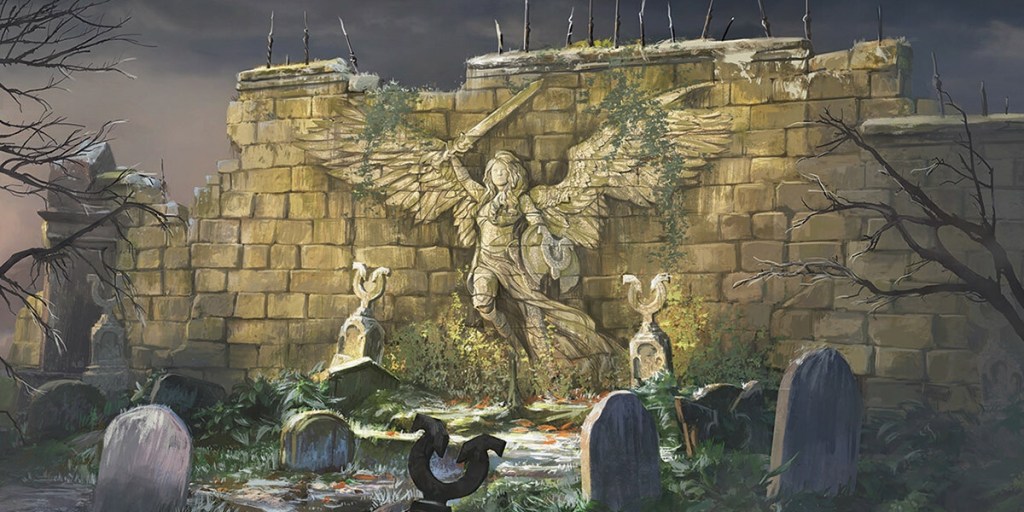
It’s little surprise that Wall of Stone goes overlooked as a D&D 5e spell. For one thing, it’s a wall spell that shares a level with Wall of Force. Given that Wall of Force is known for shutting down enemies and giving the DM palpitations, other options can struggle.
For another, Wall of Stone might be D&D 5e‘s most boringly-named spell. Other options give you walls of fire, light, force, and even wind. Cool things. Stone seems a little mundane in comparison.
‘Seems’ is the important word. Wall of Stone is a shockingly versatile spell. Almost as versatile as stone-building, the thing that has provided a bedrock for countless civilisations, is in real life.
With ten stone panels, you can do one hell of a lot. You can quickly assemble a castle (even with crenelations and cover) for your D&D 5e party to shelter behind during a fight. You can bridge a chasm, assemble stairs anywhere you need, reinforce any structure you find yourself in.
Wall of Stone in D&D 5e can also shut down creatures by trapping them that Wall of Force can (albeit with a saving throw). It completely shuts down line of sight, something that lets teleporters escape Wall of Force.
However, Wall of Force’s best uses as a D&D 5e spell come out of combat. If you maintain Concentration for a minute, the spell is permanent. Nothing stops you from adding to this structure.
Alongside its combat uses, Wall of Stone lets you build a house, castle, or even village in a handful of days with very limited effort and materials. Don’t underestimate the RP potential or out-of-combat problem-solving this can achieve.
These have been a handful of underrated D&D 5e spells that deserve more love from the playerbase. What are some personal unsung favourites of your own? Read ‘The Five Best Spellcaster Subclasses in D&D 5e‘ for even more top-tier magical options.
If you’re a DM who wants a golden opportunity to test out these and other underrated spells, ‘Five Ways to Spice Up D&D 5e Combat‘ has a few suggestions.
Please do like this article and check out others on Artificial Twenty! All comments, feedback, and even simple appreciation are all incredibly welcome. Thank you.
 Artificial Twenty