Vecna has long been one of Dungeons & Dragons‘ most infamous villains. However, he’s only recently been given a chance to step into the spotlight. Vecna: Eve of Ruin is the final campaign for this version of D&D 5e, due to be released in May 2024.
There’s no doubt that Vecna: Eve of Ruin will give DMs a good baseline with which to run Vecna. However, the character has literal decades of lore and characterisation behind him, all beginning with a humble hand and eye in the original Dungeons & Dragons game.
It can be daunting to run a villain on par with other iconic D&D characters like Strahd or Lord Soth. Fortunately, Vecna’s many appearances in D&D history have given several sources players can go to learn everything they want.
Many of these are D&D sourcebooks or campaigns about Vecna, but others include statblocks, appearances in campaigns, and more.
The Vecna Trilogy Is Eve of Ruin’s Precursor
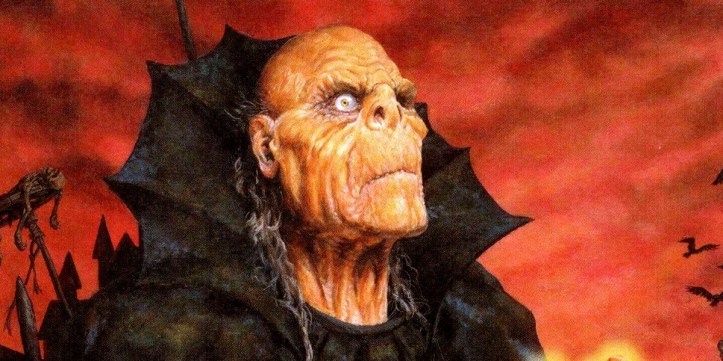
Vecna: Eve of Ruin is not the first D&D adventure to close out an edition with a clash against the Whispered One. It’s almost a direct successor to an iconic and beloved trilogy of AD&D Second Edition adventures.
Vecna Lives, Vecna Reborn, and Die Vecna Die! (I’ve already made the German joke) form a loose trilogy, forcing players to go up against Vecna in various forms. The players battle a reborn Vecna, send him to the Demiplane of Dread (D&D‘s Ravenloft setting), and then go up against his scheme to escape and achieve godhood.
These D&D Vecna adventures are some of the most iconic campaign materials ever printed. In particular, Die Vecna Die! is beloved for being a multiversal epic that has the player characters quest through Greyhawk, Ravenloft, and Planescape. The Vecna: Eve of Ruin D&D 5e campaign promises to double down with seven settings to explore.
Vecna Lives, Vecna Reborn, and Die Vecna Die! are all mechanically outdated, with very little of AD&D 2e being directly applicable to D&D 5e. Nonetheless, they give the most in-depth look at Vecna in all his forms. They show him as a gloating demigod in control of the situation and a desperate prisoner trying everything possible to escape.
They’re well worth reading if you want excellent insight into Vecna ahead of his D&D 5e campaign.
Critical Role’s First Campaign Features Vecna as the Final Boss
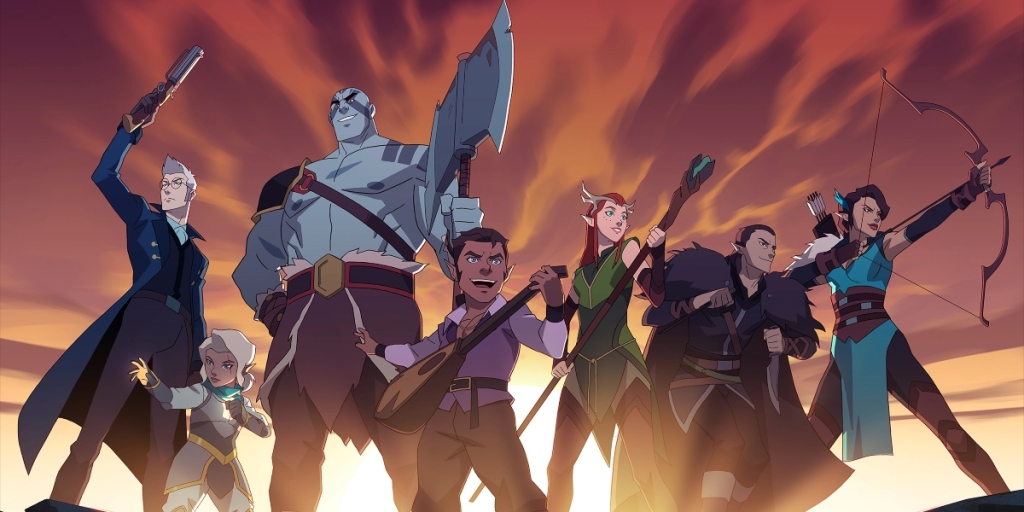
Vecna’s presence looms large over the first Critical Role campaign from its iconic Briarwoods arc. However, he only takes to the field himself in the very final arc. The cult revives Vecna in the Critical Role episode ‘Race to the Tower’, at which point he sets out to achieve divinity.
From that point on, Vecna proves one of Critical Role‘s best villains – and one of its most active. He intervenes several times to try and thwart Vox Machina’s plans, whether by sending armies to attack them or a projection of himself to taunt.
The end of Critical Role‘s first campaign is a masterclass in running villains in high-level D&D 5e without making them pushovers or flat-out ruining the party’s day. In particular, Vecna’s more personal and emotional attacks are a DM standard to deal with near-invincible player characters.
Vecna: Eve of Ruin includes the same character and peaks at similar levels. At the same time, there are very few guides for either in D&D 5e. Critical Role‘s first campaign is an excellent way to see how to play a high-level Vecna, from the mechanics to the storytelling, in the most entertaining fashion.
Critical Role‘s first campaign is canon to the wider D&D multiverse, including Vecna’s defeat. Nonetheless, there are some shaky elements that don’t match up. Furthermore, Matthew Mercer’s handling of Vecna is only one interpretation of an iconic character.
That said, it’s a damn good interpretation to learn from before Vecna: Eve of Ruin.
Deities and Demigods Covers Vecna and Other Divinities
Deities and Demigods is one of Dungeons & Dragons 3.5‘s almost endless sourcebooks about any topic under the many D&D suns. It covers exactly what it says on the tin, covering many different divine pantheons.
Vecna gets a write-up in Deities and Demigods under the general heading ‘The D&D Pantheon’. It gives a stripped-back version of his backstory and a powerful statblock for players to contend with.
Vecna: Eve of Ruin will doubtless come with its own statblock for Vecna, given he is the focal villain of the piece. Furthermore, it will probably give more background.
Instead, Vecna’s entry in Deities and Demigods is more useful for giving a rundown of his followers and his relationships with other gods. In particular, its descriptions of the D&D pantheon, coupled with Vecna’s entry, can help players understand his role in the multiverse.
Furthermore, as one of the infinite sourcebooks for D&D 3.5, and a relatively recent one, Deities and Demigods is probably easier to read a copy of than many other sources.
The Vecna Dossier Offers a Prospective D&D 5e Statblock
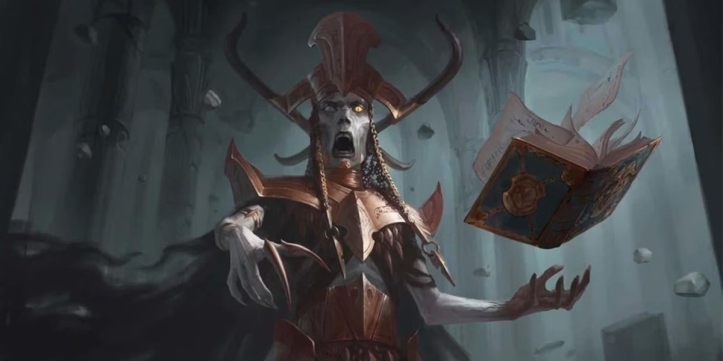
Vecna hasn’t appeared in any official material for D&D 5e except as background mentions as a potential god or Warlock patron. However, D&DBeyond released a limited-time free product called The Vecna Dossier that gave him a pre-divinity statblock.
The Vecna Dossier gave some help to DMs hoping to use Vecna the Archlich in their D&D 5e campaigns. Although far from the most powerful epic-level villain in the game, he was still a fearsome threat with capable magic, advanced abilities, and up to three reactions he could use to Counterspell (but better) or teleport.
Vecna: Eve of Ruin will likely go even further with the villain. The Vecna Dossier presents Vecna the Archlich, a near-mortal undead of terrifying power. In Vecna: Eve of Ruin, he’s instead a god on the verge of taking control of the multiverse.
In short, expect Vecna to be much more difficult when the Vecna: Eve of Ruin D&D 5e campaign comes out.
Nonetheless, The Vecna Dossier offers a glimpse at what Vecna may be like when he reveals his full potential, coupled with some useful storytelling notes. If nothing else, it lets DMs run him in his Archlich form as a warm-up before the final encounter.
The Vecna Dossier is no longer available on D&DBeyond. Nonetheless, most people can find it online, with plenty of posts sharing a copy or a PDF of it.
Open Grave Gives Plenty of Vecna Information
D&D Fourth Edition has long been controversial. However, few can deny the wealth of information available in its sourcebooks and monster books.
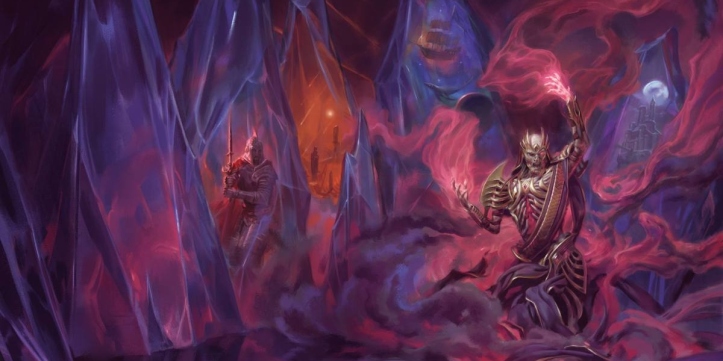
Open Grave: Secrets of the Undead is one of the most information-rich sourcebooks in D&D 4e, including a lengthy write-up for Vecna.
Plenty of the Vecna information in Open Grave is related to combat and D&D 4e‘s unique rules. However, the rest is a wealth of knowledge for a DM running a game with the character. The lore, given in ability checks, is concise but also very thorough. It covers Vecna’s history, relationships with other deities, and villainous goals.
It also gives information on Vecna’s cult, allies, holy scriptures, and more. No other sourcebook lets you read an extract from The Scroll of Mathereign, Vecna’s holy book in D&D.
Honestly, Open Grave: Secrets of the Undead is the best D&D Vecna book since the original trilogy of Vecna Lives, Vecna Reborn and Die Vecna Die! Even DMs who never want to touch that edition should give it a read before Vecna: Eve of Ruin‘s release date.
These have been five places to see D&D‘s Vecna in action before Vecna: The Eve of Ruin expects DMs to run him. It covers a variety of media, much of which are available easily online. At the same time, don’t discount useful secondary sources like Vecna’s Forgotten Realms wiki page or even his page on real-life Wikipedia!
If you have Vecna on the brain, check out ‘Five Ways to Use Vecna in Your D&D 5e Campaign Before Eve of Ruin’ to make that your players‘ problem.
If you’re exploring D&D 5e media for inspiration, then ‘Five Traits D&D 5e DMs Should Take from Baldur’s Gate 3’s Best NPCs‘ covers a game you might have heard of.
Please let me know of any other good Vecna sources! Also please do like and share this content if you’ve enjoyed it, and check out more on Artificial Twenty. Thank you!
 Artificial Twenty