Daggerheart‘s character creation and progression system isn’t restricted by class in the same way as Dungeons & Dragons. Instead, each class has two Domains alongside its unique abilities and base traits.
These Domains are decks of Daggerheart cards that each represent an ability. A Daggerheart character takes two of these (from any combination of their Domains) at character creation and one additional one per level, with five active in the character’s Loadout at any one time.
Every class in Daggerheart has two Domains. Thus far, conveniently, every Domain is attached to one of two classes. Their unique aesthetic, abilities, and mechanical roles make for all sorts of interesting combinations. However, it can be a lot for players to take in.
In this article, I aim to break down every Daggerheart Domain. This includes which classes can use them, the overall gist of their abilities, and any standout Domain Cards that could change the game.
The usual disclaimer applies: I have yet to run or play Daggerheart‘s open beta playtest. With a reading-only approach, it may be easy to overestimate or underestimate certain abilities. When I play, I will likely update this article to change my comments on specific abilities.
Arcana Domain
Daggerheart Classes: Druid, Sorcerer
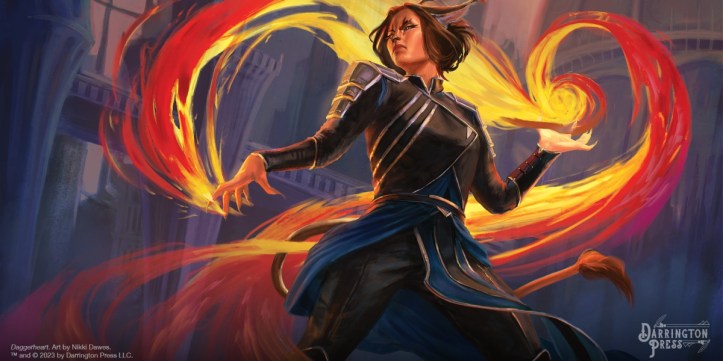
Daggerheart‘s Arcana Domain may well catch many Dungeons & Dragons players off-guard. Unlike in D&D 5e, the term doesn’t refer to the study and knowledge of magic. Instead, it’s the inherent ability to wield powerful, elemental magics.
With this in mind, it makes sense as one of the Domains for Daggerheart‘s Sorcerer. With its more elemental theme, it also suits the Druid well.
In Daggerheart, the Arcana Domain lacks the flexibility of other pure spellcasting Domains (such as Codex). Instead, it provides broadly-useful spells, with many options to dominate in combat or out of it.
Arcana Domain characters in Daggerheart can make themselves elemental forces to be reckoned with or wielders of utilitarian magic that make other spellcasters quake.
Some of the best Arcana Domain Cards in Daggerheart include the reliable damage-reducing Rune Ward, the magic-nullifying Counterspell, and the Adjust Reality that makes a mockery of chance itself for a high cost.
Blade Domain
Daggerheart Classes: Guardian, Warrior

The Guardian and Warrior are two of Daggerheart‘s most flexible combat classes, even if they might struggle outside of it. The Blade Domain is a large part of the reason for this.
As the name implies, it’s the Daggerheart Domain most to do with weaponry and inflicting hideous violence upon foes.
It isn’t wholly one-dimensional, with a few out-of-combat benefits. Nonetheless, most of the Blade Domain’s abilities focus on enhancing weapon attacks, providing new options for weapon attacks, or occasionally avoiding enemies’ weapon attacks.
The Blade Domain in Daggerheart isn’t subtle. However, it’s ideal for players who want to be combat monsters.
Despite its non-combat focus, A Soldier’s Bond is an excellent Blade Domain ability, providing large amounts of Hope for the party at little notice. Versatile Fighter is another top-tier choice, letting a Warrior or Guardian wield and exploit the best weapons possible, regardless of stats.
Daggerheart‘s Blade Domain also provides unmatched ways to go above and beyond in pure damage. Its high-level Reaper Strike and Battle Monster abilities provide ways to hit far harder than even Severe damage, turning even the strongest enemies into mulch.
Bone Domain
Daggerheart Classes: Ranger, Warrior
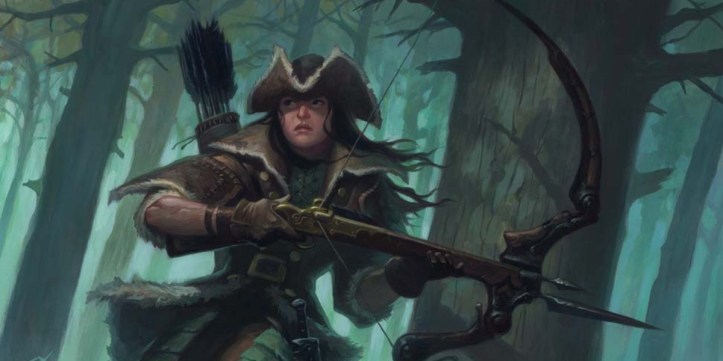
The Daggerheart open beta playtest describes the Bone Domain as one of swiftness and tactical mastery. To me, however, it looks to focus on survivability (primarily through Evasion) first and foremost, with a secondary focus on combat tactics.
Nonetheless, Daggerheart‘s Bone Domain provides a neat edge for combat-focused classes who want to do more than raw damage. It’s one of the few ways in Daggerheart to capitalise on Evasion.
In particular, the Bone Domain provides ways to punish enemies for missing attacks alongside simple ways to dodge more damage. If you want to play an almost-unkillable character in Daggerheart, albeit one who heavily relies on luck, the Bone Domain is a solid choice.
It’s also a neat way to play tactical tricks on your GM, such as bolstering allies or attacking without spending Character Tokens.
Daggerheart Bone Domain Cards that improve survivability are always welcome, such as Nimble, Brace, and Endurance. It also offers a handful of devastating offensive options, such as Signature Move, Breaking Blow, and A Thousand Cuts.
Codex Domain
Daggerheart Classes: Bard, Wizard
The Codex Domain in Daggerheart will be familiar to D&D 5e players used to the more flexible arcane caster classes. It’s marked by a heavy focus on spellcasting and by its unmatched versatility.
Many Codex Domain Cards in Daggerheart don’t provide one single, powerful ability. Instead, they provide three as a package deal, each of which is a little weaker in its right.
No other class in Daggerheart gets as many unique abilities as a Wizard or Bard who leans into the Codex Domain and the many magic tricks it offers.
The Codex Domain isn’t a series of broad, evergreen tools like Arcana. Instead, it lets a character cover a dozen different niches at once, able to pull out the right highly-specific tool when it’s most needed.
The Daggerheart Codex Domain’s standout cards are harder to gauge, given how many have more than one ability. Nonetheless, the Book of Illiat is top-tier among low-level options for its flexibility and reliability.
Similarly, the Book of Exota Daggerheart Codex Domain Card gives a short-ranged Counterspell and the chance to create another being to fight with you. Higher-level, single abilities include Teleport and the mass instant death Disintegration Wave.
If you’re enjoying this content, consider subscribing to Artificial Twenty: Investigation Check. This is a brand-new TTRPG newsletter from myself, Artificial Twenty. Sign up here to get all the latest in TTRPG news and stay on top of this blog’s content.
Grace Domain
Daggerheart Classes: Bard, Rogue

The Grace Domain in Daggerheart represents the social touch, the ability to leverage sheer charisma and force of will to bend things in the character’s favour. It’s less raw power than many other Daggerheart Domains in return for subtle flexibility.
Grace Domain Cards in Daggerheart tend to cover supportive abilities or out-of-combat dominance, with a few back-pocket magical combat choices to round it out. Even then, these are far more focused on disabling enemies than defeating them.
Daggerheart‘s Grace Domain won’t be the best choice for players who want to smash through their foes. However, it’s ideal for those who want to be the lynchpin of social plans or wield plenty of out-of-combat utility.
There are also a handful of features focused on other types of intellectual finesse, such as the Secret Plan ability. This is basically a Flashback from Blades in the Dark, letting a player trade Stress for the ability to retcon preparations into existence.
Aside from Secret Plan, the Grace Domain in Daggerheart has standout Domain Cards like Inspirational Words to trade Stress for party resources at a flexible rate, Endless Charisma to almost never fail on social rolls, or Copycat to wield literally any other party member’s abilities.
Midnight Domain
Daggerheart Classes: Rogue, Sorcerer

Daggerheart‘s Midnight Domain, as the name implies, focuses on shady and underhand actions and dealings. Almost all of its Domain Cards involve darkness or subterfuge in some way, ranging from new abilities when hidden, rewards for having Advantage, or literally blotting out lights.
The Midnight Domain is one of Daggerheart‘s surprisingly magical and combat-focused Domains. Although D&D 5e players might expect it to consist of typical Rogue things like mundane sneaking, it fits in well with the thoroughly-magical Sorcerer as well.
The Midnight Domain lets players conjure blades to skewer their foes, disappear and reappear behind enemies, force others into a damage-enhancing chokehold, summon dark spirits, and much more.
It’s one of the broadest Daggerheart Domains in its abilities that still retains a core thematic resonance around shady actions.
The Daggerheart Midnight Domain’s standout abilities include Chokehold to boost the party’s damage to a terrifying degree, Dark Whispers for either silent communication or information-gathering, or Night Terror to steal resources from your Daggerheart GM.
Sage Domain
Daggerheart Classes: Druid, Ranger

The Sage Domain in Daggerheart represents a more naturalistic form of magic, away from the more divine or arcane options that other Domains offer. Almost all of its abilities interact with the natural world in some way, either passively or as explicit magical spells.
That isn’t to say that the Daggerheart Sage Domain is at all hippie or gentle. Nature often vicious, and this Domain often embodies that side of things as well.
Sometimes, the Sage Domain is about cooperating with the natural world and healing your allies. At other times, it’s about felling your foes and devouring the body for more power. I’m not kidding.
You can pick and choose your Daggerheart Domain Cards from the Sage Domain to represent the side of nature you like best. Alternatively, you can embrace the duality with one of the most divided Domains in the game.
Some of the Sage Domain’s most notable ability cards in Daggerheart include Conjure Swarm’s immense defensive potential, Healing Field’s whole-party healing, Monster of Nature’s versatile dice buffs, or Force of Nature’s vast, expensive buffs.
Splendor Domain
Daggerheart Classes: Seraph, Wizard
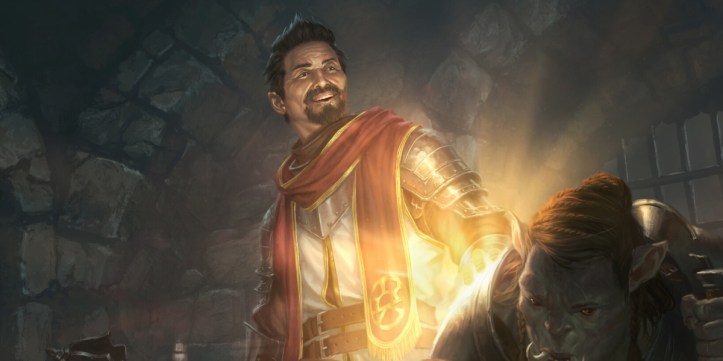
The Daggerheart open beta playtest book describes the Splendor Domain as covering life. However, as it points out, this doesn’t mean it is solely restricted to healing or even to positive abilities. It also has some oversight regarding death, both inflicting and reversing it.
The Splendor Domain in Daggerheart does focus on aiding allies first and foremost. From restoring Hit Points and Stress, to allowing rerolls of dice, to passive buffs just for being near the character, it is the ideal force multiplier.
The Splendor Domain also provides a few self-buffs. Although it isn’t the best Daggerheart Domain for direct combat, it can keep a Seraph or Wizard every bit as well topped-up as their allies.
It also has some occasional utility outside of this, such as Divination letting your character ask one question from ‘the forces beyond’ (and get a suitably vague answer).
The Daggerheart Splendor Domain allows for low-level luck manipulation with Reassurance, valuable combat support with Healing Hands, double damage with Smite, and Daggerheart‘s only revival-from-death ability in Resurrection.
Valor Domain
Daggerheart Classes: Guardian, Seraph
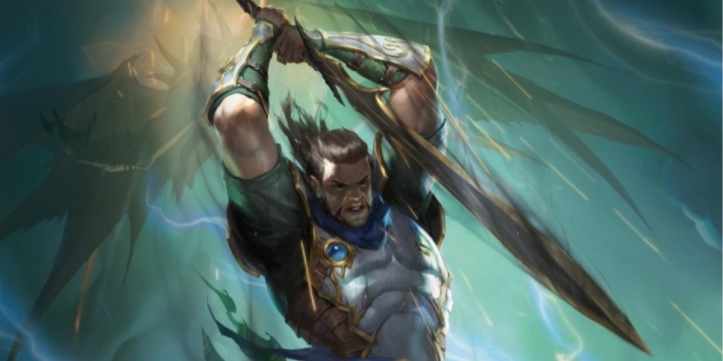
The Valor Domain, as the name suggests, is one of Daggerheart‘s best combat Domains. However, it’s got less of an offensive focus than Blade and less of a defensive focus than Bone. Instead, it more revolves around self-improvement for the betterment of oneself and the detriment of one’s enemies.
The Daggerheart Valor Domain is an excellent choice for passive-buffs. These include unarmoured defense, bonus damage on attacks, boosted Armor Score, free advantage on rolls, and more.
It’s also one of Daggerheart‘s best Domains for tanking. Abilities like I Am Your Shield and Goad Them On allow a Guardian or Seraph to take damage in the place of allies.
They also provide buffs to allies, active abilities to further improve themselves, and far more. There aren’t as many fancy tricks in the Daggerheart Valor Domain, but there are evergreen, reliable ways to make the entire party better and more survivable.
Body Basher’s consistent damage looks sure to add up as a Daggerheart Valor Domain Card, consistently pushing damage over thresholds. Inevitable pairs nicely with Unstoppable to make the Guardian very good at out-of-combat abilities (and in-combat). Unbreakable is a reusable anti-death ability, one of the standouts in Daggerheart as a whole.
This has been a brief rundown of every Domain in Daggerheart, coupled with a few abilities that I think each makes top-tier. The class design in Daggerheart is an excellent use of these different strands, combining them in interesting ways. I can’t wait to see what comes next for the system and how people use them to create fantastic characters.
For a slightly more critical take on the Daggerheart open beta playtest, check out ‘Six Flaws of Critical Role’s Daggerheart Playtest‘.
For character-creation tips in that unstoppable RPG juggernaut Dungeons & Dragons, consider ‘The Ten Best Support Subclasses in D&D 5e‘ instead.
 Artificial Twenty