Character-building is a huge part of Dungeons & Dragons Fifth Edition. Despite this, many D&D 5e subclasses can feel unusually rigid. They often have limited choice and steer a character in one way or the other, defining their role for the rest of the campaign.
However, a D&D 5e character build doesn’t have to be limited in this way. Canny players know that the right race, spells, weapons, or more can upend the way the designers intended the subclass and create a unique D&D character.
Some of these subclasses need very unconventional choices to flip their playstyle, whilst others can do it by simply switching weapons. These are only five examples of unique D&D 5e builds you can get by pushing subclasses to their limits, plenty of others are there if you know where to look.
Mobile Ancestral Guardian Becomes a Rare Martial Debuffer
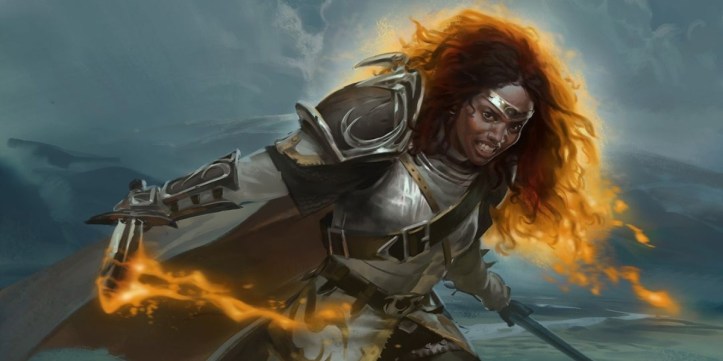
D&D 5e‘s Ancestral Guardian Barbarian trades out the damage-dealing features of most Barbarian subclasses for improved tanking instead. The first creature an Ancestral Guardian Barbarian hits has disadvantage against all other targets and deals half damage to anything that isn’t the Barbarian.
This, paired with Reckless Attack, is one of the best ways to create a tank build in D&D 5e. However, canny players know it’s also a rare way to make an effective, almost resource-free debuffer as a D&D 5e Barbarian.
The key to this unique D&D 5e build is to not end your turn in range of the enemy affected by Ancestral Protectors. If they can’t hit you, it’s no longer a tanking ability. It’s an automatic disadvantage and half damage to all attacks, something that any spellcaster would kill for.
The Mobile feat is the common way to make a unique Ancestral Guardian Barbarian build in D&D 5e. This way, you avoid opportunity attacks from your target and are free to retreat at your leisure. The Barbarian’s innate movement speed helps, as do races like Goblin, Orc, Tabaxi, or even Aasimar (for flight).
There are other ways to achieve this character build in D&D 5e. Three levels of Swashbuckler Rogue are almost identical to Mobile with Fancy Footwork. It also gives bonus damage (assuming a Finesse weapon) and a bonus action dash. Alternatively, simply using a bow from range is enough to trigger Ancestral Protectors (but loses damage).
This build doesn’t do traditional Barbarian things. However, it is a unique D&D 5e character that can completely shut down one martial enemy per combat without any spells.
Buffer Bladesinger is Almost Unbreakable

The Bladesinger is one of D&D 5e’s ready-made gish subclasses. It comes with a handful of martial features that allow for swordplay and a huge array of durability buffs to let a Wizard consider standing within five feet of an enemy.
Even though ‘blade’ is literally in the name. this subclass prioritises durability over all else and doesn’t force a player to get in close. Bladesong has no Rage-like limitations forcing hostile actions. The Bladesinger only misses out on a handful of features by avoiding melee.
As a result, the D&D 5e Bladesinger makes for a scarily effective ranged buff caster. The main peril of the Wizard’s buff spells is Concentration checks. Low Armor Class and poor Constitution saves often spell doom.
The Bladesinger conveniently adds its Intelligence bonus to both AC and Concentration checks, coupled with proficiency in light armour that no other D&D 5e Wizard gets.
Particularly when you pair this with Shield, Concentration-boosting feats, and the higher-level Song of Defense, it becomes far, far harder for a D&D 5e Bladesinger Wizard build to lose Concentration on buff spells.
You can use this on yourself to become marginally more effective at fighting in melee. Alternatively, you can cast these spells on the Fighter, Barbarian, Paladin, or Ranger to make them a combat monster.
Hanging back at range is safer and martials are often a better recipient of buff spells. You can still contribute damage with Extra Attack, a hand crossbow (which works with Bladesong), and attack cantrips. The result is one of D&D 5e‘s best Wizard builds for supporting allies.
If you’re enjoying this article, please consider subscribing to our newsletter. Artificial Twenty: Investigation Check is a fortnightly publication, direct to your inbox, that brings the latest in TTRPG news and keeps you up to date with Artificial Twenty. Sign up here!
Social Utility Divine Soul Sorcerer Dominates a Rare Pillar

When discussing character builds in D&D 5e, it’s easy to focus on combat. It’s by far the most mechanical portion of the game, with most features, spells, and classes focusing on their capacity for violence above all else.
However, some of the most unique D&D 5e characters instead look to dominate other portions of the game.
The Divine Soul Sorcerer is the only caster with two complete spell lists, the Sorcerer and Cleric lists. This does give a great many combat options, with great potential for damage, buffs, or debuffs.
It also expands the Sorcerer’s social options significantly. Building the best Sorcerer in D&D 5e often involves choosing one area to specialise in, and few can focus on out-of-combat situations as well as the Divine Soul.
The Cleric spell list in D&D 5e adds social or utility options like Guidance, Purify Food and Drink, Calm Emotions, Zone of Truth, Remove Curse, Locate Creature, and more to the Sorcerer’s existing choices like Detect Magic, Charm Person, and Suggestion.
This doesn’t necessarily allow for a unique D&D character who bends social situations to their will. A Bard gets most of these spells, more of them, and Expertise. However, Sorcerers also get Metamagic.
Subtle Spell is one of the most invaluable social tools in D&D 5e. A Sorcerer gets to cast all of these spells without anyone knowing they’ve done it. All you have to do is sacrifice combat specialisation for the ability to warp much of the rest of the game.
You should still probably take some combat cantrips like Fire Bolt. It’s still a huge part of the game. Even with this fun D&D 5e build, you don’t wanna suck at it.
Death-Or-Glory Order of Scribes Wizard Hits Hard

Many unique D&D 5e character builds involve taking a close-range subclass and having them fight from far away. However, it’s possible to take a Wizard, one of D&D 5e‘s most fragile classes, and turn them into a close-range machine of death. Without the School of Bladesinging, I should add.
Rather than any subclass features, this unique high-damage D&D 5e Wizard build uses the spell Spirit Shroud. This spell adds damage to any attacks made against targets within 10 feet, not just melee or weapon attacks. The bonus damage scales with upcasting.
Scorching Ray, another D&D 5e Wizard spell, deals three attacks with a second-level spell slot and adds attacks when upcast.
I’m going to guess you can see the idea behind this character build in D&D 5e.
Upcast Spirit Shroud as high as you can. On subsequent turns, cast Scorching Ray at high levels. At its most absurd, this build deals 18d6+36d8 damage in one turn of Scorching Ray.
Now, let me be clear, that is pure white room maths that will almost never happen in D&D 5e. But it still shows the potential of this unique Wizard build in D&D 5e.
This is also the most gimmicky of any build in this list. It monopolises your Concentration and forces you to change your entire playstyle just for high-damage alpha strikes. It also takes a turn to set up (with the action cantrip you can cast after Spirit Shroud being far less impressive) and burns spell slots at a worrying rate.
If you can get past all of these drawbacks, then this fun D&D 5e character build is liable to shred any enemy in a single turn.
The Order of Scribes Wizard subclass is purely to switch damage types. Lots of things resist Fire damage. Given your entire build is around Scorching Ray, you want to be able to switch things up if need be. If that’s not a concern, consider School of Evocation, War Magic, or Bladesinging for bonus damage or durability.
Finally, a reason to play Bladesinger Wizard up close.
Blaster Hexblade Simply Doesn’t Need Weapons

The Hexblade is D&D 5e‘s most infamous subclass for good reason. Even beyond its multiclassing potential with Sorcerers, Paladins, Bards, Fighters, and everything else, its features are thoroughly solid.
However, it suffers from a similar problem to the Bladesinger Wizard. Outside of one trait of Hex Warrior, few of its features require or even reward melee combat.
The D&D 5e Warlock subclass meant to fix Pact of the Blade is actually more effective played as a ranged blaster.
Every other Warlock would love to have medium armour, shields, and a better version of Hex that doesn’t cost a spell slot. A D&D 5e Hexblade build is good in melee. However, it’s even better if you Eldritch Blast up to four times a turn with Hexblade’s Curse and Hex, while enjoying the benefits of an immense Armor Class boost.
Even other powerful D&D 5e Warlock subclasses, such as the Genie and Undead, struggle to match a ranged Hexblade for damage. This is before the utility of features like Accursed Specter and Armor of Hexes comes into play.
These have been five fun D&D 5e character builds that put a unique twist on well-established subclasses and play them contrary to how they’re meant to work. Not all are as effective as each other, but I’d say none are useless.
If you’ve enjoyed this article, please do share it with your friends and check out more Artificial Twenty content, such as the suggestions down below.
For players looking to do the unusual in D&D 5e even more, check out ‘Unusual D&D 5e Build Ideas‘ for inspiration.
If you want slightly more sensible character-building tips in D&D 5e, consider ‘The Best Cleric Races in D&D 5e‘ instead.
 Artificial Twenty