Here on Artificial Twenty, I am big on Dungeons & Dragons Fifth Edition Dungeon Masters drawing on other works of fiction for inspiration. I find it’s one of the best ways to keep your creativity flowing and continually produce fresh ideas.
However, this does come with caveats. D&D 5e (and TTRPGs as a whole) is unlike almost any other form of storytelling. It’s largely improvised and often consists of the DM trying to subtly engineer the most helpful response from the players – while the PCs’ interests, quirks, and character personalities shape the campaign itself.
The DM doesn’t get the benefit of writing the entire script. As a result, there are many tropes – conventions or go-to storytelling devices – that work well in other media like novels or film and not at all in D&D.
It might be that these tropes rely too much on the author having the protagonists act the correct way to work. Alternatively, they might be the sort of thing that fictional characters can take on the chin, but are liable to irritate the very real people around your kitchen table. Sometimes, they’re just impractical with a narrated, improvised format guided by dice.
Worlds Full of Betrayal and Double-Crossing NPCs
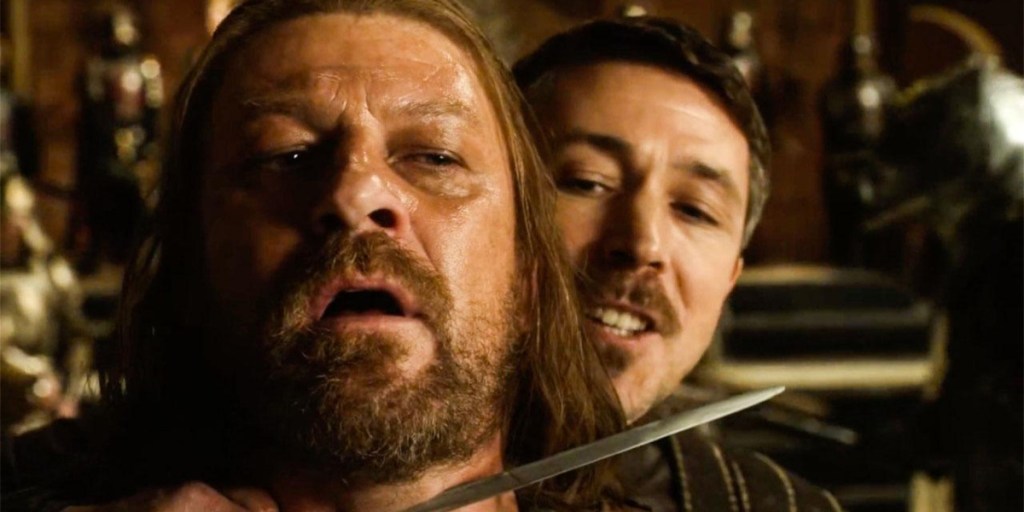
Intrigue is a popular adventure type in D&D 5e, and one I’m very fond of. The popularity of fantasy stories defined by uncertain loyalties and skulduggery has skyrocketed since Game of Thrones and its ilk.
However, this is very difficult to make work in a full D&D 5e campaign. It’s beyond many DMs to pull off. This isn’t down to their own skill, but down to the likely effects it has on almost any player group.
A good betrayal is one of D&D 5e‘s best plot twists. Once. If an NPC turns on the party in a significant, dramatic way, it’s excellent. After that point, it starts to become tedious. Worse than just losing impact, it almost always changes how your players interact with NPCs.
In a novel or film, this style of storytelling is meant to force the protagonist to choose their allies on cunning or faith, hoping that they’ve made the right choice. In most D&D 5e campaigns, your players will simply respond by trusting nobody and taking no allies.
After more than one or two high-profile betrayals, particularly if they result in harm for the party, the average D&D 5e party will just assume everyone is out to get them. They’ll refuse to get close to NPCs, try and take the upper hand over everyone they meet, and be reluctant to make big moves.
This can work, but it mostly creates more hard work for a DM. Your NPCs are one of your best resources in D&D 5e, don’t cheapen them by turning your players against them.
Note, however, that this mostly applies to double-crosses from seeming close allies or authority figures. If you set things up so the players expect a betrayal – such as them making a temporary truce with the villain or a shady rival D&D 5e adventuring party – they’ll be more okay with it. You can even invert things by having the obvious betrayal never happen, possibly restoring some of their faith in humanity.
Engineering a Eureka Moment from Hours Ago
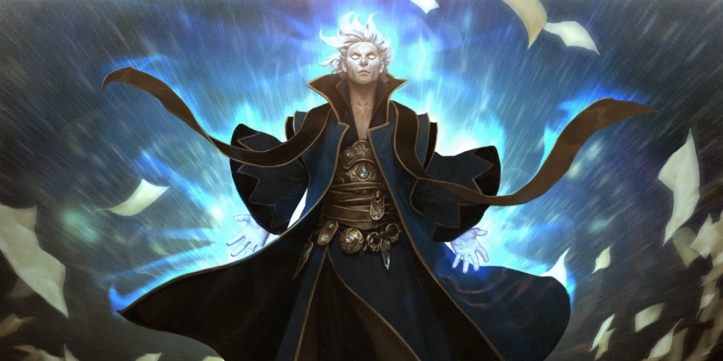
Many stories involve characters remembering they have the perfect tool or piece of knowledge – gained many chapters ago – at the perfect time to use it. Think of Tony Stark abusing the armour’s freezing problem in Iron Man or James Bond using each of his gadgets in unexpected ways to escape danger.
This is a well-worn trope going back to mythology, and very popular in all sorts of stories. However, it’s far too unreliable to work in D&D 5e.
Give your players something innocuous with no clear use case – be it a magic item or a hint about a puzzle – and drop a perfect moment for it one or two sessions later. There’s a very good chance they’ll simply have forgotten about it.
Trying to set up a ‘Eureka!’ moment and fire a Chekhov’s Gun in D&D 5e relies on things more conventional storytellers don’t have to worry about. Your players need to know everything on their character sheet, take good notes, not panic in the heat of the moment, and probably be somewhat sober.
If there’s no other way to get past your D&D 5e puzzle or encounter without producing the fantastic tool you gave them earlier, your game will grind to a halt. Either your players will tear their hair out in frustration, or you’ll end up telling them (maybe after an Intelligence check), which spoils the effect.
There’s another reason not to try and engineer this trope in your D&D 5e game: It will happen naturally if you sit back and let it.
Every DM in D&D has a story about the time the PCs dredged up an item or boon from a dozen sessions ago to trivialise an encounter. Or they use a magic item in an unconventional way to avoid an obstacle. It’s happened to me several times over.
This has the exact same impact, except that it’s more organic and far more likely to succeed. The players will do it themselves.
Memory Mishaps in Real-Time
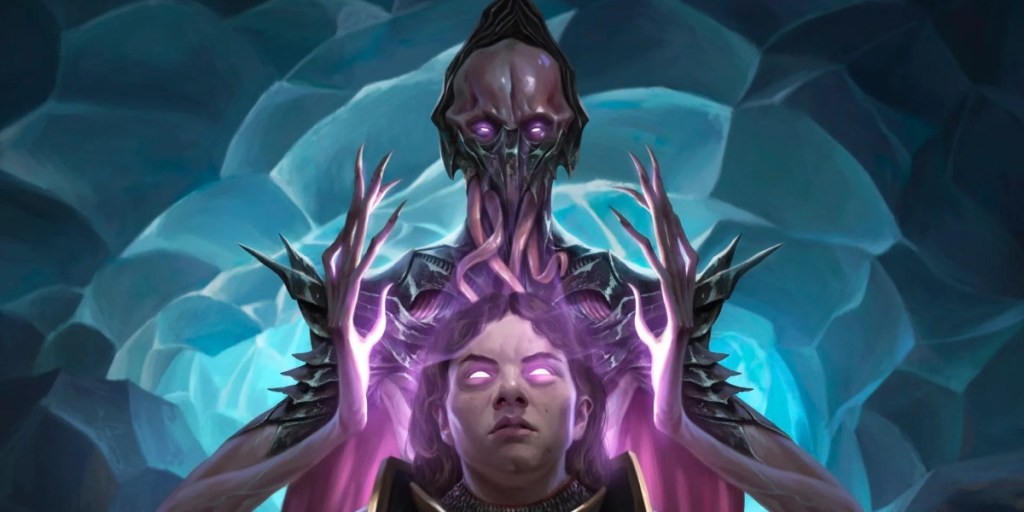
Memory is a core part of psychological horror or suspense in fiction. Audiences love unreliable narrators. Monsters that mess with people’s memories (Doctor Who‘s Silence, for instance) are always popular.
However, D&D 5e‘s very nature makes this impractical.
Do you tell players their characters see and experience one thing, and then ask them to pretend they didn’t? That’s going to strain their immersion and encourage metagaming (whether they’re acting on the information or deliberately ignoring it, they won’t be acting naturally).
Do you neglect to tell players information to represent their memories ‘after’ the fact? Then you more or less rob them of the chance to respond as their character would in the moment.
On top of that, I can’t imagine it’s very good for your D&D 5e table atmosphere. Even if all your players are comfortable with being lied to in your role as the narrator, either they know the truth or know that you know the truth. It doesn’t create the fantastic air of uncertainty either way.
It’s why I’m not convinced the popular D&D 5e ‘False Hydra’ fan monster has ever been run well. It’s a fantastic monster to read about, perfect for a story. For an interactive tabletop game? Less so.
To achieve a similar effect with this kind of uncertainty, I’d recommend effects that alter perception instead. Rob the PCs of the ability to tell NPCs apart or have your description of the environment shift each time you describe it. A similar unsettling, disorienting effect without straining the suspension of disbelief.
Note, this also doesn’t apply to things like D&D 5e character backstories (hence amnesia’s popularity). If your players are okay with it, absolutely mess with their character’s knowledge there. The issues only come from lying in your narration or asking players to ignore it.
Cryptic NPCs Defined by Dark Secrets Irritate Players
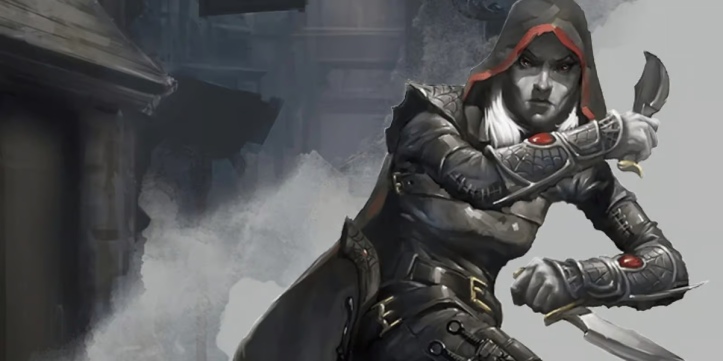
Getting a big reveal with one of your NPCs is a rare delight in D&D 5e. Taking a character your players have become invested in and upending everything they think of them makes for a unique impactful moment.
However, you have to earn it. And you can’t go into things as a D&D 5e DM with that reveal as your end goal.
Cryptic characters who hint at some dark truth in every appearance can work in fiction. They foreshadow the thing the author really wants to tell you but can’t yet, build up an intriguing mystery, and eventually lead to an excellent payoff.
However, this is another trope that D&D 5e DMs should avoid just due to likely player psychology. For an NPC reveal to really matter, that NPC needs to matter to the players. The best ways to do this are to make the group like them (being attractive helps) or to make the group really hate them (doing war crimes helps).
If all an NPC does is stand around giving hints to some awful truth, your D&D 5e players are probably going to be fairly apathetic towards them. The big reveal will likely be met with a “…Huh,” or worse, a “Who?”
It’s almost impossible to predict which NPCs in D&D 5e your players will glom onto, either lovingly or loathingly. It seems entirely random, unrelated to how much effort or screentime you give a character.
If you want to be very efficient, give every NPC a dark, terrible secret. That way, you can just fire the Chekhov’s Guns the PCs pay attention to. This advice is only semi-serious.
Inevitable Combat Defeats the Players Can’t Win

The doomed fight is a noble trope in basically any fiction. We all know Luke Skywalker can’t beat Darth Vader in The Empire Strikes Back. Yoda tells us as much. However, it’s thrilling because of how well Luke accounts for himself while hopelessly outmatched.
There are countless other examples in fiction. HMS Thunder Child‘s charge in War of the Worlds. The Red Wedding in Game of Thrones. Noble Six’s last stand in Halo Reach. We love to see heroes fight on even when defeat seems certain.
What we like less is experiencing that ourselves. A certain defeat doesn’t add joy or valour to your D&D 5e game. Nor does it make for a tragically unforgettable Red Wedding moment. It just tends to irritate players.
D&D 5e is a combat-heavy game all about players making big choices. If you render those choices irrelevant by deciding they will lose a fight, it feels cheap. Defeats should come from bad tactics or unlucky dice rolls, not god deciding they should happen.
Worse, it’s tedious. Combat takes a long time in D&D 5e. Players don’t want to sit there for an hour or longer, rolling dice that ultimately don’t matter, so the story can get to where you’ve unilaterally decided it should.
Note, this doesn’t mean you can’t defeat your party in D&D 5e. But you should never (or rarely) go into an encounter expecting it.
Nor do you have to let your players slaughter every group of enemies to a man in every D&D 5e combat. You can have fights where that has no chance of happening. You then just have to set up alternate objectives the players can achieve.
Fleeing from an overwhelming force isn’t a defeat for a D&D 5e party. Escaping with their lives to fight another day (possibly with a helpful NPC or artefact) is a victory in and of itself.
Just a note: if the best way for your D&D 5e PCs to win combat is by escaping, make that very clear. Use dead or dying allies to indicate how dangerous the fight is. Ramp up the odds to truly ridiculous degrees while highlighting exits. Outright tell them to their faces. Left to their own devices, most parties default to “kill everything or die trying” mode.
There is an exception to this rule. It can be a good way to end a one-shot in D&D 5e. If everyone is on board, you might get away with ending a standalone adventure with a doomed, hopeless battle. Even then, I’d say you can do it once per group before it becomes tiresome.
These have been five tropes that D&D 5e DMs should avoid, even if they work well in other fiction. If you’ve enjoyed this, please share it and check out other Artificial Twenty content, like the articles below.
For genuinely good fiction to help your DMing in D&D 5e, check out ‘The Best Media to Help You Improve as D&D DM‘.
If you’re trying to get your players more excited about your thoroughly un-tropey adventures, ‘How to Motivate Players as a D&D 5e DM: Tips and Tricks‘ might have some suggestions.
 Artificial Twenty