Dungeons & Dragons Fifth Edition Dungeon Masters have a wide menagerie of adventure types to choose from. Many enjoy more social or intrigue-based adventures, where what player characters say is as important as who they hit with an axe.
Others prefer more survival or exploration-based D&D 5e adventures, with navigation as important as combat. Mysteries, defensive missions, courier jobs and more provide D&D 5e with almost endless adventure fodder.
Sometimes, however, a DM wants to play the hits. Dungeons are a full half of D&D‘s name. Exploring one remains the oldest and purest form of D&D. Even in a more roleplay or social-focused campaign, most players will enjoy the chance to kick the door in, explore a ruin, and fight monsters.
Despite its seeming simplicity, however, the classic dungeon crawl has a lot of moving parts. A DM has many ways to build dungeons in D&D 5e, elevating a straightforward and fun adventure type to something unforgettable.
Centre Your D&D Dungeon Around a Single Theme
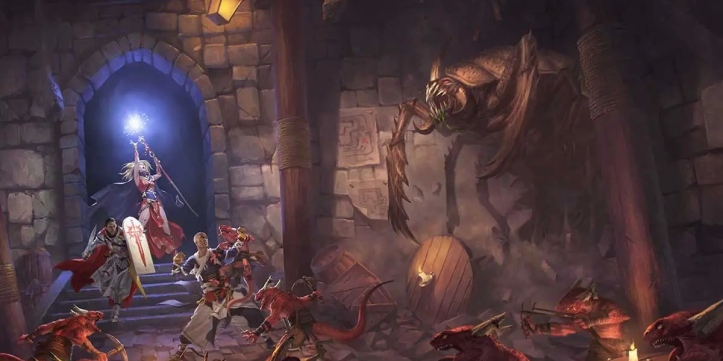
The best way to make a memorable dungeon in D&D 5e is to give it a single, coherent theme. Players aren’t going to remember something if its terrain, monsters, and loot feel like they’ve come out of a random number generator or seven different d100 tables.
You want your D&D 5e dungeon crawl adventure to make sense and feel like a real place. You want everything to tie together in a memorable whole, not a grab-bag of incohesive elements.
A good way to start is either by thinking about the environment itself or thinking about what monsters you want to use in D&D 5e combat.
If you start with the dungeon crawl’s location, build outwards from there, focusing on what makes sense. If it’s a ruined castle, why is it ruined? What secrets or treasure suit a castle? Rare weapons. Symbols of power or authority. Jewels and objects over piles of gold coins.
Is it occupied by wild beats? Has a force of kobolds moved in? Has a vampire claimed this D&D 5e castle dungeon as her seat, bringing a cohort of undead soldiers?
What traps and obstacles might be in place, either left there by the original builders or added in since? A moat and drawbridge? Collapsing ceilings or floors that risk crushing or dropping? Curses upon its hidden, invaluable treasure?
Alternatively, start with the gameplay ideas and work backwards. Do you want to fill your D&D 5e dungeon with Deep Scions? Cool, they have excellent lore. Now think about what sort of dungeon makes sense for them.
If it’s not an underwater location, it’s something they’d at least partially flood. You could set this D&D 5e dungeon crawl underwater, or possibly have it in a coastal area with parts submerged. Now, the submerged parts are a great place to put rewards, if the players are willing to brave possible drowning and probable ambushes.
You should also decide on other creatures that make sense alongside Deep Scions for your D&D 5e dungeon adventure. Do they have pets, like sharks? Spellcasters, like a flavoured Kraken Priest? Do they serve a horrific underwater aberration like an Aboleth?
Location or monsters are the easiest ways to reach a solid concept or theme for a dungeon crawl adventure in D&D 5e, but far from the only ways. You could start with a piece of treasure, a phenomenon like arcane magic or moonlight, or even something more metaphorical like avarice or betrayal.
You can make a logical, enjoyable, memorable D&D 5e dungeon by working backwards from almost any concept. The important thing is to stay roughly on-theme.
Fighting a vampire in a castle’s throne room or on the battlements after fighting through their lieutenants is dramatic and climactic. Fighting one of D&D 5e‘s iconic Beholders after a dungeon of everyday bandits is just confusing.
Include More Than Just Combat, Combat, Combat

Dungeon crawls are more straightforward and high-octane than many adventures in D&D 5e. Most dungeons are full of monsters and most loot is guarded by enemies. The players can’t usually ask nicely to get in and take things.
Most players expect combat in a D&D 5e dungeon, and they’re not far off the mark. They’re a perfect opportunity to test players’ builds and use monsters you couldn’t normally fit in the adventuring day.
That said, the best D&D 5e dungeons contain many obstacles with a wide range of possible solutions. There’s no reason your party’s other talents, be they social, skill-based, or utility, should fall by the wayside.
It’s easy to fall into the mindset that every D&D dungeon encounter needs to die. However, this is rarely the case. If they’re sapient, they probably want to live. If they’re not, they’re probably avoidable. If they’re inanimate, ‘die’ probably doesn’t apply to them.
Include locked doors or traps for your party’s D&D 5e Rogue to overcome with quick fingers (or to tax the spellcasters’ utility). Put physical obstacles like cliffs or piles of rubble that are best dealt with through raw physicality.
Include lone figures or third parties who can be misled, frightened off, or brought on-side with the right social approach and high skill checks.
If your D&D dungeon has a significant enemy presence, give alternate routes or locations where stealthy members can scout and form a plan of action.
Dungeon crawl adventures in D&D 5e are no more limited than any other adventure type. Absolutely use them as an excuse to throw lots of combat at your players. At the same time, don’t neglect everything else the game has to offer.
Study and Include Environmental Storytelling

D&D 5e dungeon crawls also don’t have to be devoid of story. Sure, you have fewer chances to layer exposition or drop plot twists on your players while they fight for their lives, but that doesn’t mean it has to be a blank slate.
Any D&D 5e DM can use a dungeon crawl to brush up on their environmental storytelling.
If you’re unfamiliar with the concept, environmental storytelling uses details in the setting and location to imply or state elements of its story. It ditches exposition and relies on players to make inferences, and can feel all the more powerful for it.
The technique is best known in video games (making it perfect for D&D) but appears in almost any art form, visual or otherwise.
Games like BioShock and Dark Souls tell you far more with their decaying, once-glorious environments than they do through their brief dialogues. The setting is as much a character as any of the cast (sorry for the cliche).
The same is true of The Lord of the Rings, where themes of decline, prosperity, war, and environmentalism come less from Aragorn and Frodo and more from the lands they tour.
There are many ways to tell a story in your D&D 5e dungeon crawl through its environment. Diaries, letters, and writing in blood on the walls are blatant and on-the-nose, but undeniably useful.
Your choice of enemies, their location, the scenery, the treasure, and how you describe everything is as much a part of storytelling as anything else.
In a D&D dungeon, a room with enemies, a large central table, and silver goblets is an interesting battlemap with loot. A vast chamber where skeletons lay slumped in chairs, surrounding a disappeared feast, some still clutching onto their wine goblets is a memorable story point.
Narrative is one of the best aids to human memory and enjoyment. Put an excellent one into your dungeon crawl adventure in D&D 5e and watch as your players delight at putting the pieces together.
And, when in doubt, throw more information at them than you think they’ll need.
Use Terrain and Enemies to Avoid Stale Combat

Even if you include other challenges, your D&D 5e dungeon will likely feature lots of combat. It’s natural, it’s fun, and it’s kind of the point. The last thing you want, for players or yourself, is for this combat to get tedious.
There are many ways to keep combat fresh in D&D 5e, but dungeon crawls lend themselves naturally to some in particular.
Pore over sources of monsters – interesting ones especially – to avoid samey combats. D&D enemies with unique or unusual abilities force players to adjust their tactics, make for memorable moves against your players, and avoid you saying the phrase “He attacks.” eight thousand times in one session.
Given how many combats you’re likely to have in a D&D 5e dungeon crawl, and how wide-ranging potential enemies can be, this is your opportunity to get loose.
Study your Monster Manual. Look in expansion books like Volo’s Guide to Monsters or Fizban’s Treasury of Dragons. Look online for the best D&D 5e homebrewed enemies. Create your own, with unique features perfectly suited to specific combats.
Reflavouring can be your friend in this regard. If your preferred enemy for a dungeon crawl only has one statblock, take something else and change how it’s described. You can’t do this endlessly (few players are going to believe the Beholder statblock is a weird dog) but it can expand your options.
The other obvious way to improve combat encounters in your D&D 5e dungeons is to use the terrain. Half of the point of a dungeon crawl is to explore somewhere cool. It becomes much less cool if everything is a flat square or circle thirty feet across.
Use battlements. Rushing rivers. Throne rooms. Split-level rooms in caves. Lava flows. Defensive strongpoints. Maze-like corridors. Battlemaps with environmental hazards like moving platforms or crushing gears. Areas with limited floor. Ropes or chains hanging from the ceiling.
I couldn’t describe a fraction of the interesting battle terrain available in D&D 5e. The potential is as vast as your imagination (and possibly your drawing ability).
Boring terrain will make even unique and fantastic enemy encounters in D&D 5e feel rote and repetitive. Varied and exciting battlefields will make your players eager to face many encounters in one day, even if you reuse enemies.
Optional and Hidden Areas Are Very Rewarding
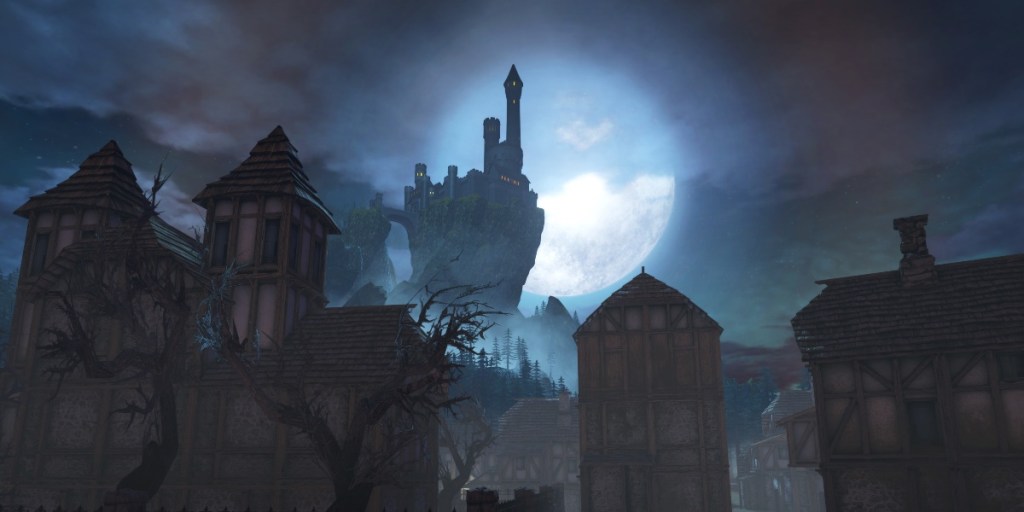
Dungeon crawl adventures in D&D 5e don’t have to be more restrictive or railroaded than any other type. However, it’s hard to deny that an internal environment and set obstacles throughout constrains player freedom.
One way to give this feeling back to your D&D party, and reward them for bravery and cleverness, is to include optional areas in your dungeon.
Technically, all of it is optional in that the characters can leave the dungeon or the players the table. However, putting something entirely out of the way, something completely unneeded to get through the dungeon, with its own risk and reward, is another matter entirely.
This goes double if you hide this optional area. This can be behind secret doors, puzzles, hidden NPC information, etc. Finding the hidden area already gives your PCs an immense feeling of satisfaction, even if they choose not to enter.
Some of D&D 5e‘s best dungeons, such as Castle Ravenloft in Curse of Strahd or the Tomb of the Nine Gods in Tomb of Annihilation, contain huge swathes of extra content. Most players will miss at least some of it, however committed they are.
This is a good thing. If every step of the dungeon is set up so players have to see it, they can feel like they’re not really in control. Adding other paths or hidden wings to your D&D 5e dungeon design is a fantastic way to remove that on-rails feeling.
It’s also a chance to reward your party generously or put harder-than-usual encounters in their way. An epic, unnecessary boss battle to obtain a rare weapon? Few parties could refuse.
Some DMs are wisely worried about their D&D 5e prep time, particularly deliberately spending it on things the players might not find or might choose not to interact with. However, the rewards of this extra effort are worth it if the players do engage.
On a more behind-the-screen note, you can absolutely reuse your D&D 5e DM prep your players don’t see. They won’t know the difference.
These have been five ways to improve your adventures and make the best D&D 5e dungeon crawls possible. If you enjoyed this article, please share it with your fellow DMs and check out other Artificial Twenty content, such as the suggestions below.
For more D&D 5e DMing advice, check out ‘Tropes That Don’t Work Well for D&D 5e DMs‘.
Alternatively, ‘Niche and Underrated Magic Items in D&D 5e‘ is essential reading if you need loot to fill your magnificent dungeon crawls with.
 Artificial Twenty