Combat is one of the most vital parts of Dungeons & Dragons Fifth Edition. It has the largest chunk of the rules devoted to it by far, dominates most characters’ features, and forms the basis of high-conflict, exciting fantasy adventuring.
As a result, it’s important to run the best D&D 5e combat possible as a DM. The rulebooks offer a comprehensive overview of the actual rules needed, with the Dungeon Master’s Guide offering expert advice on assembling encounters. However, there’s so much to it not in the rules.
DMing combat in D&D 5e is as much an art as it is a science. There’s no one way to make fights that work for every DM and every group. However, some things can hold encounters back fairly consistently.
Some of them blow the difficulty so players stomp over seemingly difficult encounters. Some inadvertently drain the fun for players or specific party members, unintentionally hindering them. Whatever the outcome, there are some common combat mistakes in D&D 5e that DMs can avoid and bump up their combat game significantly.
Only Running One Encounter Per Day
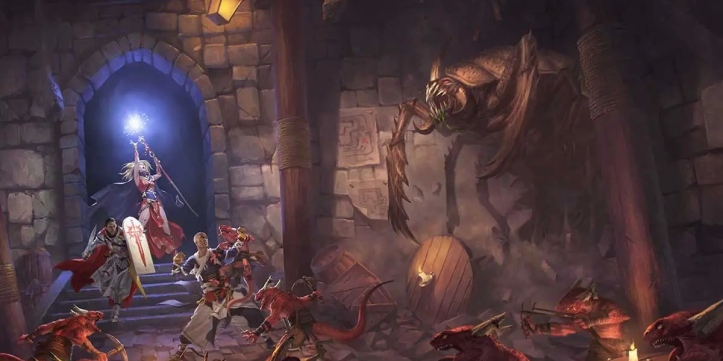
D&D 5e has seen a significant swing toward groups that only run a single combat encounter per day. There are good reasons for this. D&D 5e combat can run slowly and stretch out the pacing of things, and many players are more and more interested in the story side of things.
However, only running a single combat encounter in the D&D 5e adventuring day weakens every combat significantly.
For one thing, it throws every bit of combat balance in D&D 5e completely out of whack. The D&D 5e CR rules are written around the idea of 6-8 medium encounters in a day (I agree, that’s too many) to slowly drain players’ resources. Players are meant to make choices about how quickly they end fights and what they keep in reserve later on.
With just one combat per day, this decision-making goes out the window. Your players are free to dump their highest-level spells and strongest abilities in every fight and punch well above their weight. The result is usually that even powerful monsters get bodied immediately.
Rendering the D&D 5e CR system irrelevant (I promise it works if you get used to it) is only one problem. A one-combat adventuring day in D&D 5e also ruins any semblance of balance between the party members themselves.
Short-rest-based classes in D&D 5e like the Warlock, Fighter, and Monk (and the Rogue, which doesn’t get much back on any sort of rest) thrive in longer adventuring days with one or two short rests throughout. They can go all-out with their (somewhat weaker) abilities while long rest-based classes like the Wizard or Sorcerer have to pace themselves.
If you only have one combat encounter in your D&D 5e session, you inadvertently favour already-powerful classes like Wizard, Cleric, Druid, Bard, and Paladin. They get to go all-out with terrifying abilities while the Fighter hits a few more times, once.
It takes longer, but it is genuinely better for DMing D&D 5e combat to run 3-4 Medium and Hard encounters in a day. Or, at worst, two Deadly encounters (they’re not as deadly as they sound). Your Monks will thank you, and so will your monsters.
Overusing Crowd Control Against Players
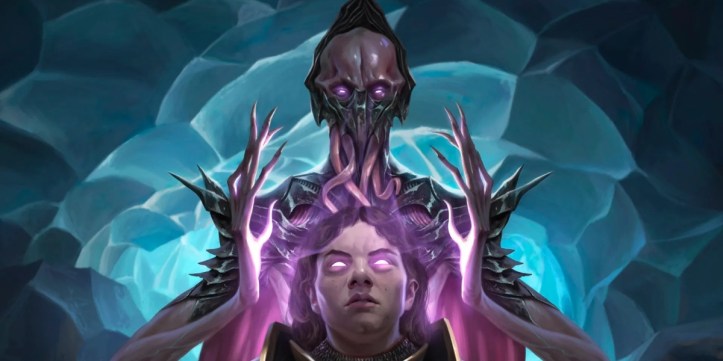
Combat in D&D 5e isn’t just about reducing enemies’ hit points as quickly as possible. Both player characters and NPCs have access to abilities that stun enemies, incapacitate them, frighten them, force them to get jiggy with it, and many other hindrances.
‘Crowd control’ is the catch-all term for D&D 5e abilities that rid characters of movement, actions, or both. It comes in many different flavours but usually trades out damage to reduce how many people can act in combat.
Theoretically, your monsters as a D&D 5e DM can do anything the players can. However, crowd control is something you should use conservatively. You can actively hinder one player’s fun or the table atmosphere by overusing it.
The relationship between the players and DM in D&D 5e is not equal. If the PCs crowd control one of your monsters, even if it’s your favourite, you have plenty else to do. You’ve probably got other NPCs to control. Even if that’s the last one, you still need to pay attention to adjudicate the game.
If a PC in D&D 5e gets Stunned, Paralyzed, Banished, or worse, that player is effectively out of the game. Their only contribution is rolling a saving throw at the end of their turn. Given the average combat lasts two to four rounds, they miss a huge chunk of D&D 5e‘s most exciting part.
At that point, it’s very easy for players, even dedicated ones, to check out, begin looking at their phone, or get fed up with the game. D&D 5e combat can be slow, and having nothing to do in the social activity they’ve set aside their evening/weekend for isn’t fun.
This isn’t to say you should never use crowd control abilities. Hell, some D&D 5e monsters like, Mind Flayers, are built around them. However, be sparing. If possible, use ones that hinder without taking away actions, such as Grappled or Frightened, to build excitement.
Only Putting One Enemy in an Encounter

Solo villains are awesome. Fiction is full of Darth Vaders and Vergils who can hold off a group of good guys or drop into a one-on-one duel as the situation commands. One lone threat against a heroic group is the basis of much fiction, from myth to the modern day.
However, this doesn’t work in D&D 5e. Not even remotely.
Action economy is a big deal. One creature, no matter how impressive, taking one turn against five (also impressive) player characters taking one turn each is a bad match-up. Even if the monster has five times as much health and deals five times as much damage, it’s on the losing side (not least because it only needs to fail one crowd-control saving throw to put up zero resistance).
Most well-prepared D&D 5e parties will shred a single enemy in a fight, even if that enemy is a legitimate threat and a badass. That’s disappointing for the DM who is very fond of that NPC, and quite possibly for the party who hoped for more of a fight.
Even D&D 5e‘s Legendary Actions and Lair Actions only mitigate the issue, rather than solving it.
As with all tips, I’m not saying a solo monster can never work in D&D 5e. Some, like Mythic Monsters, are even built for it. However, the usual way to make it work involves going all-in on how tough that individual monster is, which risks turning disastrous for the party if the dice don’t favour them.
Almost any villain in D&D 5e can have henchmen, tanks, summons, minions, or other convenient sources of fellow NPCs to fight alongside them. Contrive a reason, if you must. If the situation legitimately prevents your bad guy from having anyone else on their team, maybe they deserve to lose badly.
Having multiple enemies when DMing a D&D 5e combat encounter doesn’t just balance the sides and actions. It also gives you more flexibility. You can have minions who focus on forcing Concentration checks, tanks to hold up the hard hitters while the main enemy (if there is one) gets to do their evil, or lower-level spellcasters who can irritate the party until someone hits them once.
The world is your oyster when you use multiple enemies per combat encounter. If you dare to try a single one-enemy encounter in a D&D 5e adventuring day, prepare to be very disappointed.
Repeatedly Accidentally Disadvantaging D&D 5e Martials
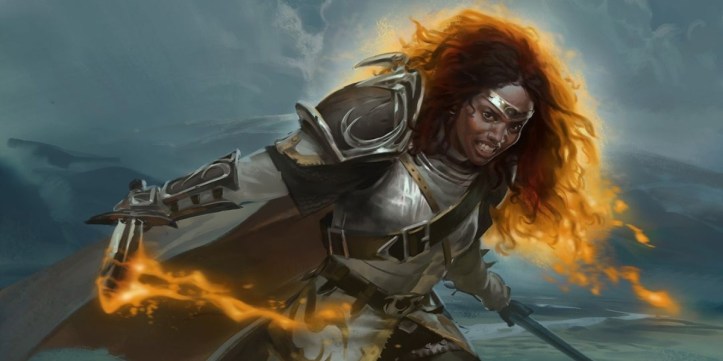
On Artificial Twenty, we always recommend adding variety to your D&D 5e combats with terrain, special rules, unique situations, and more. However, this always comes with a caveat.
It’s very easy to accidentally punish melee martials (who already have a hard time of things) with D&D 5e encounter design while inadvertently favouring ranged characters and spellcasters (who are already pretty favoured).
Some of this ties into earlier tips. Crowd control-heavy fights hit martials harder than spellcasters. Part of this is because (most) martials focus on Strength, Dexterity, and Constitution saving throws, while the worst crowd control effects target Wisdom, Charisma, and (sometimes) Intelligence. Martials also often need to use more movement, so being slowed, Frightened, or Grappled is worse for them.
However, there are countless ways to accidentally make a D&D 5e combat that punishes players who already have it harder.
Vast distances between sides force characters with swords to spend their turns dashing or use their often underwhelming ranged attacks. Archers and spellcasters are free to light the enemy up from a distance, with attacks that cover hundreds of feet.
Obstacles in a D&D 5e battlefield are excellent. However, make sure they’re not something the Fighter can only stare at glumly while the Wizard can simply teleport past, fly over, or ignore with ranged spells.
An unfortunate number of things further stack the odds against martial characters in D&D 5e. Ranged enemies, hidden enemies, hit-and-run enemies, flying enemies (oh god, flying enemies), enemies who deal damage when hit in melee (and it’s always melee), height differences, forced movement effects. It’s worryingly easy to do.
Some fights will suit certain D&D 5e characters better than others. It’s both unavoidable and the perfect way to give everyone a chance to shine. However, for every long-range fight against teleporting flying mages who punish melee attacks, give the party a close-quarters scrap against foes who love grappling and eating Wizards. As a treat.
Building NPCs with PC Rules
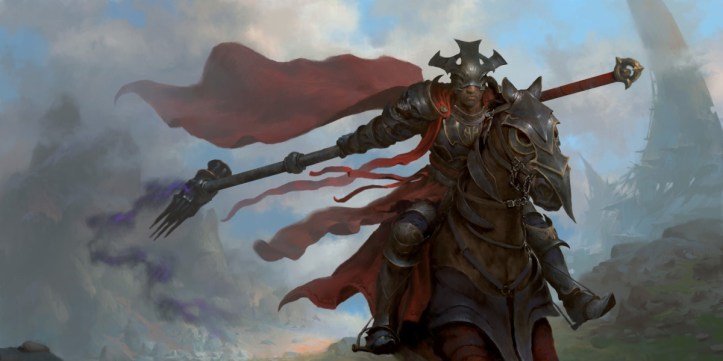
Using D&D 5e character creation rules to make villains, enemies, and NPCs is a very well-worn and very easy-to-make mistake as a DM. The rules are fun, fairly intuitive, and make for capable combatants.
Nonetheless, this is a genuinely bad idea for DMing D&D 5e combat. Even when the Dungeon Master’s Guide confuses things by adding ‘NPC subclasses’ that aren’t really for PCs, it’s a bad idea to try and build enemies using PC rules.
This is because player characters and NPCs have different priorities in D&D 5e. Rather than break down the maths in the DMG, I’m going to simplify it:
NPCs are tanky. PCs hit hard.
A PC statblock has better Armor Class, a higher attack bonus, (usually) significantly more damage potential, much more versatile abilities, and far fewer hit points. Monsters have lower AC (compensated by vastly more hit points), simpler abilities, and typically don’t hit as hard (although there are exceptions).
A monster in D&D 5e combat built like a player character will be an unfun glass cannon. They will be able to demolish any PC’s hit point pool in a couple of turns – if they live past the opening seconds of combat. They’re far too swingy for the relatively well-calculated nature of D&D 5e combat.
They also don’t need to worry about living past the encounter, effectively flipping the ‘one-encounter combat day’ problem against the PCs in a way that increases the risk of a TPK.
If you want to use class and give the idea of a character class in a D&D 5e NPC, please do. Rather than building them with the rules, simply add character abilities to their NPC statblock. Abilities resembling Divine Smite, Battle Master Maneuvers, Rage, Spellcasting, and more make for excellent and fun enemies.
Everything else that goes into making a D&D 5e character does not.
These have been five common mistakes when DMing combat in D&D 5e. As with all of these guides, I’m not saying to never do these things. Just don’t make a habit of it and have a good reason for doing so.
If you’ve enjoyed this article, please share it with your friends. Please also read more Artificial Twenty content like the suggestions below. Thank you!
To take your D&D 5e combat encounters from good to great, check out ‘Five Ways to Spice Up D&D 5e Combat‘.
If your combat’s fine, you might prefer ‘How to Motivate Players as a D&D 5e DM: Tips and Tricks‘ and its DMing advice.
 Artificial Twenty