There are plenty of vital aspects to character creation in Dungeons & Dragons Fifth Edition. Similarly, there are many ways to contribute to a party. Social interaction and utility are every bit as important as combat, and characters can shake up encounters with buffing, healing, or crowd control.
At the same time, sometimes you just want to deal the most damage possible in D&D 5e. You simply want to hit things until they crumble.
Not every D&D 5e class is similarly capable of this. Some are naturally capable of dealing vast amounts of damage, nudged up by clever build choices. Others lack this inherent capability and make you work for it.
Nonetheless, you can customise your D&D 5e character build with any class to hit as hard as the dice will allow. You might need to tweak subclass, feats, spells, or even race, but you can pull it off.
It is worth pointing out that no D&D combat happens in a white room. You never fight spherical goblins in a vacuum. Cooperation, teamwork, and playing sensibly will always yield better results than solo damage builds. But, if you want a reliable basis of D&D weapon damage to build from, this article can probably help.
Just as a note, I’m not going to focus on popular D&D 5e cheese strategies or multiclass builds. You can definitely pump the damage higher than these suggestions, but they often require edge cases or lenient DM rulings. This is for things that should work at every table.
Artillerist Artificer Pumps Out Respectable Damage

Overall, the Artificer is one of D&D 5e‘s least damaging classes. It trades out the base combat potential of the Ranger and Paladin for greater spellcasting and utility. Even the best damage-dealing Artificer builds in D&D 5e will pale compared to martial classes.
With that said, the Artillerist Artificer subclass is your best bet for devastating enemies.
Eldritch Cannons should not be overlooked as a D&D 5e combat build feature. The Force Ballista provides 2d8, then 3d8, and eventually up to 6d8 (with two) long-ranged damage as a bonus action. The Flamethrower offers it as a short-range area-of-effect for cleaning hordes.
At the same time, the D&D 5e Artillerist Artificer gets the best offensive spell list of any subclass. It further boosts these powerful spells, such as Scorching Ray and Fireball, with an additional d8 (that affects every target of an AOE.
Utility and support will always be important to an Artificer build. At the same time, an Artillerist who casts a buffed Fireball and lets two cannons rip will deal eye-watering damage in D&D 5e combat.
Barbarian’s Reckless Attack is Built for Great Weapon Master
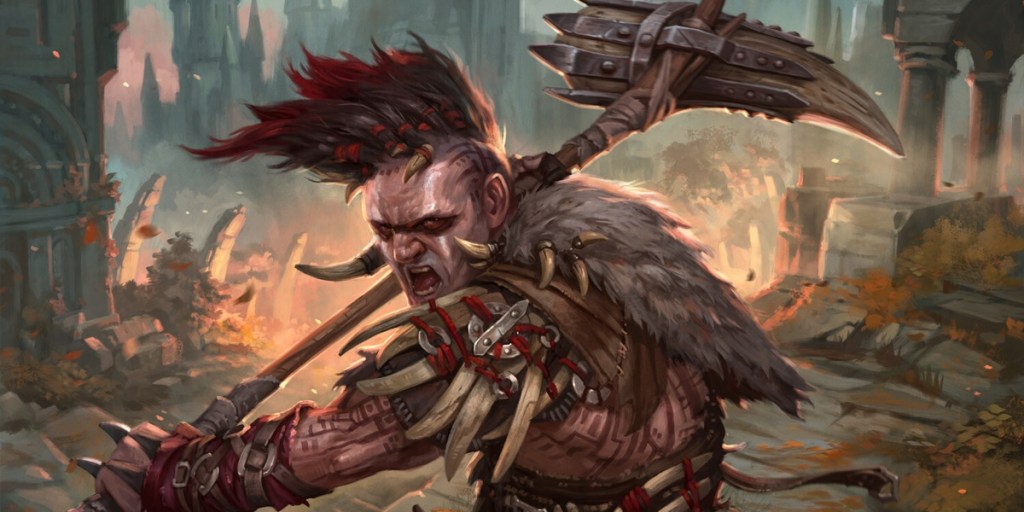
Barbarians are meant as straightforward combat builds in D&D 5e. Their class lacks too much complexity in favour of reliable abilities that buff their damage and toughness. If you want to deal the best damage with a D&D 5e Barbarian build, you should lean into this.
In particular, the Barbarian’s Reckless Attack feature is tailor-made to work with one of D&D 5e‘s best combat feats. Great Weapon Master provides a huge damage increase in exchange for an accuracy penalty. Reckless Attack all but negates this with unlimited advantage on every melee attack.
You will take more damage as a trade-off, but that’s what a d12 hit die and Rage damage resistances are for. As an added bonus, Reckless Attack doubles your chances of a critical hit, adding Brutal Critical into the mix.
If you want damage with no other considerations, then the Berserker is the best D&D 5e Barbarian subclass in a fight. A bonus action attack, powered by Reckless Attack and Great Weapon Master, skyrockets your damage. However, this is costly.
A Zealot Barbarian build is a more reasonable option to still hit hard every turn – and GWM will sometimes get you a bonus action attack anyway.
Feat-hungry D&D 5e builds can take Polearm Master as well to boost the Barbarian’s number of attacks. Even with a smaller weapon damage die, stacking Rage damage and Great Weapon Master makes the third attack devastating.
Bards Can Exploit Buffs When It Counts

The Bard is another class not optimised for D&D combat. It dominates almost every other part of the adventuring day but falls behind its fellows when the weapons come out. It’s not useless, it’s just not a specialist.
Nonetheless, Bard players know their D&D class can be built to hold its own in a fight. The College of Swords and College of Valor D&D 5e subclasses are built to use weapons – although the Swords Bard has a slight edge in dealing damage.
For the best combat performance, a D&D Bard build will need to use buff spells. An upcasted Shadow Blade adding significant damage to every hit, alongside the Swords Bard’s Blade Flourishes, will hit above its weight class.
Other buff spells, such as Tenser’s Transformation or Holy Weapon, work better for D&D Swords Bard build who already has good magic weapons.
Shapechange is another high-level spell that a Bard can use to vastly up their damage in a fight.
Alternatively, if you don’t mind going hands-off, Animate Objects is an innate Bard spell in D&D 5e that severely tilts the damage and action economy in the players’ favour.
Cleric Has Two Ideal High-Damage Subclasses

The Cleric is one of D&D 5e‘s most versatile classes. With their choice of subclass, they can excel in support, utility, crowd control. A handful of choices even specialise in damage.
The best D&D Cleric builds for damage won’t necessarily use the best or most well-rounded subclasses. While the Twilight and Peace Domains can trivialise combat, they don’t have any particular advantages in dealing damage.
The D&D 5e Light Domain Cleric holds a near-monopoly on area-of-effect damage for the class. All Clerics get a few widespread damage spells, but the Light Cleric gets new ones at most spell levels. This includes ever-useful and iconic D&D 5e spells like Fireball.
These spells don’t get more potent than normal until very high levels, when the Light Cleric gets Corona of Light. Disadvantage on saving throws for all targets of Fire or Radiant spells racks up the damage quickly.
For single-target damage, the best D&D build for Clerics is the Death Domain. Its martial weapon proficiency is a bit of a trap, especially with medium armour. However, Touch of Death is effectively a fixed-damage Divine Smite that applies to melee spell attacks.
It’s a high-risk, high-reward playstyle, but a D&D 5e Death Domain Cleric build can use Touch of Death with Inflict Wounds to great effect. Multiple d10s plus anywhere between 9 and 45 extra damage will devastate most foes. You can even swap in Vampiric Touch to trade a bit of damage for surprisingly high self-healing.
Clerics can do far more than damage in D&D combat. If you want to see high numbers, however, the Light and Death Domains are your friends.
Druid Can Wield Repeatable Damage Spells or Rewrite the Terrain

Burst damage is one of the Druid’s rare weaknesses in D&D 5e. While their spell list is vast and versatile, they lack many fire-and-forget spells that can deal high damage. Even the combat-focused Circle of the Moon D&D 5e subclass is more about resilience than murder.
Most Druid damage options in D&D revolve around reliable, repeatable damage. Call Lightning won’t make enemies crumble in one hit. However, it provides excellent efficiency. Cast it once, and you can repeat the area-of-effect strike every turn without spending another spell slot.
The same is true of Heat Metal. This trades Call Lightning’s area-of-effect for single-target debuffs and using a bonus action to repeat the damage. You can consistently bane one foe with it while using other spells elsewhere.
This applies doubly if you upcast your Druid spells. It still won’t be the best D&D build for damage, but those extra d8s and d10s add up when you get them every turn. Add them each time to multiple foes with Call Lightning and the damage racks up impressively.
If you do want some non-Concentration damage spells to add to your repertoire, perhaps to use alongside Heat Metal, Circle of the Land is the best D&D 5e Druid subclass for you. Arctic gets you Cone of Cold (eventually) and Mountain get Lightning Bolt. Either one of these can provide a useful fire-and-forget option.
A more niche way to deal high damage in D&D 5e as a Druid is Spike Growth. There’s no limit on how many times its 2d4 damage per five feet of movement applies to a target. If have allies who can move an enemy, a way to grapple them through it and not harm yourself, or a way to make them fall through the entire length of it, you can deal dozens of d4s of damage every turn.
However, this does rely on specific team compositions or D&D combat situations, neither of which you can always count on.
Fighters Can Pile Riders on Their Many, Many Attacks
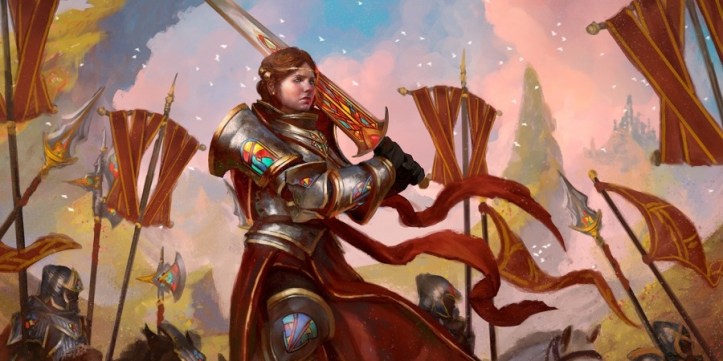
The Fighter’s unique combat niche in D&D 5e is their many attacks. Most martials get the Extra Attack feature, but only Fighters get it for their third and fourth attacks.
With Action Surge, this can lead to even a non-optimised Fighter hitting six or eight times in a single turn.
As a result, the best way to push up a Fighter’s weapon damage in D&D 5e is to find traits that boost damage on every attack. This isn’t a bad idea for any martial class, but it pays off so much more with the Fighter.
Bugbear, one of D&D 5e‘s best races, especially pays off here. Somehow, it can deal 2d6 damage on every attack against a target who hasn’t yet acted. Even if this only applies in the first turn, it’s an eye-watering amount of extra damage, almost for free.
Certain feats, such as Gift of the Chromatic Dragon or Fey-Touched (for Hunter’s Mark/Hex), also provide bonus damage on every hit. Take these as a Fighter and profit.
This also extends to Sharpshooter and Great Weapon Master. Other martials benefit from these feats, Fighters excel with them. They can apply the +10 damage on so many more attacks than other classes.
Sharpshooter is the better of the two, if only because the Archery Fighting Style’s +2 to hit makes the accuracy penalty less painful.
Fighters in D&D 5e also get enough bonus ASIs to take feat combinations that other classes might find punishing. It’s no sweat to take both Sharpshooter and Crossbow Expert or Great Weapon Master and Polearm Master (for up to five attacks on a normal turn).
Samurai are an easy way to make a high-damage build in D&D 5e, if only for even more attacks and on-tap advantage. Alternatively, canny Battle Masters can provide similar benefits through careful use of Maneuvers (such as knocking enemies prone and attacking in melee).
Way of Mercy Gives Monks More Teeth

Of all D&D 5e‘s martial classes, Monks are the least-damage focused. They’re less likely to trade blows and whittle enemies’ hit points down. Instead, they’re best as ambush predators, rendering dangerous enemies helpless or punishing vulnerable ones.
That said, you can still make a Monk into a reasonable D&D damage build on top of their other strengths.
Obviously, Flurry of Blows plays a part. Four attacks is far too attractive to pass up, especially when you want the best D&D combat build.
The Way of Mercy is the best Monk subclass in D&D 5e for hitting enemies hard. Hands of Harm effectively doubles the damage of one attack – particularly ideal on a crit. At higher levels, it even becomes free when you use Flurry of Blows, giving you no reason not to use it.
Unusually, on-hit damage bonuses are a hard sell for most D&D 5e Monk builds. Something like Hex, which costs a bonus action to cast, will struggle to pay for itself versus a Flurry of Blows. It’s not a terrible idea, just one that needs to be balanced carefully.
Bugbear, however, is a stellar choice. Up to an extra 8d6 damage, for very little cost, on the first turn of D&D combat is a perfect way to boost those numbers higher.
Stunning your target early helps. A big part of D&D weapon damage is hitting, and advantage on every attack goes a long way.
Despite the mental image of a Monk, using a weapon is imperative for dealing the highest damage. A quarterstaff or spear’s d8 (or even a d10 if you can wrangle proficiency with a longsword somehow) is significantly better than a punch’s d4. Even at higher levels, when Martial Arts evens out, magic weapons are always a good idea.
Vengeance Paladins with Polearms Own the Battlefield
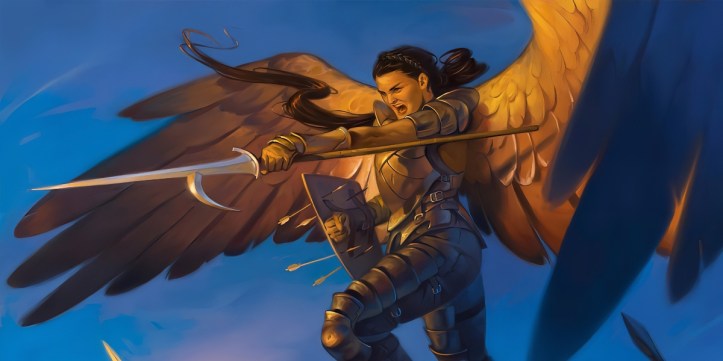
Paladins are a top-tier D&D class for combat, on top of being good healers and smooth-talkers. Divine Smite is a ready-made feature for burst damage. It provides extra punch to any melee weapon attack that, while expensive, most martials would kill for.
Divine Smite is particularly invaluable on a critical hit in D&D 5e. It’s far more cost-efficient, and flat-out melts foes. A high-level smite, doubled, takes a hefty chunk out of any HP total in the game.
This is one of the reasons why the Oath of Vengeance is one of the best D&D builds for damage. Vow of Enmity effectively gives advantage against one foe per short rest. This doubles the likelihood of critical hits, making it a certified boss killer.
Oath of Vengeance’s Vow of Enmity also helps accommodate Great Weapon Master. Paladins don’t have an innate way to offset a -5 to-hit penalty like the Barbarian. They need to rely on subclass features to do the trick. The Oath of Devotion’s Sacred Weapon is nice – but it doesn’t have the same crit bonuses.
It’s worth the trade-off, though. Great Weapon Master and Divine Smite together tear through any enemy in D&D 5e.
Polearm Master is another necessity for doing the most D&D damage as a Paladin. Improved Divine Smite adds damage to every attack. A hard-hitting third strike per turn is exactly what’s needed to take it from a decent feature to a top-tier one.
Gloom Stalker Rangers Alpha Strike Hard

The Ranger D&D class, for all its flaws (most of which have been fixed), has never been a bad damage-dealer. Its multitude of damage-boosting subclass features, alongside efficient spells like Hunter’s Mark, have kept it competitive.
However, one Ranger subclass in D&D 5e rules the roost when it comes to damage. Better yet, it pulls it off entirely on the first turn of combat – when you have the best chance of killing something before it harms your friends.
Dread Ambusher is one of the best abilities in the game. It gives an entire extra attack on the first turn of combat. If that weren’t enough, it buffs that attack’s damage even further.
Honestly, just playing a regular, unoptimised Gloom Stalker build in D&D 5e is a good way to outdamage your party. However, you can push it even further.
Sharpshooter feels like a risk, especially when you want every attack on your first turn to hit. However, D&D 5e Gloom Stalker Rangers are invisible to creatures using Darkvision to see them – which is most creatures in most dungeons. That’s a lot of advantage to gun foes down with.
Bugbear is even more synergistic with this D&D damage build than most others. Its bonus damage also all comes on the first turn, boosting every attack. An extra strike on the first turn of combat feels tailor-made for it.
Multiclassing in D&D 5e is largely outside this article’s purview. However, I will just note that two levels of Fighter work hideously well to boost a Gloom Stalker Ranger’s damage even further. Dread Ambusher triggers twice, giving you two extra attacks. Just think about it.
Rogues Hit Hard with Their Reaction

Unlike many D&D damage strategies, the Rogue is less about character-building. The best way to bolster their damage – effectively doubling it – is through changing their playstyle.
Unlike every other class in the game, Rogues use Sneak Attack for high-damage, single-target strikes. This happens once per turn. Not, as it’s easy to misread, once per round.
If a Rogue hits on somebody else’s turn, using their reaction, they can apply their D&D 5e Sneak Attack damage a second time. If you find a way to do this consistently, you’re effectively doubling your damage.
The difficulty comes in landing a reaction attack every single round – or at least most of them – – while also maintaining the conditions needed to Sneak Attack. Opportunity attacks in D&D 5e aren’t that common, especially when a Rogue is a good target to stand next to and hit.
Allied help is invaluable. Battle Master Fighter or Order Domain Cleric have innate abilities that let allies make reaction attacks. However, these are resource-limited and require specific party compositions.
An ally with Haste is a more likely choice. You use your Haste action to attack once (all a D&D 5e Rogue needs per turn anyway). Then, you use your regular action to Ready an attack for some likely trigger (such as an enemy ending their turn next to you).
The Sentinel feat is another possible way for a D&D 5e Rogue to trigger Sneak Attack consistently with their reaction. However, it’s a tanky feat for a class with light armour and a d8 hit die.
Ultimately, maximising your D&D combat damage as a Rogue is as much an art form as it is a science. Try out different techniques with your party, DM, and enemies, see which get you more reaction attacks.
On a build note, high-damage Rogues benefit from the Arcane Trickster D&D 5e subclass. Booming Blade adds extra damage to Sneak Attack and provides a fun rider. Furthermore, melee is easier for triggering reaction attacks, so its lack of range isn’t too much of a drawback.
Sorcerers Blast Better with Metamagic

Like most D&D 5e spellcaster classes, Sorcerers get much of their damage from area-of-effect attacks. Even if they can’t shred single targets as well as martials, they excel in ruining groups of enemies.
Sorcerers, in their nature as specialist spellcasters, can be better at this than almost any of the competition. Just as they can be top-tier buffers, crowd-controllers, or debuffers, their spells and Metamagic can make for a finely-tuned blasting machine.
Quickened Spell and Empowered Spell together make for potent damage. By Quickening a levelled blasting spell, a D&D 5e Sorcerer build can double down with a cantrip to pick off a weakened enemy. Even if (up to) 4d10 damage doesn’t seem like much, it can be the difference between a foe living and dying.
Empowered Spell is easy to overlook next to famous choices like Subtle Spell and Twinned Spell. However, it’s cheap to reroll up to 5 damage dice. When you’re hitting multiple foes, turning even a single 1 or 2 into a six yields a lot of damage. Even better, it’s a rare Metamagic option that stacks with others.
The Draconic Soul remains the best D&D 5e Sorcerer subclass for blasting, even if it falls behind in other areas like spell selection. Few enough subclasses in D&D 5e can add their spellcasting modifier to the damage of their AOE spells – yet another boost that can tip foes over the edge.
In another quick multiclassing tip, two levels of Warlock is an infamous way to make the D&D 5e Sorcerer a damage-dealer. No cantrip can compete with Eldritch Blast and Agonizing Blast. If you use it in combination with Quickened Spell (either for an AOE or just to cast it twice), very little can stand against you.
Hexblade or Undead Warlocks Boost the Best Cantrip Further

Warlocks already have D&D 5e‘s most damaging cantrip in Eldritch Blast. With Agonizing Blast, they almost double the at-will damage any other D&D spellcaster class. This is to make up for their unique Pact Magic being more restrictive and limited than Spellcasting.
To boost this D&D damage further, they have two subclasses that stand out as the best options.
The infamous Hexblade Warlock subclass in D&D 5e has absurd damage potential. Its Hexblade’s Curse adds up to six damage per hit, doesn’t use Concentration, and stacks with Hex. With up to four Eldritch Blasts per turn, that’s a lot of damage adding up.
Hexblade’s Curse also doubles the chance of a critical hit – not insignificant when your blast uses a decent damage die.
The Undead Patron is another good choice for the best build in D&D for Warlock damage. Form of Dread, past level six, lets you roll another damage die on one attack per turn. In effect, it provides a free critical hit every turn – but one that stacks with a Natural 20.
Whether you go for the Hexblade or Undead D&D 5e Warlock subclasses, there are a few ways to boost your damage through playstyle. Consistent advantage is a good one – particularly with Hexblade’s Curse. Either using the Darkness spell with Devil’s Sight works, or simply casting Shadow of Moil at higher levels (which comes with other damage perks).
Wizards Should Mix Types of Damage Spells For Maximum Impact

As with everything, the Wizard D&D class does the most damage when it abuses having the single biggest spell list in the game. Wizards can excel at anything they turn their minds to through magic, and combat is no different.
For the obvious, a damage-focused Wizard D&D 5e build should choose the School of Evocation. Other subclasses are better, but that one focuses on raw damage above all else.
This build assumes you’re not doing unwieldy strategies like summoning eight thousand undead with the School of Necromancy.
Empowered Evocation is a flat damage bonus to Evocation spells (read: most of the damaging ones). Particularly when you apply it to area-of-effect spells with multiple targets, this stacks up quickly.
The School of Evocation also offers Overchannel. You cause any spell to deal maximum damage automatically, at the cost of taking damage on your second and subsequent time using it in a day. It’s a strange companion to the Barbarian’s D&D damage build. You trade durability for the ability to kill something there and then.
To get the most out of Wizard spells for damage, you should combine two types. Concentration spells that deal damage over time, and non-Concentration Evocation spells you can add on top of them.
If you can get multiple enemies taking damage every turn from Wall of Fire, or Animate Objects, or Cloudkill, and then pound them every turn with a Fireball, Lightning Bolt, or Cone of Cold, they’ll perish quickly.
This has been a guide on how to get the most damage in D&D 5e combat out of every class. It’s a little longer than what I normally do, and a little more focused on specific strategies. At the same time, I’ve tried to avoid infamous cheese or overly convoluted multiclass builds.
If you’ve enjoyed this, please do share it with your friends (or hide it, if you’re a DM). Please also check out other Artificial Twenty content, like the suggestions down below. Thank you!
Damage is fun, but it’s not the only thing. Check out ‘Fun D&D 5e Builds: How to Put a New Spin on Five Subclasses‘ for some other ways to build a character.
If you’re a DM trying to keep up with the other side of things, ‘How to DM D&D 5e Combat: Common Mistakes to Avoid‘ might instead be what you need.
 Artificial Twenty