Support is a vital party role in Dungeons & Dragons. Healing and buffing, both in-combat and out-of-combat, are vital force multipliers to keep the party effective.
Five support characters might struggle to kill a dragon, but one D&D 5e support build in a party of damage-dealers can help take down six.
Some classes lend themselves more naturally to a D&D 5e healing or support build than others. Many focus on more direct combat, tanking, or utility than bringing their allies up. However, there isn’t a single class in D&D 5e that has no way of helping their allies, as rare as these features might be.
Whatever sort of D&D 5e character you’re playing, you can go out of your way to help your party – if you think they deserve it.
Artificer Doesn’t Just Improve Allies, But Their Equipment Too

The Artificer is a unique D&D 5e half-caster class. Whilst the Paladin and Ranger focus more on combat than anything else, the Artificer leans hard into both utility and support. Overall, they’re more there to help their party than kill bad guys.
The base Artificer class has plenty of conventional support features, as well as a few more esoteric ones. Their spell list has plenty of effective D&D 5e healing and buffing options, including Guidance, Cure Wounds, Sanctuary, Aid, Enhance Ability, Haste, and Greater Restoration. They don’t quite have all the Divine Magic staples, but they’re far from poor.
Flash of Genius is a beautiful D&D 5e Artificer support feature. As a reaction, the Artificer can provide up to +5 (typically) to an ally’s ability check or saving throw. This can’t affect attacks, but it can avert disaster or make a high-stakes roll succeed.
Spell-Storing Item is a more unusual support class feature in D&D 5e. It lets an ally cast a first or second-level Artificer spell up to 10 times. From letting allies buff themselves, spreading around healing, or simply expanding allies’ or your own toolkits, it’s top-tier support.
Most Artificer subclasses in D&D 5e provide some supportive tools. Only the Armorer is lacking, compensating with an offensive spell list and an optional tanking focus.
The Alchemist Artificer in D&D 5e has buffed healing, a wide range of bonus support spells (including Healing Word), and a central class feature that buffs allies. The Artillerist can spread eye-watering numbers of temporary hit points to allies, whilst the Battle Smith can heal and attack simultaneously with Arcane Jolt.
The D&D 5e Artificer also has a near-unique way to support allies through Artificer Infusions. Rather than limited buffs to party members, they can semi-permanently improve their equipment. Whether you unlock new abilities or simply give the Barbarian a free +2 weapon, this is a powerful way to boost your party in D&D 5e.
Bard Leans On Innate Features and a Stacked Spell List
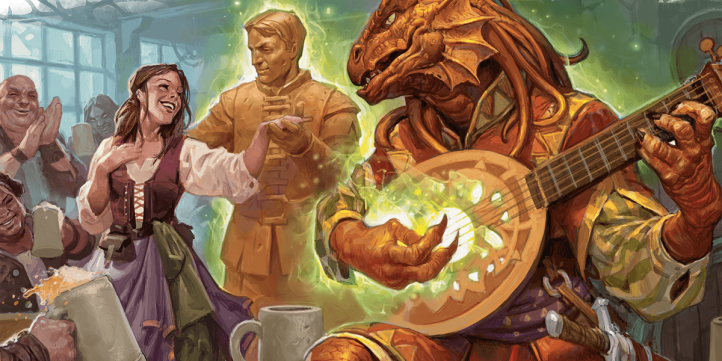
The Bard has long been one of D&D‘s iconic support classes, with only the Cleric and Paladin having a longer reputation.
This is never better shown than in their central class feature. D&D 5e Bardic Inspiration, at its base, is a free d6 (later going as high as d12) you gift to allies for them to add to an attack roll, ability check, or saving throw of their choice. Outside of specific class features, the Bard can only use Bardic Inspiration on allies, not themselves.
Some subclasses let the D&D 5e Bard spend Bardic Inspiration to fuel their own abilities, including the College of Swords’ Blade Flourishes, the College of Whispers’ Psychic Blades, or the College of Spirits’ Tales from Beyond.
However, others provide new ways to help allies, whether by boosting their AC or damage (Valor), mitigating enemy attacks (Lore), providing movement and temporary hit points (Glamor) or others.
Bardic Inspiration isn’t the only way to provide D&D 5e healing and buffing for Bards, however. They have more minor features to help allies, such as Countercharm (highly situational) or Song of Rest (minor but never unwelcome extra healing).
However, the other meat for a D&D 5e Bard’s support abilities comes from their spell list. Although it lacks many direct damage options, the Bard’s nine levels of spells are stuffed full of ways to boost allies.
You can heal them as an action or bonus action. You can boost their abilities. You can make allies invisible mid-combat. You can teleport them in or out of danger. At higher levels, you can give them advantage on every d20 roll they make in a day.
Any support spells your D&D 5e Bard lacks, they can fill up the shortfall with Magical Secrets.
There’s almost nothing that can compete with how much a high-level Bard build loves their friends. They’re almost unmatched for the best support build in D&D 5e.
Barbarian Relies on Infrequent Subclass Abilities for Support

The Barbarian is nobody’s first thought for a D&D 5e support class. Its primary way of contributing tends to be taking and receiving damage, dominating in combat to give allies some breathing room.
The D&D 5e Barbarian doesn’t have any base features for buffing allies, and definitely none for healing them. It typically takes a pre-emptive approach by tanking and reducing incoming damage.
However, you can support allies as a Barbarian if you dig deep. A surprising number of subclasses include features for buffing allies or boosting their durability, representing the Barbarian as a charismatic war leader or primordial force of nature.
The D&D 5e Ancestral Guardian Barbarian’s Spirit Shield reduces damage against an ally by 2d6 (later increasing up to 4d6) as a reaction every turn. Given their tanking feature can provide damage Resistance, they might well reduce an attack’s damage to 0.
The Storm Herald’s Tundra aura is the only one with a defensive ability. Every ally in the aura gets temporary hit points as a bonus action. Even with relatively low numbers, this is a persistent durability buff for the entire party.
The Wild Magic Barbarian in D&D 5e gets it twofold. Wild Surge can boost nearby allies’ Amor Class. Bolstering Magic provides a Bless-lite effect to an ally or restores spell slots (!!) for spellcaters. Either is a powerful support tool.
On the more offensive side of a D&D 5e support build, the Wolf Totem Warrior gives advantage on allies’ attacks, whilst the Path of the Zealot gives once-per-day advantage on saving throws and attack rolls for a turn to the entire party. The Path of the Beast’s Call the Hunt is a complex feature that lets allies inflict bonus damage in return for giving the Barbarian temporary hit points.
You can’t make the best support build in D&D 5e from the Barbarian, but it has a nice array of subclasses with genuinely impactful support features.
Cleric Still Rules the Roost with Support Spells and Features

The Cleric class is far more than a D&D 5e healer. Its abilities have broadened to smash the old stereotype, with different subclasses excelling at damage, utility, and more.
When the D&D 5e Cleric wants, however, it’s still one of the best support classes in the game.
The Cleric spell list is one of the best sources for support spells of every type. Almost every healing spell in D&D 5e finds its way onto the Cleric’s spell list. Although it lacks some arcane buffs like Haste and Fly, it still has top-tier ways to bolster and aid your party, including Guidance, Bless, Shield of Faith, Aura of Vitality, Dispel Magic, Death Ward, Heal, and many more.
A character with nothing more than Cleric spellcasting could be an excellent support build in D&D 5e. This is on top of its excellent use in other areas.
However, Clerics can double down on supporting allies with their choice of Divine Domain.
Life Cleric, as the name suggests, is D&D 5e‘s best healer in raw numbers. Grave Domain protects allies at the point of death and skyrockets party damage at crucial moments. The D&D 5e Order Domain Cleric lets allies attack out of turn, potentially boosting a character’s damage massively.
Peace and Twilight Domain Clerics in D&D 5e are so good at support that they almost break the game in half. Both make it near-impossible to down a single party member while providing numerous other buffs.
You can make a Cleric good at any role. However, it’s easier than most to make them the best support class in D&D 5e.
Druid Gets General Spells and Healer Subclasses

The Druid is one of the best all-around spellcasters in D&D 5e. Their vast list of spells to prepare covers almost every area, with only a slight weakness in direct damage.
The Druid spell list contains plenty of ways to help your allies, most of which it shares with the Cleric. However, it doesn’t specialise as hard in it as the D&D 5e Cleric’s spell selection does – while having more to compete with.
The average Druid in D&D 5e might not be as effective a support build as the average Cleric. However, players can specialise into it if they want.
The Circle of Stars helps to double down on healing allies – literally. When you cast a healing spell while invoking The Chalice constellation, you can heal a second ally (including yourself) for free. The hit points it gives are better than Healing Word. Cosmic Omen can also impair enemies or bolster allies, further pushing into support territory.
The Circle of Wildfire Druid makes for an unusual D&D 5e support build, seeing as it splits its focus between aid and damage. Its spell list contains options like Cure Wounds, Revivify, and Fire Shield among its combat options. The Wildfire Spirit can teleport allies.
When it comes to Druid support builds in D&D 5e, however, the Circle of Dreams is clearly built for it from the ground up. Its central ability is a vast reservoir of bonus action healing that doesn’t consume spell slots. Even if its other party-oriented features are wonky, Balm of the Summer Court is worth serious consideration.
Fighter Needs to Dig for Supportive Subclasses

Like most martials, the Fighter is more focused on devastating foes than providing D&D 5e healing for its allies. It hits hard and lacks much in the way of combat medicine.
In terms of base class features, the Fighter only really has the Protection and (almost directly better) Interception Fighting Styles. Given they use no resources, however, they do let a Fighter prevent thousands of points of damage throughout a campaign.
Otherwise, the Fighter has to look to its subclasses for support abilities in D&D 5e.
Technically speaking, the Banneret (Purple Dragon Knight) exists. However, its added area healing to Second Wind and party attacks with Action Surge don’t do much to make it viable.
The Eldritch Knight does get a few defensive and buff spells from its Wizard spellcasting. However, they’re almost always best used on the Fighter themselves.
For D&D 5e Fighters, the Battle Master is one of their best support subclasses. With the right choice of Battle Master Maneuvers, they can provide allies with temporary hit points, covering fire, bonus attacks, additional mobility, and more.
The Rune Knight is a surprisingly good subclass for D&D 5e support build Fighters. Runes like Cloud and Storm provide protection or boosts for allies, whilst Runic Shield provides long-distance protection from attacks.
Monk Breaks Out of the Self-Reliance for One Subclass

It may surprise some players that the Monk is one of the worst D&D 5e classes for support. It’s a skirmish-style combatant that expects to spend a lot of time alone on the battlefield. As a result, any of its healing or defensive features tend to affect it and nobody else.
No Monk base class features directly help the party. They enable a Monk to do their role well, but that role doesn’t cover buffing or healing allies. Even with Tasha’s Cauldron of Everything, Quickened Healing is a self-targeting heal.
Outside of a vanishingly small handful of abilities (such as the Way of the Ascendant Dragon’s resistance aura), the only support-focused Monk subclass is the aptly named Way of Mercy.
Although it has a sideline in poisoning foes, the Way of Mercy Monk in D&D 5e has most of its features oriented toward healing allies.
Hands of Healing lets the Monk heal allies for a modest amount and comes free in a Flurry of Blows. The Monk can simultaneously revive an unconscious ally and bludgeon the enemy who put them in that state.
Physician’s Touch lets you cure debuffs as well as hit point damage, whilst Flurry of Healing and Harm spreads the love to multiple allies. Hands of Ultimate Mercy go one step further and let you raise the dead. Given how high-level and restrictive most resurrection magic is in D&D 5e, and how this doesn’t require components, it’s an excellent support tool.
Non-Mercy Monks do have an unconventional way to provide D&D 5e healing. Their high movement speed and Step of the Wind make them able to cover vast distances on the battlefield without risk. If you take a big bag of potions, you can provide healing and buffing services to allies at the drop of a hat – at the cost of feeling a bit like an ambulance.
Paladin Gets Support Features Every Step of the Way

The D&D 5e Paladin can’t quite match the Cleric in raw support magic. This is about the only way it falls short.
The designers were worried that players would get bored of the Paladin being one of D&D 5e‘s best classes for damage, tanking, and social interaction. As a result, they made it one of the game’s best support builds as well.
From first level, the Paladin gets top-tier D&D 5e support features. Lay on Hands costs an action, but is a spell slot-free way to pump serious healing into a creature and to cure many conditions.
It’s also not like the Paladin’s D&D 5e healing and buffing spellcasting is bad. Spells like Shield of Faith and Sanctuary are always welcome, and their spells can patch the holes where Lay on Hands fails. At higher levels, they even get area-based buff spells like Crusader’s Mantle to help the entire party hit harder.
This ties in with the Paladin’s Auras, which are among the best D&D 5e support build features available. Other builds need to take actions or bonus actions to help allies. Paladins have to stand there.
Aura of Protection is an eye-watering baseline ability that buffs the saving throws of nearby allies (and yourself) by your Charisma bonus. Even a +2 to all saves is absurd in D&D 5e, and a +5 is horrendous.
Other buffs fill the same area and provide boosts at the same time. Aura of Courage (base class) negates Frightened. Aura of Devotion (Oath of Devotion) negates Charmed. Aura of Warding (Ancients) halves spell damage. Aura of the Sentinel has the rare effect of making allies act first in combat.
Some other D&D 5e Paladin subclasses have non-Aura support features, especially in their Channel Divinity. The Oath of Glory gives Inspiring Smite to give nearby allies temporary hit points and Glorious Defense to provide durability. Oath of the Crown has a conditional Mass Healing Word from a low level in Turn the Tide.
Ranger Coasts By on Its Spell List

The Ranger in Dungeons & Dragons has often been a loner-esque type, more focused on self-reliance than on helping others.
However, because it’s also Aragorn, it gets Cure Wounds. Thus begins the minimal (but present) support role of the Ranger.
Fundamentally, nothing in the D&D 5e Ranger’s toolbox suits support builds. Even its exploration-focused abilities, which do things like feed the entire party, tend to get left by the wayside.
Most Ranger subclasses aren’t any better for D&D 5e support builds, instead focusing on different niches of combat superiority and utility. Very few abilities even mention allies.
Nonetheless, the Ranger gets a watered-down version of the D&D 5e Druid spell list, with a focus on combat buffs, natural utility, and some slight healing. They get Cure Wounds, Aid, Healing Spirit, Lesser Restoration, Revivify, and Greater Restoration. This is, for the most part, the extent of the Ranger’s capacity for D&D 5e healing and buffing.
You don’t want to spend combat running around with Cure Wounds, it detracts from your main role and costs limited spell slots. However, there’s no harm in having a few support spells in your back pocket, just in case.
Rogue Lives Up to the Name with Few Support Abilities

Like D&D 5e‘s other loner classes, the Rogue doesn’t much go out of its way to help people. The name doesn’t conjure to mind a helpful wandering healer, and the class doesn’t pretend to be one.
The Rogue does their job expertly, be it infiltrating a noble’s mansion or Sneak Attacking enemies to death and hiding. They rely on other party members to do the same.
Nothing in the base Rogue class lends itself to a D&D 5e support build. Neither do its subclasses, despite a theme of general competence. Hell, a high-level Mastermind can indulge in anti-support, making allies take damage in its place.
If you squint, the Arcane Trickster can pick up a few buffs with its Wizard spellcasting, especially with Enchantment as one of its schools. However, like the Eldritch Knight, it often has better things to be doing.
With the Healer feat, a D&D 5e Thief Rogue can also make an unconventional support character. Fast Hands lets them use a Healer’s Kit as a bonus action. Effectively, you spend gold for the ability to bring allies back to their feet at melee range or give them a few bonus hit points.
Sorcerer Makes an Excellent Buffer

Most arcane spellcasters in D&D 5e can dabble in support, at the very least. They get an excellent selection of buffs, including game-changing spells like Haste.
The Sorcerer does it better than most for a few reasons. For one, they have proficiency in Constitution saving throws as a baseline – the only full spellcasters to do so. Almost every support spell in D&D 5e requires Concentration, and Sorcerers lose it less than everyone else.
For another, Metamagic makes many buffs significantly better. Twin Spell allows the best buffs to affect two targets, something most other D&D 5e support builds can’t replicate. Two Hasted martials will destroy the enemy – as long as you don’t lose Concentration.
As a result, most Sorcerers in D&D 5e make great support characters if they focus on buff spells.
The Divine Soul Sorcerer goes even further. It gets total and unfettered access to the Cleric spell list, mentioned above as having a who’s-who of top-tier healing spells. Twin a Healing Word to bring two allies up or a Heal to restore 140 hit points for one slot.
Between the Sorcerer and Cleric spell lists, a D&D 5e Divine Soul Sorcerer support build has access to almost every buffing and healing spell. Your low spells known will hurt, but you still have the best support build buffet available.
The Clockwork Soul Sorcerer is also a reasonable choice for a support build, given its ability to choose Abjuration and Transmutation spells from three different classes.
Warlock Gets One Healer Subclass

The Warlock is another D&D 5e class that doesn’t bring team spirit and hugs to mind. There’s nothing saying that they have to be evil or selfish. However, their lore and abilities tend to be very self-focused, with a lot of utility and damage options available.
This has been slightly rectified with Tasha’s Cauldron of Everything. The Pact of the Talisman is a buff-focused boon that provides bonuses to allies’ ability checks. With D&D 5e Eldritch Invocations, it can also provide saving bonuses, damage enemies who attack the Talisman’s bearer, and allow you and an ally to teleport to one another.
A few other Invocations add support abilities for other Pact Boons. Gift of the Protectors, for Pact of the Tome, lets you protect allies from death once per day by writing their name in your book.
In terms of spells, the Warlock list gets a handful of support spells, mostly buffs (and mostly for themselves). However, Fly and Remove Curse a handful of times per day isn’t going to set the world aflame.
For Warlocks, the Celestial Patron is the closest they have to a D&D 5e support build. Even then, it’s mostly the Healing Light feature. A reasonable pool of bonus action healing is invaluable, particularly as it doesn’t stop you from casting spells or blasting. Celestial Resistance is also a nice temporary hit point buffer.
The Genie Warlock in D&D 5e eventually makes short rests easier for the whole party and can access more support spells with Limited Wish, but this is fairly limited compared to other support builds.
Wizard Relies On Its Arcane Buff Spells

It’s a general truth in D&D 5e that Wizards don’t do healing. They can master every other area of magic, but Cure Wounds is beyond them.
Thank god, they’re already strong enough.
However, this, more or less total, ban on healing (besides inefficient spells like Life Transference) doesn’t mean Wizards in D&D 5e are bad at support.
Wizards have the largest spell list in the game, with vast access to all eight schools of magic. This comes with a lot of protective and buff spells, particularly from the Abjuration, Enchantment, and Transmutation schools.
From Enhance Ability to Haste to Fly, Greater Invisibility, and many more, a well-prepared Wizard can make any ally much more potent. They have some of the best buffs in the game, barring those exclusive to divine magic classes.
No D&D 5e Wizard subclass gives exclusively support features, but some supplement a good number of buffs. The School of Divination lets you protect allies from harm or guarantee their success. The School of Abjuration eventually lets you shield others with your Arcane Ward. Bladesinging doesn’t provide any defensive features for allies itself, but makes your Concentration (and therefore buff spells) stronger.
This has been the ways all thirteen classes in Dungeons & Dragons can provide D&D 5e support features. Not all of them excel, but most can find a way to help their allies when needed.
If you’ve enjoyed this article, please share it with your D&D-playing friends and check out other Artificial Twenty content, such as the suggestions below. Thank you!
If you like the idea of fitting martial class pegs into a support role hole, you might enjoy ‘Fun D&D 5e Builds: How to Put a New Spin on Five Subclasses‘.
For the other end of the D&D 5e combat spectrum, we have ‘How to Deal the Most Damage with Every DnD 5e Class‘.
 Artificial Twenty
False Life is self only
LikeLike
So it is! Thank you for catching that.
LikeLike