Dungeons & Dragons Fifth Edition is far more than a game about people whacking each other with weaponry and spells. However, there are undeniably a lot of people whacking each other with weaponry and spells woven into its DNA.
As a result, when the chips are down in D&D 5e combat, you want to be whacking people with the right thing. Wielding a Flame Tongue against a Red Dragon would get you laughed out of the combat, except it would get you horrendously murdered first.
There are thirteen damage types in D&D 5e. Very few characters are going to be able to inflict all of them. You should try and cover a range. If you have to pick and choose, however, I hope this ranking of the best D&D 5e damage types helps.
I’m going to give the main weight to how commonly these damage types face D&D 5e Resistance or Immunity. However, the breadth and quality of common options for dealing them will also factor in.
Poison

Poison. Oh, Poison. Poison damage in D&D 5e is a tragic meme, with good reason.
What I’m trying to say is that Poison is the worst damage type in D&D 5e by some margin. Ask fifteen fans, and you’ll likely get fifteen people agreeing with this.
Almost every creature in the game is Resistant or Immune to Poison damage (and it’s almost always Immunity). Fiends, Undead, Celestials, and Constructs have it near-blanket. Many other creatures of other types don’t blink if you unload hundreds of points of D&D 5e Poison damage into them.
Hell, it’s even one of the most-resisted damage types by player characters. This is actually excellent, because plenty of enemies deal it (and are almost always Immune to it).
To add insult to injury, your options for inflicting Poison damage in D&D 5e aren’t even very good. Poisoning your weapon is expensive and inefficient. Class options that inflict it (such as Trickery Cleric) are weak. Few spells deal Poison damage exclusively.
Go with anything else. Any other damage type in D&D 5e will beat Poison.
Cold

Cold is the first of the damage types grouped together as ‘elemental’ in certain D&D 5e spell effects. It makes way more sense than some others – I don’t recall Poison or Acid in Avatar: The Last Airbender.
Ultimately, Cold damage risks underwhelming as a D&D 5e damage type. It’s not that it’s a standout in how weak it is, just that it has the perfect collection of traits to be mediocre.
Cold damage has fewer creatures with Resistance and Immunity than either Fire or Poison. However, plenty of enemies do resist Cold. White and Silver Dragons don’t care. Many Elementals shrug it off. Unexpectedly, many D&D 5e Demon damage Resistances include Cold as well (the Abyss is vast and all-encompassing).
On top of being relatively common for Resistances, D&D 5e Cold damage lacks any massive strengths. Very few enemies are Vulnerable to it. It’s almost never a trump card in a fight.
Worse, most sources of Cold damage in D&D 5e are just fairly mediocre. Compare Snilloc’s Snowball Swarm to Shatter, of the same spell level. It’s upsetting. There are good options, but they often pale compared to better choices from other elements.
Even Cone of Cold, an iconic D&D 5e damage spell, targets most monsters’ best saving throw.
Lightning

Lightning damage in D&D 5e is another of the middling elemental types that, while not exceptionally bad in any way, isn’t all that awe-inspiring either.
Don’t get me wrong, it’s very cool.
In terms of raw numbers, Lighting also does a little better than many elemental damage types. It’s less resisted than Fire, Cold, or Poison (everything is less resisted than Poison). Very few creatures have D&D 5e damage Immunity to Lighting.
However, Lighting lacks too many standout abilities. A couple of creatures have unique reactions to Lightning damage, but very few things are Vulnerable to it. Unlike with damage in Baldur’s Gate 3, you can’t make a creature wet and then blast them for double damage.
As a saving grace, there are some excellent Lighting damage spells in D&D 5e. Lightning Bolt is iconic, and then you have things like Call Lighting and Chain Lightning for added combat flare. It also has some unique synergistic features like the Tempest Cleric’s Destructive Wrath.
Fire
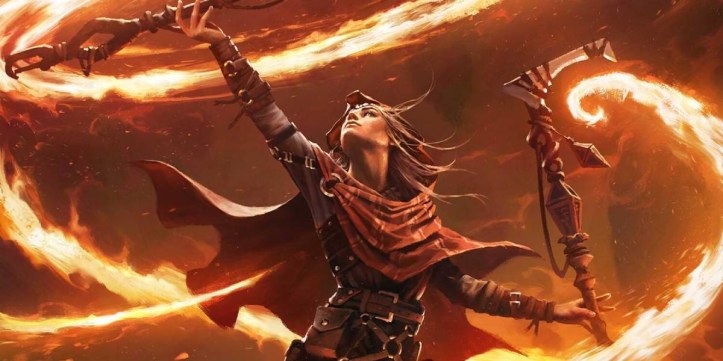
Fire’s power level as a damage type in D&D 5e is a complicated topic. In terms of sheer numbers it’s one of the most-resisted types in the game. Hundreds of things have Fire damage Resistance, and plenty have Immunity.
There is a certain logic to the creature types, however. It’s not just slapped around randomly.
Red, Brass, and Gold Dragons don’t bat an eyelash at fire. Neither do Fiends (Devils are Immune, most others are Resistant), many Elementals, some Constructs, and a grab-bag of humanoids.
This makes a lot of sense. Most things that have Fire Resistance in D&D 5e are on fire, conjuring fire, or in some way associated with it. You’re unlikely to be blindsided.
At the same time, Fiends and Dragons are common, iconic enemies in the game. So while the stats on D&D 5e Fire damage Resistance are inflated, you’re still very likely to run into a situation where Fireball is useless.
On the plus side, many Fire damage options are excellent. A Flame Tongue is a fantastic magic weapon. Fire damage outstrips every other spell damage type in D&D 5e several times over. Even better, a surprising number of enemies have Vulnerability to Fire damage (hint: the ones made of ice, wood, or straw).
Take Fire spells. Use them with reckless abandon. However, have a backup plan and don’t be shocked if you run into Fire Immunity in D&D 5e.
Acid

Acid damage in D&D 5e is an easily overlooked and unsung hero of damage types. It’s vanishingly rare to find anything that cares about Acid one way or the other.
Acid-spewing Black Dragons ignore Acid damage (makes sense). So do corrosive oozes (again, makes sense). So do Water Elementals (sure, why not?). Apart from that, it’s hard to find monsters that take more or less damage from the element.
So, what’s the downside?
It’s incredibly hard to deal D&D 5e Acid damage as a player character. It has next to no spells and very few player character features. You can count the Acid spells in D&D 5e on not many fingers and probably the average amount of hands.
Those that do exist, such as Tasha’s Caustic Brew and Melf’s Acid Arrow, do have a neat thematic effect. They often deal damage over multiple turns, which gives them a niche as Concentration breakers (two saving throws). They also kill Trolls dead, which is nice.
Reliable damage and a fun niche do make Acid damage one of the better damage types in D&D 5e. However, the sheer paucity of sources acts against it and makes it hard to build around.
Thunder

Thunder damage is technically the last elemental damage type in D&D 5e, as defined by spells like Absorb Elements. However, its stats have more in common with exotic damage types like Nectrotic.
Almost nothing resists Thunder damage in D&D 5e, and Immunity is even more rare. You could easily go through a D&D 5e campaign never running into an enemy who takes less damage from Thunder (barring mages with the right spells).
Even better, D&D 5e Thunder damage has some excellent options available. Thunderwave, Booming Blade, and Shatter are some of the best low-level spells. It does trail off later on, but still boasts unique options like Thunder Step and Destructive Wave.
You can’t do an entire D&D 5e Thunder damage build, unfortunately. However, it provides many low-level options you can reliably use throughout a campaign.
Plus, if you get really bored, you can cast Summon Draconic Spirit and give it Thunder for Auld Lang Syne.
Necrotic
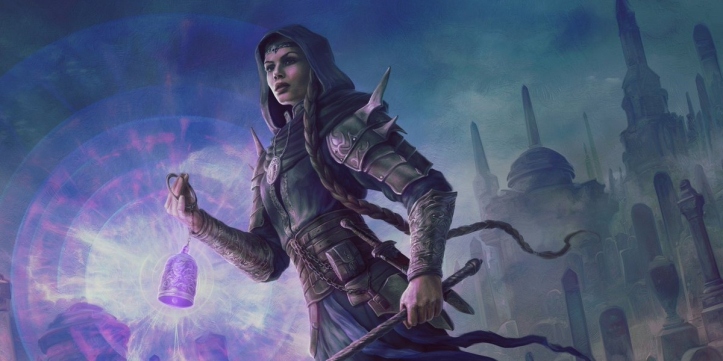
Necrotic is the first of the truly exotic damage types available in D&D 5e. It’s best associated with divine and necromantic spells, being the rotting, decaying essence of death itself.
Now, this sounds effective, and it is. However, it comes with downsides.
D&D 5e Necrotic damage is surprisingly widely-resisted. In pure numbers, the amount of creatures with Necrotic Resistance or Immunity is worrying. However, this falls into a similar trap as Fire.
Most of the enemies who have Resistance or Immunity to D&D 5e Necrotic damage are undead (and not all of them). Most of the rest are Celestials. It makes sense when you think about it.
You can get through most of the campaign with a D&D 5e Necrotic damage build and not have to worry. Unless, that is, your DM is running Curse of Strahd or another Undead-heavy campaign. That’s when you start to suffer.
D&D 5e spells and abilities that inflict Necrotic damage also account well for themselves. Inflict Wounds, Touch of Death, Vampiric Touch, Finger of Death, and many more have a habit of killing things. The names give it away.
Necrotic is a powerful damage type in D&D 5e. However, it is very much a ‘check with your DM’ type before you set your heart on it.
Bludgeoning, Slashing, and Piercing

I’m grouping these three together because that’s what the game does in 99% of cases. These are the generic damage types, the ones you achieve without magic or supernatural abilities. Cutting someone with a sword, punching them in the face, or chucking them out a window deals D&D 5e Bludgeoning, Slashing, or Piercing damage.
This is the bread-and-butter of Fighters, Barbarians, Rogues, and other people who don’t get to conjure fire by waving their hand. Luckily, it’s pretty damn good.
Technically, Bludgeoning, Slashing, and Piercing damage in D&D 5e is a tale of two types. Uniquely, they get the distinction between damage caused by non-magical weapons and damage dealt by magical sources.
If you don’t have a D&D 5e magic weapon (or a way to make your weapon attacks magical), I am so sorry. Nearly everything past a certain Challenge Rating resists these attacks, and plenty of high-level D&D 5e monsters have Immunity.
That said, if your DM makes you fight these things without giving you a way to keep up, they’re kind of being really rude. So maybe the damage type isn’t at fault.
Very few things resist magical Bludgeoning, Slashing or Piercing damage in D&D 5e. Once you get a magic weapon, you’re off to the races. Nothing has blanket Immunity to these three types, and only a few things have Resistance (including Raging Barbarians).
D&D 5e Bludgeoning, Slashing, and Piercing damage are also more likely to have unique interactions with certain creatures. Skeleton Bludgeoning Vulnerability, Oozes splitting with Slashing damage, or Rakshasa taking double Piercing damage from Good creatures. That one’s fun.
These three D&D 5e damage types, with magic weapons, really can hold their own with the best. Given that many classes have little choice but to use them, thank god.
Psychic

Psychic damage in D&D 5e is the domain of Aberrations, Psionics, and other stuff you don’t find in The Lord of the Rings.
As a result, it’s pretty rare. So is Resistance or Immunity to it.
When you’re in a situation where D&D 5e Psychic damage is a bad idea, you’ll know it. Mainly because they’ll either be Psychic masters and probably killing you, or they’re a Construct that lacks brainwaves.
Weirdly, most Undead in D&D 5e take full Psychic damage, despite also lacking brains. I guess Poison just really sucks.
As a counterpoint, Psychic damage is fairly rare among most D&D 5e builds. Only a handful of spells deal it, such as Dissonant Whispers, Shadow Blade, and the DM-upsetting Synaptic Static.
If you make a Psychic damage build in D&D 5e, it’ll probably be integral to your character. For instance, psionic subclasses like Psi Knight and Soul Knife will deal it basically every turn.
Psychic is one of D&D 5e‘s best damage types, and one of the rare ones that is equally terrifying on PCs and enemies. Just don’t try and destroy a door with it.
Radiant

If you wanted to personify Good Boy Damage, then D&D 5e Radiant is it. The power of gods, holiness, and occasionally agonising laser beams.
Radiant is one of the least-resisted damage types in D&D 5e. It performs even better in the game than it does on paper.
Most D&D 5e monsters that have Radiant Resistance are Celestials. In most campaigns, these guys hang around, do good, fight Demons, and occasionally give you quests. Unless you’re playing Baldur’s Gate: Descent into Avernus, a bad guy campaign, or with a DM who likes to deconstruct good and evil, you’re very unlikely to kill them.
As a result, what you have is a D&D 5e damage type effective against nearly every enemy in the game. Even better, it’s pretty widely available.
Radiant damage in D&D 5e is available almost on-tap to Paladins and Clerics through their holy spells and Divine Smite. Some other classes can get it through spells like Moonbeam, Sunbeam, or Sickening Radiance.
How much access you get to one of the best D&D 5e damage types is very much a class-segregated thing. If you have Radiant, however, use it freely and liberally. It’s good.
Force

Stop the presses. Force damage in D&D 5e, the concentrated energy of magic itself, is excellent. If this shocks you, please do sit down.
Force damage’s reliability is almost an exaggeration of a good damage type. In the base D&D 5e Monster Manual, zero creatures are Resistant to Force. Exactly one has Immunity. Later books include a few more, but these are vanishingly rare.
If you want something you can kill almost any D&D 5e monster with, go for Force. It’s often very widely available for spellcasters (sorry, martials). Magic Missile is always good to cast. Eldritch Blast is D&D 5e‘s best cantrip for its vicious Force damage.
On the holy side, Spiritual Weapon is infamously good. If you want to go hilariously further, Blade of Destruction is that concept taken past 11 to around 19.
Force damage is far and away the best damage type in D&D 5e for being plentiful (for spellcasters) and reliable. If you run into lots of enemies with Resistance or Immunity to it, it’s a good sign your Warlock has made the DM angry.
This has been all thirteen damage types, ranked by how good they are. Regardless of what I say, they are all perfectly viable to make a D&D 5e build with.
Except Poison. Dear god.
If you’ve enjoyed this article, please do check out some others, such as the suggestions below. I’d also love it if you could leave a like and share it around. Thank you!
Players looking to get freaky with their damage type might want to check out ‘7 Niche and Underrated DnD 5e Magic Items for Clever Adventurers‘ for other weird choices.
Similarly, ‘Fun D&D 5e Builds: How to Put a New Spin on Five Subclasses‘ also touches on the subject, including a Wizard whose entire job is to smash things with not-Fire damage.
 Artificial Twenty