On this blog, I frequently spout the virtues of imitation in Dungeons & Dragons Fifth Edition. One of the best ways to make something memorable and enjoyable – be it a character, adventure, or campaign – is to take elements from other memorable and enjoyable things and repurpose them.
However, there is a limit to this. D&D 5e is a fairly unique storytelling medium, one with its own social norms and practical concerns. There are some character concepts and tropes that, while potentially fantastic in other mediums, don’t work at the D&D 5e table.
It might be that they’re impractical within the structure of a D&D game. Others might risk crossing lines at the table and need significant DM input to work (which isn’t to say they’re impossible). Others might simply be too self-indulgent to work at a table with two to six other D&D 5e characters and not hog screen time.
You should be as creative as you want to be in D&D 5e character creation. You should enjoy yourself and take inspiration where you can. However, steer clear of these infamous concepts if you want to keep things sailing smoothly.
Also note that, for the most part, these tips apply to other TTRPGs. Many risky character tropes and traits aren’t exclusive to D&D 5e. However, some do use the mechanical framework of the game. If it sounds similar, regardless of system, be wary.
Updated November 11th by Isaac Williams: I remain very proud of this post, and I stand by its contents. I just need to bring it up to date with how I write content on the blog now and expand on a couple of points.
The Embittered Lone Wolf in the Corner

This infamous D&D 5e character idea is one of the most prevalent people try and make work. This is especially true for new people, who often gravitate to the idea after seeing it in fiction.
The lone wolf who tries their hardest to avoid others’ business, only for them to get dragged into it, is popular across fiction. The titular character from Mad Max is one of the most beloved examples, but there are more.
It can be great to see this character get dragged out of their selfish, distant funk and regain their love for others. However, this is not a character arc that works at many D&D 5e tables.
D&D is a game all about player choice and action. Players need to want to do things, to adventure, to go out and get treasure, to save the day. If your character doesn’t want to get involved in any of this….what are they going to do all day?
Describing racking up a bar tab is probably entertaining for two minutes. After that, you’ll start to wish your D&D 5e character had just wanted to go out and fight a Froghemoth.
Of course, the main hope with this is that other characters will motivate your character to go on a quest they don’t want to. However, that’s either extra effort your DM has to put just on your character, or the rest of your D&D 5e table going out of their way for you in a way they don’t have to for anyone else. Even then, it starts to wear thin after more than one adventure.
The lone wolf character trope in D&D 5e can maybe work if things start with the entire party forced into some sort of quest. That’s a minority of campaigns, however, so be prepared to keep your powder dry for a long time.
Gods, Demigods, and Dragons in Disguise
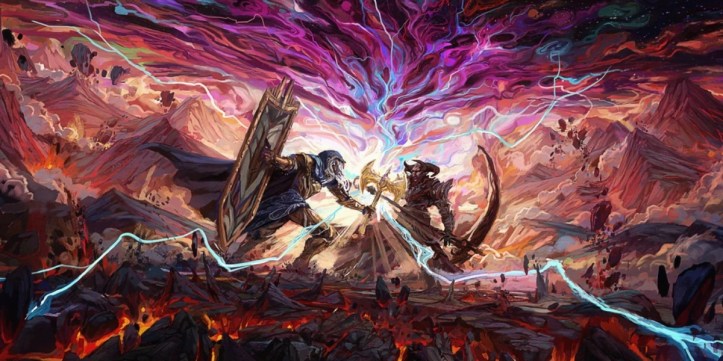
Some D&D 5e character ideas don’t work because of how much spotlight and story focus they necessarily pull toward one character.
An obvious one is your humble, low-level PC actually being something vastly more powerful in disguise. At several D&D tables I’ve run for, I’ve personally seen people who want to play gods, reincarnations of gods, amnesiac gods, avatars of gods, and children of gods.
This falls into a broader category of “my D&D 5e PC is actually a significantly bigger player than anyone else.” Dragons, aboleths, reincarnations of historical figures, and more all tap into a very similar feel.
Apart from anything else, it’s very strange for a god in disguise to have the abilities of a first-level D&D 5e Sorcerer. Choosing to pretend they’re voluntarily limiting themselves strains disbelief and makes everyone else at the table feel a little surplus to requirements.
In general, the other people at the table are why this trope doesn’t work for D&D characters. Any sort of powerful being masquerading as an adventurer screams ‘main character’, and those just don’t exist in most D&D 5e campaigns.
The other players around the table don’t want to watch the show of your D&D 5e character being a vital part of the world by backstory. They’d much rather the entire party become vital parts of the world through their heroic deeds, with no one standout.
I’m not saying characters all need equal in-universe relevance, or to be exactly equal in talent, standing, social class, shoe size, etc. However, apply some logic. A commoner and a noble have more in common than a regular bloke and a demigod.
In short, shoot a little lower. There are plenty of fun backstories that don’t involve immense divine heritage or draconic power, trust me.
An Evil Character Who Just Wants to Rob and Kill
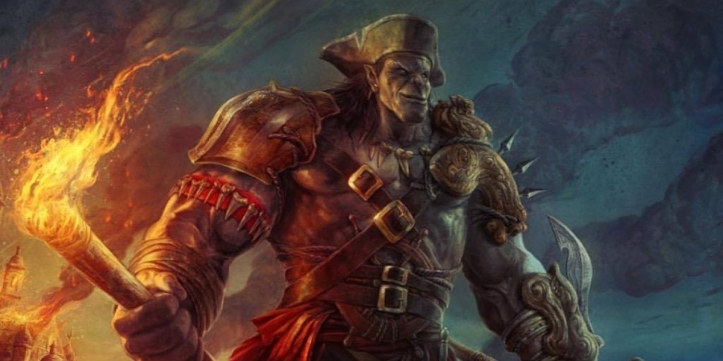
Creating an evil character in D&D 5e is often a thorny topic. Most D&D campaigns assume the player characters are heroic. Failing that, it assumes they have the baseline decency that their self-interest doesn’t spiral into horrific deeds.
That said, the entire alignment chart is there for players to use. There’s no reason evil D&D 5e characters have to be off-limits. A well-created and well-played evil character has as much motivation to engage with the plot and keep things playable as anyone else does.
The problem comes when someone creating an evil character in D&D 5e means doing the most crude, malicious, short-sighted thing possible at the drop of a hat.
This often conflates with the ‘murderhobo’ character type, but sometimes with more self-awareness. Someone who genuinely thinks the best way to play an evil character is to kill as many people as possible, torch buildings, laugh evilly, and kick puppies.
There is a reason most well-liked fictional protagonists don’t do this. It’s very hard to tell a good story, including in D&D, when someone is smashing the props against the wall as hard as they can.
Aside from the difficulties that a D&D 5e murderhobo evil character causes the DM, it’s also not fair to the rest of the table. It’s hard for them to build bonds with NPCs, establish themselves in the setting, and explore their arcs if someone is starting fires everywhere they go.
It also speaks to an unpleasant power fantasy. Dungeons & Dragons is peak escapism, there’s no denying that. However, a lot of people, when entering a world where they can do anything, don’t want to immediately destroy something their friend built.
Anything Based Around a Single Joke
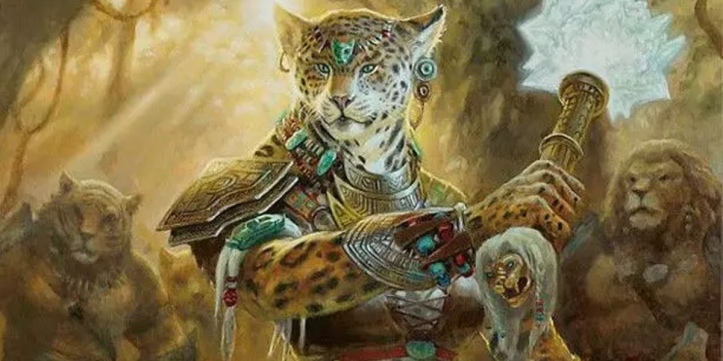
Joke characters do exist in media. They serve an important purpose as comic relief in many stories. Furthermore, you can keep a joke character in most stories off-page until the time is right for them to exist, make that joke, and leave again.
Making a joke character in D&D 5e is a much riskier prospect. It gets far worse if, rather than being general comic relief, they’re based on one single joke that follows them everywhere they go.
It might really amuse you at the time to make a character whose first instinct is to hand out doughnuts, even in the middle of combat. Or one who is clearly a send-up of a popular fictional character (Batman is a strangely ubiquitous choice) with the name slightly changed. Or one based off of your really good impression of a beloved celebrity.
Will it be as funny forty hours in, when you haven’t really had a chance to do much else with the character?
Punchlines tend to be funny the first time around. Even running gags work best when they can catch people off-guard. The same joke in every scene gets old within a handful of sessions.
Everyone loves the cabbage merchant from Avatar: The Last Airbender. A series following him where he screams for his cabbages at the end of every scene wouldn’t be nearly as popular.
Joke D&D 5e characters can work for a one-shot, however. Consider relegating your Arnold Schwarzenegger character with a funny name to one of those instead of a full-blown campaign.
One Class Pretending to be Another

I can understand the appeal behind many bad D&D 5e character ideas, even if they don’t work in practice. However, this strangely popular one honestly confuses me a little bit.
There are plenty of stories online of D&D 5e characters who are one class attempting to convince the party they’re another class.
Paladins who wear medium armour and only cast two spells per short rest. Smooth-talking Wizards who never change their prepared spells and keep hinting at bonus action spellcasting. Many more.
Of course, the idea is that, eventually, the D&D character reveals their true class and the entire rest of the table (besides the DM) is shocked. It’s a big reveal that changes how everyone looks at the character. This is especially true with more story or theme-heavy classes like Warlock or Sorcerer.
I’m honestly not sure this has ever happened with this character type. Most people are too concerned with their own D&D 5e character abilities, particularly in combat, to pay enough attention. Those who know the game well enough will probably figure it out ahead of time.
The overall resounding response will probably be “Huh. Okay.”
Furthermore, to really try and sell this ‘plot twist’, your character will probably hang back on abilities in D&D 5e combat. Using only half your skillset isn’t very fun for anyone, throws the balance out of whack, and leaves the rest of your party attempting to make up the shortfall.
Furthermore, there’s plenty else you can keep secret about your D&D character that is less foundational. God, for instance, or even race. Just try and make it something worth hiding and impactful in-game, rather than going for “What I claimed to have written on my character sheet is actually not what I have written on there, be impressed.”
The Relentless Lech Who Won’t Pack It In
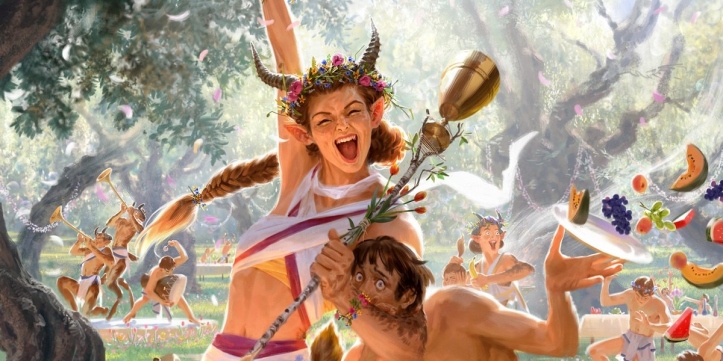
Few bad D&D 5e character ideas have caused as much discourse as this one, both in funny online stories of the type and people’s pushback to them.
The womaniser. The lech. The horny Bard (it’s always a Bard, and I’m not sure why).
The D&D 5e character who only wants sex basically runs into the same problems as any other character built around one joke but with some added potential for problems.
There’s nothing wrong with romance, sex, and flirtation as part of a D&D 5e campaign. However, they require everyone to be on the same page and in their comfort zone. Even players who don’t mind sex being an active topic in the game might not want a ‘heroic’ character who reminds them of the worst men on the internet.
If you use the D&D 5e horny Bard trope without discussing it and judging everyone’s comfort levels, you might actually just ruin someone’s evening. Nobody wants that.
Furthermore, there’s the fundamental issue of the outcome of hitting on everything in D&D 5e. A character being a terrible casanova and getting shot down repeatedly is entertaining but runs into the one-joke problem. Succeeding results in this big part of your character turning into a repeated off-screen way of enjoying themselves, far from a front-and-centre character trait.
Fundamentally, your friends don’t have infinite time to play D&D. There’s only a certain amount of it most people want to spend watching you flirt with the DM.
Successful and beloved horny Bard characters, such as Critical Role‘s Scanlan Shorthalt, are the exception, not the rule. Even then, Scanlan is so well-loved because he shapes up and matures into a proper person eventually.
These have been six D&D 5e character tropes and archetypes that don’t work in practice unless you work really hard with your DM. If you’ve enjoyed this, please share it with your friends and check out other Artificial Twenty articles like the ones below. Thanks!
If you want to make something that is more likely to work at tables, take a look at this article on how to come up with D&D 5e character inspiration.
For the DM side of this issue, ‘Tropes That Don’t Work Well for D&D 5e DMs‘ might have some useful advice.
 Artificial Twenty
i haven’t played in a long time but something that I remember as a problem was an entitled character. Rich kid kicked out of the family but parents still spoil with money and gifts. Buys things normal PC can’t afford and says it’s paid for, parents will bail me out, do you know who my parents are extra.
LikeLike
I could definitely see that getting problematic! Characters from mony are fairly classic to D&D 5e, but if it’s used to get a serious in-game advantage, that could be a problem.
One way to do it would be if the player and the DM had an understanding that they’d get less loot to keep parity with the other players, but that might be hard to pull off. And even if you do, it might still leave a bad taste in everyone else’s mouths.
LikeLike