‘Tanking’ is a time-honoured tradition in party-based games, where one or more members of the party take damage from enemies so that more fragile members of the party don’t have to.
With the design of Dungeons & Dragons Fifth Edition, no role is necessarily essential in a party, but there is no denying the value of a party tank. Someone has to get hit by the giant’s club, and the Wizard will only complain and possibly die.
The best D&D 5e tank builds have many qualities, including the ability to take some serious punishment, the ability to force enemies to target them, and potentially the ability to protect their allies in other ways.
Although D&D tends to lack MMORPG mechanics – because your DM is allegedly a person and not a computer – there are still several subclasses clearly designed with tanking in mind.
Updated 15th of November by Artificial Twenty: This article, from the days before I regularly updated this blog, was one of my earliest hits. However, it was exceptionally dated compared to my current style. I’ve brought it up to speed in both content and appearance.
Cavalier Fighter Punishes Uncooperative Enemies Hard
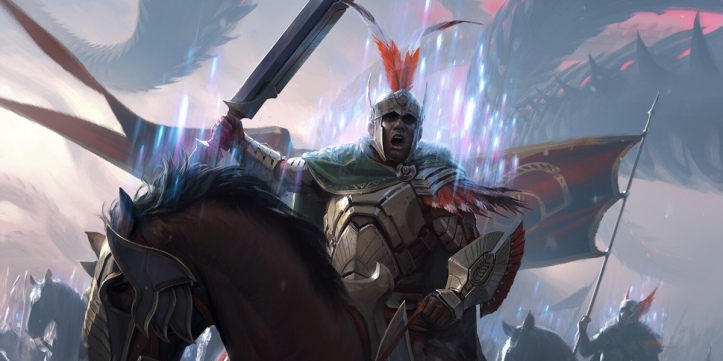
Despite their name, the Cavalier Fighter in D&D 5e has very little to do with riding horses, and much more to do with annoying your DM by not letting them scythe down the Sorcerer while laughing evilly.
Before you reel from the blatant false advertisement, take a second to look at the Cavalier’s non-horse features (they have one horse-related feature, one) and you’ll realise that there is an incredibly solid D&D 5e tank subclass under the hood.
The Cavelier is one of the best Fighter subclasses in D&D 5e, and one of the most complex. It has several features that punish enemies for attacking your allies, damaging your allies, moving towards your allies, or even thinking about your allies.
As a base ability, you get the classic ‘an enemy hit by you has disadvantage to hit anyone except you’ that adorns most tanking subclasses in D&D 5e, but the Cavalier gets theirs with extra spice.
If you ‘mark’ an enemy as a D&D 5e Cavalier and they dare to do damage to anyone other than you – even with an area-of-effect spell like a Fireball – you get to make a super-retributive strike of justice (not the feature’s actual name) as a bonus action on your turn, as well as all of your other attacks.
Its tanking abilities grow with the character. As you level up, you learn to deflect blows aimed at your allies, stop enemies that try and scoot past you in their tracks, and eventually make Opportunity Attacks on every creature’s turn.
You’re not much of a horseman at any point of the game. However, you are an incredible D&D 5e tank build by 20th level.
Armourer Artificer Makes Itself the Best Target

Artificers aren’t the first D&D 5e class to come to mind when you think about tanking. They have a d8 hit die, they don’t wear heavy armour, and they have a sort of Intelligence-nerd aesthetic to them.
Nerds can be badass, however, and although the Artificer’s Armourer subclass in D&D 5e isn’t the bastion it was when first unveiled in Unearthed Arcana, it can still take a mean punch.
More specifically, the ‘Guardian’ sub-archetype can prove an able tank, whilst the ‘Infiltrator’, as the name suggests, is far less about getting in the enemy’s face.
The Armourer Artificer’s best subclass ability for tanking in D&D 5e comes right at third level, when the game decides that characters get to actually be good at what you want them to do. This is the ‘Thunder Gauntlets’ feature.
Aside from being serviceable weapons, the Thunder Gauntlets provide a crucial feature for tanks: they force the opponent to hit you or make their attacks at disadvantage.
If there’s one thing D&D 5e DMs like, it’s hitting with attacks, so you can be pretty certain that a creature hit by you – and you can apply this effect to multiple foes in one turn – will be gunning for you like you mocked its homeland.
At higher levels, you get other nice features, including the ability to physically drag your foes towards you and away from your allies. This is particularly useful if a squishier and nerdier party member, like the D&D 5e Wizard, gets ambushed in melee.
The only downside is that the D&D 5e Artificer has a relatively low d8 hit die, meaning that you may need to pace yourself – or buy stocks in a Healing Potion company.
Oath of Redemption Paladin Believes in Protection First

The Paladin is one of D&D 5e‘s best classes for tanking. And fighting. And socialising. And healing. The developers love the Paladin.
When it comes to tanking, Paladins have a lot of hit points, can wear heavy armour, and have excellent saving throws. Wizards of the Coast were still worried they’d be hard-pressed underdogs, so D&D 5e Paladins can also heal themselves.
I’d continue to talk about the paladin’s many general strengths, but this article would get a lot longer.
The Oath of Redemption is one of the most unique Paladin subclasses in D&D 5e. Unlike the righteous violence of other Oaths, its fluff and its mechanics are geared towards peace and, surprisingly enough, redemption.
Pacifism is unlikely with four other party members quivering to kill things. Redemption is apparently more appropriate for the BBEG than the hundred less evil henchmen slaughtered to get to them. As a result, the D&D 5e Oath of Redemption Paladin spends most fights focusing on tanking over damage-dealing to keep vaguely with its ideals.
Rather than go for the traditional ‘disadvantage on all other targets’, the D&D 5e Redemption Paladin gets some more unconventional – but interesting – abilities.
With your Channel Divinity, you can punish enemies who hit creatures other than yourself with peaceful retributive holy fire. At higher levels, you frequently take damage instead of your allies.
It’s another eight levels before you get the automatic healing to help you survive this, so use it carefully. Or make really good friends with your party’s other healer. You have another healer, right?
Furthermore, the D&D 5e Oath of Redemption Paladin gets another way to ensure the enemy attacks them, rather than their allies. They get Counterspell. Spam that and the DM will attack you out of sheer irritation.
Rune Knight Fighter Put a Magical Spin on Tanking

For a long time (D&D Third Edition), the Fighter was a bit of a joke D&D class. They weren’t close to the best physical combatants in the game. By the time they got something as impressive as a third attack or the ability to trip an enemy, the Wizard was rewriting reality.
In D&D 5e (and Fourth Edition before it), something changed at Wizards of the Coast. They decided that the Fighter should probably at least be able to fight well, even if they fall behind in other areas.
Although there are still issues with martial-caster balance in D&D 5e, the Fighter can do more than it used to – as signified by its second appearance on this list.
The Rune Knight is one of the most recent fighter subclasses in D&D 5e, added in Tasha’s Cauldron of Everything. The Rune Knight Fighter gets in on a bit of caster-esque action with a bag of tricks in the form of runes. Don’t worry, there’s still the book’s signature power creep.
The Rune Knight Fighter’s titular runes give passive benefits as well as the ability to ‘invoke’ them for more powerful effects once (later twice) per short rest.
The runes are pretty versatile, and put some interesting twists on tanking – especially the one that lets you make enemies hit each other with attacks, so you don’t even need to sacrifice your retirement hit points.
Because passive buffs and powerful rune abilities weren’t quite enough, the D&D 5e Rune Knight Fighter can also grow Large (and later Huge), and potentially physically block enemies from their allies.
Even more, because Wizards of the Coast really want to make it up to the Fighter, you get an aura to force enemies to reroll hits against allies a limited number of times a day – all the more reason to hit you.
In addition, they get the other useful Fighter traits like good armor and excellent hit points. The result isn’t the most conventional D&D 5e tank subclass, but an undeniably effective one.
Ancestral Guardian Barbarian Makes Attacking Enemies Pointless
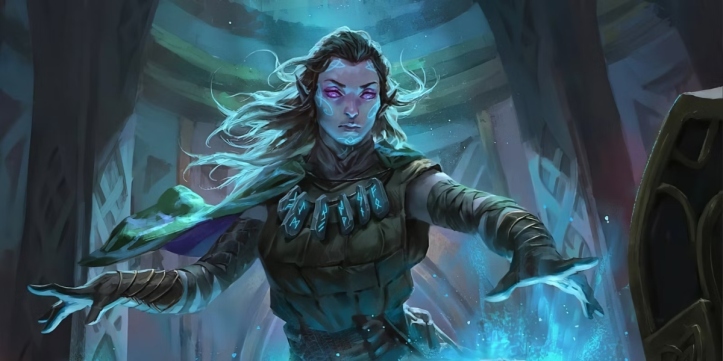
The D&D 5e Barbarian is a class built to tank. They’re also built to hit things very hard, but they take it every bit as well. A d12 hit die, a lot of features that reward Constitution, and the ability to halve most (nearly all with the right subclass) damage makes for a sturdy package.
Of course, being able to survive hits is only one part of tanking. For a long time, the Barbarian was a bit lacking in drawing enemy attacks.
Aside from being a Berserker and dealing frightening amounts of damage to paint themselves as a high-priority target (a valid approach), and giving enemies advantage with Reckless Attack, D&D 5e Barbarians lacked stickiness or reasons to hit them.
Enter the Ancestral Guardian as one of the best D&D 5e tanks.
The fluff of the D&D 5e Ancestral Guardian Barbarian subclass has never quite fit the mechanics in my opinion, but the lore is very interesting and the mechanics are good fun, so it works.
When you hit an enemy, that enemy gets the traditional disadvantage to hit anyone else – as well as the damage being halved even if they do succeed – as the spirits of your ancestors mob them and make their lives hell.
It’s a strange implication that your ancestors encourage the enemy to hit you, but maybe you’ve disappointed them with your life choices.
Using Reckless Attack, you can give the DM a choice between attacking an ally with disadvantage and having the damage halved, or attacking you with advantage – and still probably having the damage halved. It’s an easy call for the DM and a satisfying way to shield your teammates.
In addition, Ancestral Guardian Barbarians in D&D 5e can use their reaction to further hinder enemies who still dare to hit anything that isn’t their face. At first, Spirit Shield simply reduces the damage done to your allies. At higher levels, enemies take direct, unavoidable damage.
The only consideration is that all of these tanking abilities are tied to Rage – which is limited at earlier levels.
If you run out of Rage in D&D 5e, you will lose your nice tricks. Then again, you’ll still have enormously high hit points and be battering your opponents with the largest axe you can find. You’ll be fine.
These have been the best selection of tank subclasses in D&D 5e. If you’re a selfless team player (or the sort of person who enjoys being hit, we won’t judge) these subclasses could be for you in your next game. Have pity on the poor spellcasters.
If you enjoyed this article and want more character-building tips, please check out The Five Best Gish Subclasses in D&D 5e, and for a defense of some less-loved builds, try Five Underrated D&D 5e Subclasses That Are Better Than You Think.
Please like, follow for more D&D and RPG content, share this with your friends, and generally stay tuned for more content.
 Artificial Twenty