Trevor Garner and David Haddad are two of the minds behind Big Bad Dungeon. This company is hot off the success of Firevalanche, the first season of their D&D 5e actual play show.
I got the chance to sit down with David and Trevor, me in the UK and them in the United States, and learn a little more about the inspiration and practicalities behind their new project.

“First question, then. How did you guys get into TTRPGs?”
David: I got into TTRPGs with a big mistake. A friend of mine had played Cyberpunk, and he came into school telling us about this great game where you live in the future and have all these adventures with this awesome technology.
Within seconds, we were all sold. We pooled our money and I went to buy it from the store. I walked in and saw this awesome hardback book. On the cover was a guy with a metal arm, holding a gun, doing all cool stuff. Sounded exactly like what he’d told me, so I bought it.
I bought Shadowrun.
My friends were not happy. It was actually really bad for our group and almost ended it. So I read this Shadowrun book and I realised that it was actually awesome as well. After enough talking about it, I convinced people to give it a try with me running and managed to just about save the friendship group. That was it for me.
Trevor: I got into it when I was a kid with old-school D&D 2e or 3e, I can’t remember. I took a big break and then tried to get back into it with Pathfinder, but I just kinda bounced off.
Then, years later, I moved from Atlanta to Washington DC, with my girlfriend. We needed a way to keep in contact with all our friends, to have a reason to keep talking. After going through a few options, we settled on TTRPGs. Masks in particular.
This led to a, god, five or six-year running game that exploded massively. We had old friends, we had roommates. Eventually, David ended up in that game.
There was a rough patch in my life, a time when I lost a few people. During that time, looking for something comforting, I got into Critical Role. Of course, that led me to D&D 5e, and I got yet another multi-year campaign started.
That’s what really solidified my process in gaming. It all started with little seeds planted in high school, and then like really turned into a redwood tree in 2018 when I needed to connect with people. Masks did that for me. And then it launched into this massive series of games that have become a sort of lifestyle for us.
To be fair, a lot of them have had hiatuses because of people travelling and things like that. And like, with the Masks game, we tried every other week, but we settled on once a month for the two years of it because of scheduling.
Then the long-running D&D game had a big break when our DM had to (he’s the most fascinating dude ever) do government stuff in Washington DC. So we actually started another campaign while keeping that one on hold. And then we started another campaign, so we had three running at the same time.
“Very impressive. So, for both of you, what made you turn this from a hobby into a production?”
Trevor: David…
David: It was actually a couple years ago. Big Bad Dungeon is the most current incarnation of a desire I’ve had to do something like this.
Back in 2015, I was working for a delivery company here in Atlanta. I had just spent the last thirty minutes getting shouted at over the phone because one of the deliveries was missing. A packet of soy sauce. Right after that, the person who was on the phone next to me got off the phone. He took his headphones off.
Directly behind our work area, there was a very nice couch and recreation area. We never got to use it because we never got any breaks. He walked over to this couch while I was talking to a customer and just started beating up all of the office furniture. The couch, the cushions, he threw around. He went face-down on the couch and started screaming.
So there was this noise in the background while I’m talking to a driver, directing him while all this was going on.
I needed a couple minutes after that. There was this small atrium that was directly next to our office, looking out at some apartments. In that minute, I decided that, if I could just figure out a way to do the thing I wanted to do, this passion for playing games, and share that with other people, then I wouldn’t have to be in this situation that just didn’t feel good for my spirit or creative soul.
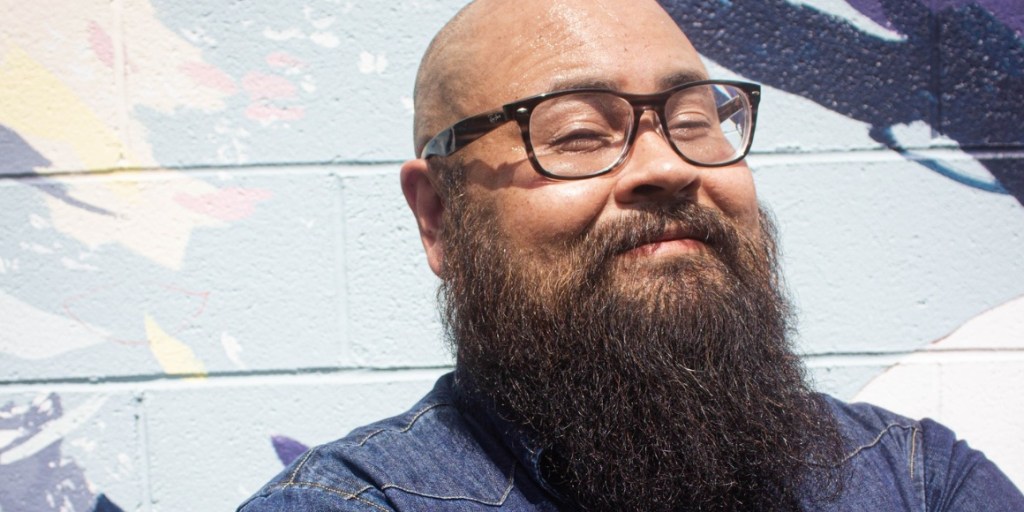
Myself and a couple of friends put together this streaming setup and we set ourselves up in my friend’s apartment. We put together a small gaming stream that piggybacked off of another streamer and we did roleplaying game content.
We streamed a D&D campaign, we did some weird campaigns, we did some talk show bits. It was really fun, but I guess it didn’t really work out too well.
Fast-forward a bit later, after there was some loss in my family, I was hit with the bug again. I decided “You know what? We gave this a go before, and I had to take a break from it. Let’s see if there’s anything left in the tank. Let’s see if we can do this again.”
I had been playing in the wonderful game Trevor was running. I put it to him and we talked to see if this could be a thing. It turns out it could, and it is.
Trevor: I was also involved previously with several failed attempts to do this. I wasn’t in the position I am with Big Bad Dungeon, as a producer and things like that. I was just a player.
I got asked to do this streaming show, nothing ever came of it after I did a bunch of pre-work. I was actually a player in one that recorded like, a pilot, and it never came to fruition.
I was also a player in another one that had a pretty well-known DM, who has since been cancelled. Bad behaviour, I won’t name names. It was with good reason. We finished shooting, but it will never see the light of day.
So that never happened.
On a lot of these projects, one of our producers was also there. Keith, me and David have been hella best friends with him for a long time.
The third person, our studio manager, production coordinator, editor, etc. he was also involved in these. So when David came to me, I decided we’d messed up enough times and been in enough failed ones that, together, we’d do it right.
We started with a two-person team that quickly became a three-person team. It’s now many more people. We got it together in a way that’s working and, fingers crossed, will keep working.
All of us involved in the core of the production are really experienced in the fields we represent.
We all have film experience. I’ve been working in entertainment since I was nineteen. I’m thirty-nine. So I’ve been working in the industry for twenty years, major and minor productions. I’ve been in front of and behind the camera. I’m a professional voice actor for my day job.
David had done directing and acting. He’s been in front of and behind the camera for years. Our director and editor has professionally edited for a long time. He teaches acting, he’s been on the stage for a long time.
A lot of our cast are also weirdly experienced. We’ve got voice actors, we’ve got editors, we’ve got costume designers. It’s like we’ve built up these skills in other industries that are tangentially related for years, and now they’re all clicking into place like LEGO.
We’re making a kick-ass LEGO castle with a dope dragon on top.
“On that note, how did the Bad Dungeon group form?”
Trevor: I love that question because it’s super fun. David, you wanna hit it?
David: Like I said, Trevor, Keith and I have been friends for a really long time. The founding connections were already there. And then we put out a casting call for the rest of the members of our crew. I guess for like, our team of Ocean’s Eleven experts. A couple of the folks, we already knew they’d be in it. We’ve got a good friend of ours, Bob Carter, who’s a huge voice-acting professional. He was like “I’m in.”
Trevor: We mean “huge”. He’s like, 6’3. If you know the American English dubs of, like, Dragonball Z, he’s in them. He’s the voice of Shao Kahn in the Mortal Kombat video games. He’s got that deep register, so the “I’m in.” echoed a lot.
Bob’s a huge gamer. He was in our Masks game that ran forever, he was one of the original people in it. He considers it “gaming therapy” as he calls it. He was one of the first people who jumped in.

David: Then there was Mae Manning. I worked with her on a previous project called Dicelords, so, when her name popped up, we were like “Oh yeah, she’s amazing.” I was even more blessed with her at the table because she has some of the best reactions of anyone in the season.
With someone who has so much behind-the-camera experience like Mae Manning, seeing her in front of the camera is-
Trevor: She’s so fun. And some of the failed shows, the ones that didn’t make it off the ground, Mae was another player on it. With me and her, it was like the handshake in Predator, that was us. Keeping each other through.
We had private Discord conversations with ourselves and someone else I’ll mention in a second. We’d just talk like “What is going on?”
It was like we were coming out of a war. We formed one of those bonds under fire. It was great to have her on-board. Me and her are so bad at the table together.
David: Or amazing.
Trevor: Or amazing. We cause trouble and egg each other on.
David: And then Josh Terell is someone I’ve gamed with in previous campaigns. He’s an incredible voice actor, an incredible talent, and one of the most creative people I’ve ever had the pleasure of playing with.
He’s always the first person to throw a wrench in a game. Out of left field, he’ll suggest a course of action or something that I, as the Game Master, didn’t see coming. And suddenly, I have to deal with it.
Trevor: And then there’s Kali Kehoe. She was the other person that myself and Mae were on a couple of other shows with. Those shows were Kali’s first time ever playing D&D.
She got cast on those because she’s got a magnetic personality, no other way to say it. One of those people with an infectious laugh, a bright joy of life that other people just gravitate towards. She got cast for that reason, and that’s why we pulled her onto this show.
She was also brothers-in-arms with me and Mae from our previous experiences. It was like we trudged out of the trenches to join a new general who had a much better plan. She’s an amazing actor, a lot of stage, film, and costume experience.
Mae Manning is an editor, professionally. So we have people who are in the industry in some way, so everyone on the cast understands how entertainment works.
Now let’s talk about our crew. The one and only Robert Peralgo, our assistant director and one of our major camera ops. He also does other stuff – we all wear multiple hats. He’s a phenomenal actor, phenomenal acting coach, out of Atlanta. He’s got very George Clooney vibes.
He’s such a fun person to have on-set because he has no idea about D&D. He’s just along for the ride, but he’s always making fun comments after we do episodes or sessions, and asking weird questions. He just brings this grumpy New York positivity and eats all your food.
David: Every time. Every time he eats all your food.
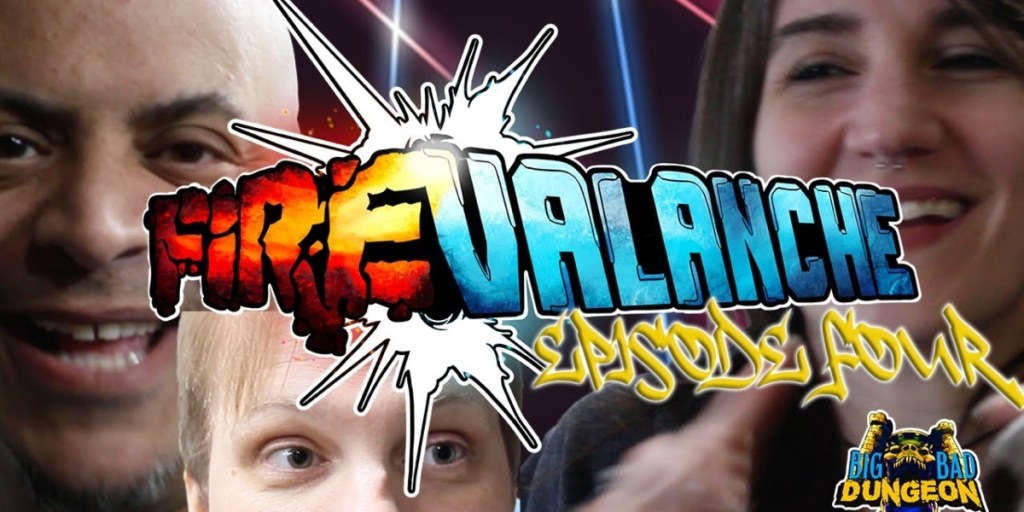
Trevor: Keith Brooks, our other producer, is also our director and editor. He’s so good at managing people and so good at keeping people positive, in addition to knowing what he needs to. Out of all of us, he’s the most talented.
When we’re actually filming a show, running an episode, he’ll actually text the DM and say things like “Hey, follow the thread that player just dropped.”
He’ll be watching from there, and we’ll be communicating with each other about stuff like camera angles, and he’ll notice things like “Well, they reacted that way, so do this.” Not reshooting, but revisiting what people say. We don’t reshoot things, we just edit.
It’s not a livestream, so we do things like cutting out dead air. Nobody has time to sit through that. But the game you watch is the game we play, minus the bits where I knock my coffee cup over.
Our set designer, Stephen K. Greer, is also basically our full art department. He and Nicky are two guys who do all our set dec, props, all of that stuff. Steve Greer has been one of my friends for a long time. I’ve been in movies he’s directed and stuff like that.
Before we brought him in, he worked on Marvel stuff, Stranger Things, doing set design, prop manufacture, prop design, stuff like that. His eye for structure, design, and fabrication is unmatched, he’s amazing at all of those.
Our studio is in an old bomb shelter. It’s quite literally a dungeon. But, because of that, there are structural concerns. Space is limited, and we have poles supporting the structure to make it not fall down if a bomb fell on it.
We have to build our set around it, and he’s like a master of engineering, figuring out how much space we have to work with. Our set from seasons 1 and 2 is like, half an inch lower than the ceiling.
Nicky is his fabricating partner, incredibly talented. We got them working with us. Our artist, who does all our character designs and our logos, is named Nova Nordstrom.
I met Nova when I moved to Los Angeles from the east coast. I moved here for voice acting, I had to be here. Nova is a friend of a friend who I met through a friend of a friend, and she’s now one of my best friends. She’s a phenomenal illustrator and artist who does a lot of brand design and logo design for big companies. I knew instantly we needed her.
And then our business manager is one of my best friends. His name is Iain Terry. Last week, we actually added him on as our fourth producer, because he’s been doing so much to help us.
He’s our business and marketing manager, and he knows so many things about business that we don’t. He’s also an old-school gamer, started with D&D 2e.
He owns the San Diego Sword School, which I teach at. It teaches HEMA, focusing on Italian longsword. Him and I met in Washington DC when I was trying to find a group to do swordfighting with, and he started that group. He’s like, hella connected into this whole world too, just so knowledgeable about everything.
David: What I like about Iain is that, in a meeting, he’ll be talking about the business side of things, very serious. And then, as soon as the meeting ends, everyone else leaves the Zoom call and we just talk about how awesome swords are.
Trevor: Our awesome lady, Dee Wright, does all of our catering and food service stuff. She’s also an actor and super-organised at everything. She’s Brazilian, so we run into fun cultural differences. It’s also a coincidence, because a huge amount of our season 1 audience is from Brazil.
We talk a lot about how privileged we are to work with these people. We’re a small team, and we keep it that way on purpose as a small show. It also makes sure we’re all on the same page. It’s great that that page is full of fun stuff as well as business stuff
It’s so good to work with people that we love and who we have fun being with, as well as people who always know what they’re doing.
“There’s a lot there. But what are you proudest of since starting Big Bad Dungeon?”
David: Oh man. I think I’m proudest of getting our first season together, and of our organisation of the second season.
I also love that, since starting this, I’ve been able to interface with some of my heroes in the TTRPG industry and the actual play space. I’ve had the chance to interface with B. Dave Walters, the writers of White Wolf, and some of the game creators whose work I’ve enjoyed for my entire life.
Now, I’ve had the chance to interact with them on a professional level.
What I’m most proud of, however, is everyone’s performances and getting this product out there.
Trevor: I think I agree with that. I second that. The thing I am proudest of is just that we did it. That we’re still doing it. It can be really tough to launch anything new. It’s scary, right? You don’t know if it’ll work, or even if it’ll get finished. You wonder if it’s even gonna be good, or if people are even going to care.
You have all of these questions.
And then we did our first season. Shot it, edited it. It’s not perfect, but we got it out there. Our second season is now in post-production, and it’s better than the first. It’s smoother, tighter. We’re gearing up for our third season, which will be even better, even tighter.
While that’s all happening, we’re continuing to grow the brand. I’m just so proud of everyone involved and everyone who’s contributed to it.
Even this moment here. Like, I’ve read your blog, I really like it, and now you’re here talking to us. I’m really proud of that. We just got together and did something. That’s so awesome.
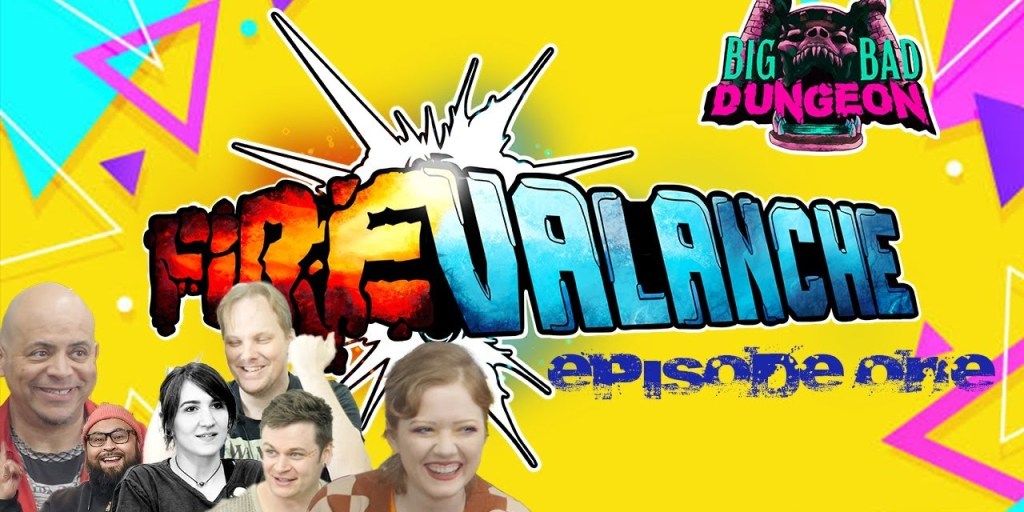
“You touched on it there, but what are you both hoping for in the next year from Big Bad Dungeon?”
Trevor: Can I take this one first, David?
David: Go for it.
Trevor: One of the things that makes up the biggest pillar of our mission and the idea behind our show is connecting with people and inspiring them to imagine and dream and play again. We don’t just wanna make an actual play show.
We want to make an actual play show that feels like you’re coming on a journey with the players. And afterwards, you go to your friends and you go on a similar journey.
We want to inspire people to play, so one of the things I’m hoping for in the next year is to connect with more people in the space that are inspired by what we do. To create a community not just of fans, but of people who talk to each other.
One of the things I hear from a lot of people is “I love your show, how can I find my own gaming group?” If we can develop fans who form a community that we’re active and a part of, they can all form their own groups and start playing together.
The reason I got into the entertainment industry in the first place is because that’s what inspired me as a kid. I want to be a person who does that for other people. I want to do that through gaming, because tabletop roleplaying games are one of the best and only avenues that are open to everybody with no barrier for entry.
I want to get together and tell stories the way we used to when we were kids, to do that on a personal level and tell stories with them. You’re doing things together. It’s not like going to a movie where you sit there in silence.
Instead, you have a session, and you’re with people. Having actual human interactive connections and telling a story together that forms lifelong memories.
So, I want Big Bad Dungeon to be an avenue for that for people, and to inspire people to do that. That’s my goal for the next year.
David: My goal for the next year is very similar to Trevor’s aims. Going forward, I would like to create a community space where people who like games, who like tabletop RPGs, who like storytelling. I want them to meet each other, to interact, to share their stories, and find good people to play with.
Like everyone, I’ve had times when I’ve tried to fight loneliness as best I can. I found that playing games with people is one of the most reliable ways to combat loneliness.
B. Dave Walters has said, “the mind doesn’t know the difference between something that is real and something that is vividly imagined.” I think that, when we all play games together, we’re in this space, all vividly imagining being in this crazy space and fighting dragons.
In those moments, those relationships you build with other people, this wonderful shared experience becomes invaluable. All of my strongest relationships have been with people I game with, so I want to make a place where people can find each other.
“Aside from D&D 5e, what are some favourite games of yours?”
Trevor: Masks is my personal favourite of all time. It’s so nostalgia-hitting for me because I started collecting comic books when I was six years old. Superheroes are how I got into storytelling. And then I love the teenage angst mixed in with that, so Masks is perfect.
The game design for it is also perfect. Every mechanic, every piece, reflects the emotional struggle of a teenage superhero really well. The theming of it all is so good, and it plays really fast and really fun. That is my personal favourite.
I also really like the Kids on Bikes system, as well as Kids on Brooms and Kids in Space. That’s really fun to play and run. I like a lot of other Powered by the Apocalypse games. Monster of the Week is one. Thirsty Sword Lesbians is another great one I’m running right now.
David, what other ones do I like?
David: Heart.
Trevor: Heart, yeah! You talk about that one.
David: Heart is an incredible game from Rowan, Rook, and Decard. I’m also a big fan of Spire. They both use the same mechanic and they both move really fast. They’re good at telling different kinds of stories.
Spire is more fantasy spy thriller-y. You make your way through the corruption of this single location. Heart is more like delving beneath the lands of the Spire and investigating something eldritch beneath it to maybe get a wish granted.

I’ve recently wrapped up a V5 Vampire game, another system I love. I’ve done a lot of White Wolf stuff, a lot of World of Darkness. My most successful forays into the World of Darkness have been Vampire and Werewolf. Some wild-as-heck Mage games as well, because Mage is all gas, no brakes.
I dig Mörk Borg for its grungy, grimy, heavy metal aesthetic. I also love how accessible it is. Call of Cthulhu’s incredible lethality and voraciousness is great, I’m not sure I’ve made it through more than a single session with the same character, so kudos to Chaosium.
There’s also Over the Edge, from way back when…
Trevor: I love Over the Edge. That’s another ‘no brakes’ game, but this one’s more winding. Unknown Armies…
David: Yeah, Unknown Armies is the one. I’ve done a lot of Shadowrun, but I’ve done a heck of a lot of Unknown Armies.
It’s the game I got known for running in the early stages of my RPG career. I like its take on a 90s-ish modern cosmos and some of the supernatural that occupies it. I like how the system drives your character toward their own obsessions and how your passions fuel the game.
It was one of the first games to make me think about what my character would think about while I was building them. That’s my stuff.
I like games.
Trevor: I like games too.
There’s loads more that I can’t think of because I’m on the spot, but I do want to give a shout-out to the 2024 revamp of D&D. I love it.
I love the new Player’s Handbook and the new 2024 rules. I was really apprehensive about it, mostly feeding off of other people’s apprehension. There was all the stuff with Hasbro and the OGL.
With all that said, I love the 2024 Player’s Handbook and the new rules so far. We’re actually using those for our upcoming third season. There’s nothing wrong with D&D 5e. It’s fast, it’s fluid, as far as D&D goes.
But with the new version coming out, David had this idea of using it. I had that instant shock reaction, but then I read it and it was really great. It was even more streamlined, even more player-facing.
That was the thing I liked about it. I like games that are very player-facing, and this one does that.
David: I actually love all the stuff they did with tools.
Trevor: Tools are so cool now.
David: I’m looking forward to the Dungeon Master’s Guide as well. When I get it, I’m going to start reading about how to make magic items and I don’t think I’m going to stop reading for days.
You can find Big Bad Dungeon’s YouTube page here and their social media here.
A massive thanks to David and Trevor for sitting down for the interview. Please do go and check them out. Please also tell your friends about this article and check out some of my other work!
For other TTRPG interviews, try this one with The Panic Table‘s Cameron Strittmatter.
If you’re still curious about the wide world of actual plays on the internet, read this guide to the best D&D shows around.
 Artificial Twenty
What an insightful interview! It’s fascinating to hear how David and Trevor’s journeys in TTRPGs evolved into a creative endeavor like Big Bad Dungeon. I especially resonate with their emphasis on community and connection through gaming. Finding a group to share stories with can truly be transformative. Excited to see how they continue to inspire others to explore the world of tabletop gaming!
LikeLike
Thank you! And to them, for giving such good answers.
LikeLike