Meeting in a tavern is a time-honoured Dungeons & Dragons tradition. It’s the perfect place for oddities and outsiders to gather. Whispers and rumours are cheap currency. A bartender can always provide useful exposition. It’s a well-trodden dream for a D&D 5e DM.
However, this tradition has slid its way into cliche. “You all meet in a tavern” is now a punchline of D&D DMing. Despite its appeal, many consider it overdone, unimaginative, and trite.
I’m not saying it’s a bad thing. Like any trope of fantasy storytelling, it’s a tool. Nonetheless, people eventually want you to dig further into your toolbox.
So, what are the best ways to start a D&D 5e campaign? That’s a hard answer. What I can do, however, is tell you five D&D 5e story hooks that, among their other virtues, don’t begin with everyone sitting around over a tankard of ale.
Forced Together by the Local Authorities
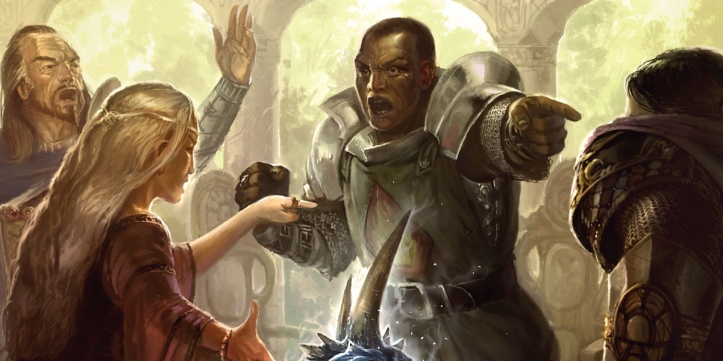
Part of the suspension of belief in D&D covers the party itself forming. So what if these five people meet in a tavern? Why does that mean they become companions, lifelong friends, and comrades-in-arms?
Because to do otherwise is rude to your DM, that’s why. But what if they had a little more of a nudge?
It’s easy to have the low-level D&D 5e characters in your campaign recruited – willingly or unwillingly – by the local authorities and sent on a quest. Maybe there’s some local problem that’s a little too dangerous to throw the militia at. Perhaps the governor or mayor has some beneath-the-table business she wants dealt with.
Imagine it a bit like a very, very low-level Avengers initiative from the MCU. The local authorities have noticed a few strange or (relatively) powerful people in town and decide to throw them at a problem. Not too big a cost if they live.
This way, the party have a reason to stick together and a quest hook they’re expected to do. It only takes a couple of minutes of narration.
Of course, this D&D campaign start isn’t completely player-proof. If it’s an involuntary or semi-voluntary rounding up, players might have their characters fight the militia instead and derail a very smooth set-up. Like most player problems, however, this is more of a communication issue than inherent to the plot hook.
The other problem is that it might engender player hostility to your D&D setting, or at least toward its authorities. If they’re corrupt and antagonistic, perfect. If you want the PCs to become helpful local heroes, however, this first impression can be hard to claw back from.
They Already Know Each Other
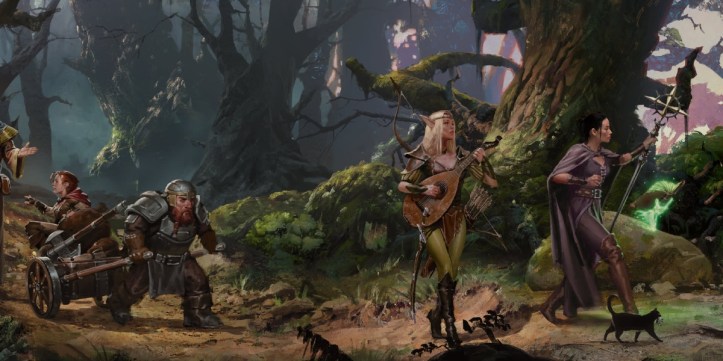
Some might consider this cheating in a list of ways to have a D&D party meet. However, I stand by it and always will. There is nothing wrong with a party who already know each other, travel together, and fight together.
This way, you skip needing to contrive a reason for these five exceptional people to work together. The players don’t need to consider why their characters would stay.
Maybe they’re a mercenary group. Possibly nobles and their retainers. What if your D&D group played something more exotic, like travelling merchants or members of a theatre troupe?
This also doesn’t need to be particularly restrictive on D&D character backstories. There’s no reason players can’t come up with their own exciting stories of how their characters got started adventuring, encountered each other, or joined the group. You just don’t need to play it out in the game.
This also opens up some fun opportunities for collaborative D&D character creation. Everyone gets to chip in with ideas for the sort of group their characters form, some history, and possibly even NPCs who are also there. This isn’t for everyone, and does require some communication, but it can be great fun.
Sole Survivors of a Crisis

This is a D&D intro that doesn’t have the warm, crackling fires and gentle comfort of a tavern. If anything, this is the opposite end of the spectrum. Having the PCs fall together because they’re the only people alive in the local area can be the perfect way to kick off a grim or dark campaign.
You can make the crisis anything. A natural disaster. A magical disaster. Military conflict gone horrendously wrong. The classic dragon attack. Something even more supernatural. All you need is for everyone else to be dead and two to six player characters who have somehow survived.
Apart from anything else, this can be a great way to introduce a more overarching story element from the off. If your D&D 5e campaign warrants a looming threat or grand catastrophe early on, murdering a lot of people is a great way to establish it.
It’s also a good source of early personal hooks for your players’ D&D characters. They might want to take revenge on whatever nearly killed them, stop it from happening again, grow stronger, or simply get the hell out of dodge. Any of these can make a great early campaign story arc.
Also, despite the dramatic title, they don’t need to be the sole survivors. You can have the odd NPC to provide exposition or be somebody to protect. The important bit is that your D&D 5e PCs are the remaining capable people who need to band together to survive.
Notably, this is more or less how Baldur’s Gate 3 opens. The only reason the sarcastic vampire, lovable Sharran, teddy bear Tiefling, and Githyanki warrior join forces is the need to survive the Sword Coast and find a cure. So if you want a D&D campaign inspired by BG3, I’d say to start here.
In a City Under Siege

We’re continuing in the more dramatic range for D&D 5e campaign hooks here. Trapping the PCs in a confined area they can’t escape because of an outside threat works well.
Apart from anything else, it gives them an impetus to work together. Nobody wants to be in a city under siege. It’s a famously unpleasant situation to be in. As a result, the characters are motivated to work together to end the threat.
They might be soldiers, conscripts, or helpful travellers who’ve found themselves stuck. You can even combine this with the first D&D campaign opener on this list. The authorities have press-ganged them to help defend the city.
It’s also a wellspring of early D&D 5e adventure ideas. Why not spend your low levels sabotaging the enemy equipment, hunting down traitors within the walls, or dealing with opportunity threats within the city?
This can also last as long as you like (or as long as it takes the players to deal with it). The siege can be the opening adventure or an entire story arc in its own right. It even comes with a natural dramatic climax when the enemy force attempts to take the city by storm.
If the siege is part of a wider, ongoing conflict, then you also have a convenient arc ahead of you in your campaign. After being threatened with starvation and death, many D&D 5e parties would probably be hungry for revenge.
One of Them Starts in Peril
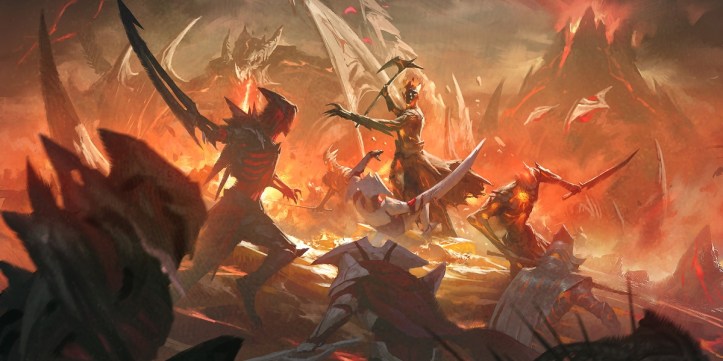
To kickstart many D&D 5e campaigns, you often want immediate action and a reason for the party to band together. You can combine those by, with a bit of planning, having one of the player characters start in immediate danger and the others needing to rescue them.
Have a talk with one of your players. See if they like the idea of their character being chased by bandits, locked in a cage, or awaiting execution (you will encounter Skyrim references). This way, there’s an immediate problem to be dealt with and a good reason for the other characters in the area to leap to somebody’s defence.
This is another of the best ways to start a D&D campaign if you want a bigger story hook to go into. Whoever’s wronged one of the PCs and put them in peril might not be wholly dealt with in just one fight. There could well be a wider force, organisation, or villain at work for the party to stop.
Do note, however, that this first D&D session idea requires a bit more management than others. For one, more selfish or evil characters in D&D 5e might not take the bait. Like many cases of the initial plot hook being refused, this should be discussed. However, “I don’t want to risk my life for a stranger” is more reasonable than “I’m not going on this lucrative adventure.”
It also needs to be carefully balanced. The last thing you want in your D&D game is for one player to seem either privileged or belittled compared to the others. This opener naturally gives one character some spotlight, but also risks turning them into a damsel in distress.
In general, this isn’t a problem. If you do want to begin your D&D campaign like this, however, it’s worth knowing the general attitudes of your players. And, for the love of god, discuss and arrange things with the victimised party member ahead of time. If you can, fit it into their wider story. They’ll love it.
These have been five of the best D&D 5e campaign starts that haven’t yet fallen into cliche. They will eventually, of course, unless they fade into obscurity, but such is fiction. I plan to go with one of these for my next campaign, and I’ve played in a game that started with another! In general, I rate them.
If you’ve enjoyed this, please check out some other Artificial Twenty content, such as this article about ways to avoid players growing sick of your D&D 5e BBEG.
What’s the best way you’ve started a D&D 5e campaign? On the flipside, what’s the most fun a DM has given you in the first session? Let me know in the comments!
 Artificial Twenty