The Circle of the Moon Druid is unlike any of its cousin subclasses in Dungeons & Dragons Fifth Editions. Most Druids are spellcasters first and foremost, using Wild Shape for utility or subclass-specific purposes.
The D&D 5e Moon Druid, however, uses Wild Shape as its first, last, and primary combat tool. Its unique Combat Wild Shape vastly increases the CR of Beasts the Druid can turn into, later unlocking Elementals as a higher-power option.
This gives the Moon Druid an unconventional role as a close-range striker and tank, unlike most other Druid subclasses in D&D 5e. As a result, it doesn’t neatly fit the ‘Best Druid Races in D&D 5e‘ article on this blog. In particular, the slightly unclear rules that let a Druid use their race and lineage open up new options that would be too situational for most characters.
As a result, this article will cover the best D&D 5e races for Moon Druids specifically. Due to a similar off-melee role, some will also suit the Circle of Spores, but the article focuses on those races with abilities that suit Wild Shape but not spellcasting.
Variant Human and Custom Lineage Open Up New Options

Another race list, another recommendation for Variant Human. This is the only entry that is also one of the best races for other Druids in D&D 5e. However, I’m repeating it because it has some unique applications.
As always, it’s the free feat that puts Variant Human and Custom Lineage among the best Moon Druid races in D&D 5e. Unlike with other Druids, spellcasting feats are going to be of limited use, particularly in combat. Similarly, mainstays like Tough don’t apply to Wild Shape, due to animal forms replacing the Druid’s hit points.
Plenty of feats are still invaluable for a D&D 5e Circle of the Moon Druid. War Caster helps enable one of the subclass’s best strategies of casting a Concentration spell, dropping into Wild Shape, and then tanking damage while getting value from the spell. It becomes even better at high levels when Druids can cast in Wild Shape. A tank becomes much more compelling when walking away might get a Plane Shift opportunity attack.
Nothing bars a Wild Shaped Druid from using the Telekinetic feat in D&D 5e. Moon Druids have little use for their bonus action much of the time, and shoving enemies at range with Wisdom is incredibly versatile. If the Wisdom boost, utility, and combat uses don’t sway you, consider the mental image of a bear using Force Push.
Telepathic is particularly useful to Moon Druids, given their limits on spoken communication in Wild Shape. Depending on how strict your DM is, mental communication is helpful compared to animal pantomime.
I’d personally go for Variant Human or a Custom Lineage with a free skill, seeing as Darkvision doesn’t apply in D&D 5e Wild SHape. However, even a Moon Druid occupies their normal form some of the time, and it’s helpful there.
Kobold Provides Whole-Party Support
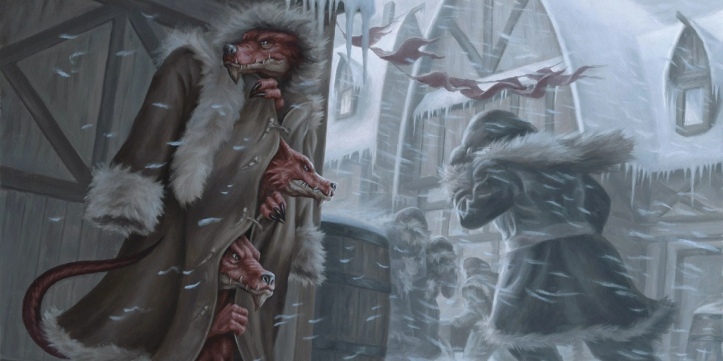
If the mental image of a tiny lizard-thing turning into a Mammoth doesn’t get your pulse pounding, I respect that. However, the mechanical strengths of Kobolds as one of the best D&D 5e Moon Druid races still might do the trick.
In their Mordenkainen Presents: Monsters of the Multiverse update, Kobolds get Draconic Cry as a powerful support ability. Giving allies advantage on all attacks multiple times a day is excellent. However, it requires close range. This is something most Druids want to avoid like the plague.
However, a Circle of the Moon Druid in D&D 5e is a perfect melee tank. They want to be within ten feet of many dangerous enemies. As far as I’m aware, nothing stops a Wild Shape (that can make noise) using Draconic Cry.
As well as tanking damage for your party, you can help them deal vast amounts in return.
Kobold Legacy also has benefits. Craftiness gives useful Druid skills, Defiance prevents Frightened from crippling a Moon Druid on the battlefield, and Draconic Sorcery can give utility or combat options when Wild Shape fails.
Aasimar Provides a Rare Wild Shape Damage Boost
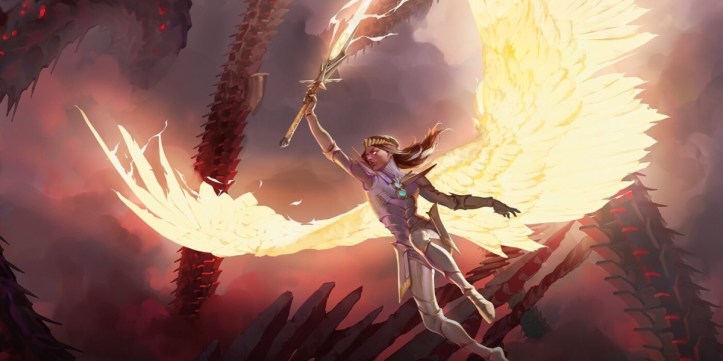
Many of the best Moon Druid races in D&D 5e are more about unique utility or resilience in Wild Shape. Aasimar stands out because, except under the strictest DM readings of the rules, seems to boost damage by a not-insubstantial amount.
Celestial Revelation has two excellent choices for a D&D 5e Moon Druid in combat. Radiant Soul gives any Wild Shape a flying speed and extra Radiant damage on one attack per turn. Radiant Consumption provides the damage bonus while also blasting nearby creatures for automatic harm – ideal for a melee tank.
I’m leaning on mental images a lot in this article about D&D 5e Moon Druid races, but that is because the thought of a flying, glowing t-rex is genuinely a delightful one.
By the rules, I see nothing that bars an Aasimar Moon Druid in D&D 5e from using Celestial Revelation. Stricter DMs might say the beast form is incapable of invoking divine heritage. As always, discuss edge cases with your Dungeon Master before deciding.
Celestial Resistance is situational until it isn’t and can protect your Wild Shape form from tough fights. Healing Hands saves on spell slots and might even work in Wild Shape.
Shadar-Kai Offers Bonus Action Teleportation

At higher levels, the Circle of the Moon Druid is one of the most mobile classes in the game. It can run, climb, swim, fly, and even burrow. However, Wild Shape doesn’t offer teleportation at any stage. The D&D 5e Druid spell list only offers situational options like Tree Stride.
The Shadar-Kai is another race for Circle of the Moon Druid in D&D 5e that you might want to check with your DM before playing. However, given that its primary ability, Blessing of the Raven Queen, is supernatural, I see no reason why being a bear should prevent it.
If a mobile beast is intimidating, a teleporting one is even better. With just a bonus action, a Shadar-Kai Moon Druid in D&D 5e can appear next to almost any enemy and ruin their day.
Blessing of the Raven Queen gets even better. From third level onward, it also gives resistance to all damage for a turn. Seeing as many Wild Shapes have reasonable hit points but terrible AC, this lets you tank twice as much damage.
Keen Senses gives D&D 5e‘s best skill proficiency and pairs well with the Druid’s high Wisdom. Fey Ancestry and Necrotic resistance can both be life-saving. However, it really is Blessing of the Raven Queen that makes Shadar-Kai one of the best Moon Druid races in D&D 5e.
Hobgoblin Empowers a Prime Moon Druid Strategy

As mentioned above, one of the best ways to play Circle of the Moon Druid in D&D 5e is to drop a powerful Concentration spell like Moonbearm or Flaming Sphere, Wild Shape to stay alive, and continue to get value out of the spell as you fight.
This strategy typically requires Moon Druids to make many Concentration checks, something they lack proficiency in. Feats like Resilient: Constitution and War Caster help with this, and so too does the Hobgoblin.
Fortune from Many gives up to +3 to a saving throw, something that turns the tide on all but the worst basic Concentration checks. It’s also flexible enough to empower other saving throws or vital ability checks and attack rolls.
Outside of Combat Wild Shape and certain spells, Moon Druids in D&D 5e don’t often use their bonus action all that often. This opens the door for Fey Gift to provide advantage to allies its maximum number of times throughout the day.
These two features cement the Hobgoblin as an excellent lineage for the D&D 5e Moon Druid, with more minor benefits like Fey Ancestry rounding out a good kit.
Orc Adds Unstoppable Mobility and Staying Power
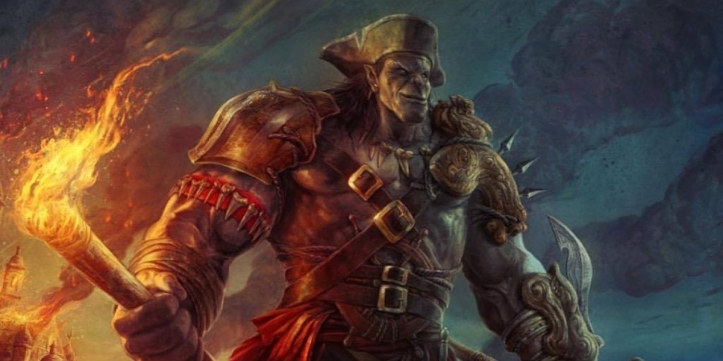
Moon Druid is one of the best tank subclasses in D&D 5e because it has near-endless hit points. Wild Shape forms last until they drop to zero hit points, at which point the Druid emerges almost entirely unharmed. This can happen twice per short rest.
The Orc is a top-tier Moon Druid race in D&D 5e because of how Relentless Endurance interacts with this. Once per day, an Orc can shrug off an attack that would drop them to zero hit points and remain on one instead.
If an Orc uses Relentless Endurance with Wild Shape in D&D 5e, they don’t lose their beast form. Any excess damage is wasted, they save a Wild Shape use, and they don’t need to spend another bonus action to transform again.
Adrenaline Rush is the reason why Orc is a better D&D 5e Moon Druid race than Half-Orc. On top of Relentless Endurance’s unstoppability, it provides significant mobility. A bonus action Dash is always helpful, particularly with many Wild Shapes’ high speed.
The free temporary hit points even provide an extra shred of durability, potentially enough to save a Wild Shape form or even the Druid’s life during difficult fights.
Bugbear is a Huge Damage Increase In Itself
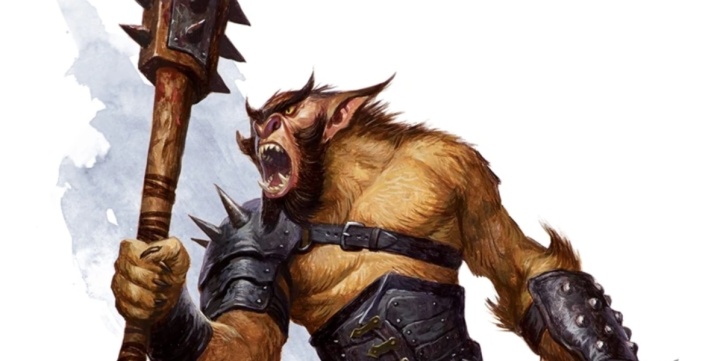
Bugbear regularly appears on lists of the best races in D&D 5e for one feature: Surprise Attack. Even if it was once per fight, an extra 2d6 damage would be a significant damage boost. Instead, Surprise Attack gives this bonus damage on every attack made against a creature who hasn’t taken a turn in combat.
This changes the priorities for Wild Shape in D&D 5e. Instead of looking for good mixes of damage and durability, you instead want the Beast creatures that make the most attacks in a single turn to capitalise on this alpha strike potential.
This also changes the go-to strategy for a D&D 5e Moon Druid. As Surprise Attack only works in the first turn, you don’t have time to cast a spell. You have to drop immediately into Wild Shape and deal as much damage as possible. As such, it’s a great choice for players who want to focus on physical combat or use their spellcasting for utility.
Other Bugbear features in D&D 5e, such as Long-Limbed and Powerful Build, almost certainly don’t work in Wild Shape. However, Sneaky is still free proficiency in Stealth, something many Wild Shapes can exploit heavily.
If you choose Bugbear, you’re doing it for Surprise Attack and damage. However, this one feature is enough to put it among the best Moon Druid races in D&D 5e.
These have been seven D&D 5e races that might be mediocre on a standard Druid but excel with the Circle of the Moon Druid’s Wild Shape. If you’ve enjoyed this article, please leave a like and check out some others, like the suggestions below. Thanks!
For more race guides, check out this guide to the best D&D 5e Rogue races, or this one discussing the best races for Monks in D&D 5e.
For slightly more complex character-building tips, try the advice in ‘How to Multiclass in D&D 5e: Mistakes to Avoid‘.
 Artificial Twenty
“Game Statistics. Your game statistics are replaced by the Beast’s stat block, but you retain your creature type; Hit Points; Hit Point Dice; Intelligence, Wisdom, and Charisma scores; class features; languages; and feats. You also retain your skill and saving throw proficiencies and use your Proficiency Bonus for them, in addition to gaining the proficiencies of the creature. If a skill or saving throw modifier in the Beast’s stat block is higher than yours, use the one in the stat block.”
You aren’t able to use Species abilites while Wildshaped.
LikeLike
It’s not quite as clear-cut as that! I would also need to emphasise that this is written for D&D 5e, not the 2024 rules update.
There, you have the fun caveat “You retain the benefit of any features from your class, race, or other source and can use them if the new form is physically capable of doing so. However, you can’t use any of your special senses, such as darkvision, unless your new form also has that sense.”
I acknowledge that DMs may rule against some of these, as is their right. But I would say that these features aren’t biology-specific, many being supernatural or psychological.
LikeLike