A Dungeon Master in Dungeons & Dragons Fifth Edition has a lot of power to dictate when, where, and how things happen. In most campaigns, however, the DM’s will is not absolute. Most D&D 5e games involve elements of collaborative storytelling. This includes players being able to throw you for a loop.
In many cases, players will catch a DM off-guard through a clever solution or unexpected success. While this can cause problems, bringing things back to more familiar territory is often easy.
Sometimes, however, D&D 5e players go fully off the rails. They change direction and head for the blank spot on the map. They decide to side with somebody meant to be a major antagonist. They make the last decision the DM expects.
This will throw many DMs off, particularly if they’re newer to the game. Preparation gives you something to fall back on and helps deliver the best content possible. If players head where you haven’t prepped, it’s nerve-wracking. However, being too heavy-handed with putting them back on the correct track risks them noticing you railroading as a D&D 5e DM.
Rather than panic, there are a few ways to keep your campaign fun and flexible when your players catch the DM off-guard.
Have Prep Work Done For Any Areas They Might Go
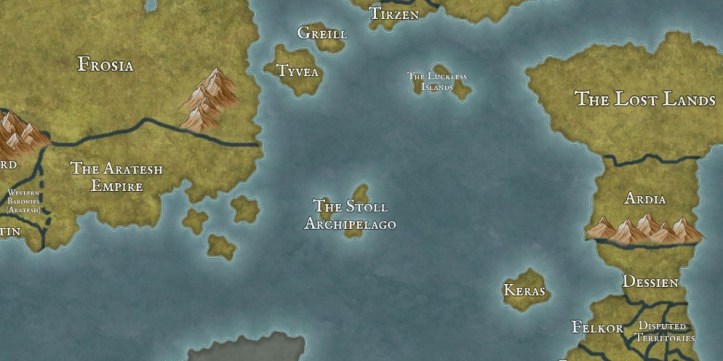
Now, this tip for DMs in D&D 5e scrambling to adjust is a bit of a cheat. It’s basically “have done the work already.” Nonetheless, this is a valid way of preparing your campaign that can all but avert these moments of panic.
In many cases, D&D 5e players go off the rails unintentionally by simply heading in an unexpected direction. If they have any freedom in where they go, they might think an area you mention as background detail sounds cool. They might draw the wrong conclusion from clues and head to the ‘wrong’ place. They might just reject the current plot hooks and strike out elsewhere.
My own D&D 5e players have done this several times. In one instance, they went on a road trip north (the region I hadn’t designed) in my campaign to return an expositional book to its owner’s descendants.
In Curse of Strahd, they went to Argynvostholt several levels early seeking reinforcements. In a third campaign (this happens a lot), I overegged some clues and they headed prematurely to a location, abandoning some questlines to do so.
If you’ve already done prep work for this area, you’re ahead of the game. You can simply fall back on that prep work, either adjusting it for their level or keeping it exactly the same, depending on your particular philosophy.
This is easier when DMing a premade D&D 5e campaign module. The work is already done for you. All you need to do is read through the chapter once before it becomes relevant (I always recommend reading modules through once before running them), and you’ll have a rough idea of what the players can expect.
This is harder in a D&D 5e homebrew campaign, even if it’s a map-based one where you plan for them to visit everywhere eventually. You don’t need fully written-out dungeons, NPCs, and questlines (that’s too much prep). Just a few preliminary ideas can buy you time and give you a solid base to build on between sessions.
Don’t Become Too Fixated on Specific Ideas
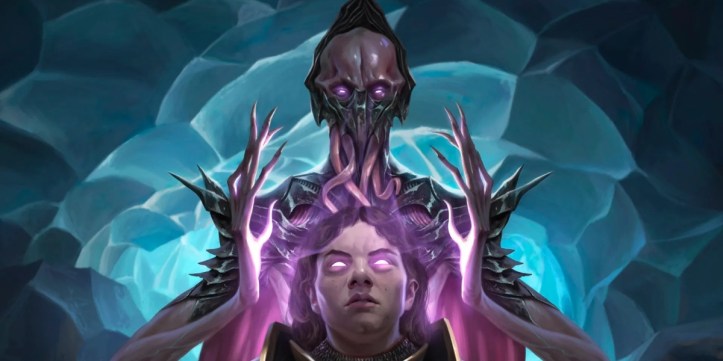
This is another aspect of D&D 5e DMing philosophy that makes player agency less threatening. Avoid having a specific preset idea of how you want things to unfold. If there’s only one way you can imagine things happening, it breaks your flow when the party inevitably go a different way
In your head, Quest A leading to Revelation B and Murder C, which together cause the players to go to Location D and meet Villain E, is a fantastic and logical story. However, you’re officially thinking too many steps ahead. Your players will only probably go on Quest A. By Location D, this is something that will only exist in your head or with copious railroading.
Don’t think too many steps in the future when DMing D&D 5e. You can have a reasonable idea of what will happen in the next handful of sessions – if that. When things change – which they will if your players have agency – you can’t be panicking about plot points several sessions down the line.
The more rigid your plan is, the more frantic you get when things deviate. Or, worse, the more ironclad the rails your D&D 5e players are not allowed to deviate from.
Personally, I like to think of a ‘base state’ of the campaign. I know how things would happen if the PCs weren’t involved. The party then become the ultimate curveball as I react to how they change things. However, that’s just my style – and I’m naturally quite reactive. It’s not for everyone.
I’m not saying that to DM in D&D 5e, you can’t have any tracks or pre-set story beats. Every DM does. However, making the rails malleable and short-term gives the players freedom and reduces your headaches when they do decide to move them.
Lean into the Players’ Ideas and Goals

Many DMs of D&D 5e campaigns (and other TTRPG campaigns) actually enjoy being caught off-guard. They like it when the tracks disappear. Apart from anything else, it’s a sign that your player characters have motivation and agency and that your players want to engage with the world.
Try and find out why your players are taking this unexpected course of action. Does an area you’ve mentioned off-hand sound like a special interest of theirs? Have they turned against a trusted NPC because they think they’re shady? Does their character have a deep-seated desire to do something the available plot hooks don’t offer?
You can just lean into what your players want in your D&D 5e campaign by going off the rails. Particularly if you’re strapped for ideas, their eagerness might reveal something really good you could build off of.
If your players have a particular goal in taking a detour, don’t shut them down to bring them back to your pre-planned adventure. You have the groundwork for a questline to help them fulfil that goal and an almost guaranteed way to motivate your players in D&D 5e.
You also don’t need to be a social expert to do this. I don’t recommend flat-out offering your players a wishlist of things they want to find. Nonetheless, simply asking, in a conversational tone, “What are you expecting to find in the Gardens of Zoriath?” can get you good information without giving too much of the game away.
Sometimes, their ideas make sense. If they expect to find their long-lost sibling in the Gardens of Zoriath and have a list of reasons why, maybe their sibling really is in the Gardens of Zoriath and you just didn’t realise it.
Don’t sacrifice your own vision and enjoyment just because your D&D 5e party wrenched the wheel and upset your plans. However, you can often find a way to make it work for everyone just by listening to your players’ wants.
Loop the Diversion Back into the Main Story Beats

Player freedom is a tricky thing to balance when learning how to DM in D&D 5e. Players want a coherent, realistic-feeling world that reacts to their actions, but they also want the freedom to go and do wherever and whatever they want. Seeing as the DM is not actually an entire world, they have to make compromises.
Furthermore, D&D 5e DMs have plans and hopes of their own. You usually have a storyline or premise you want to see your players engage with, something that appeals to you and them. A sudden detour can throw away that prep work.
Nothing says you can’t combine the two. Your players do something you don’t expect. They start down a new story beat of their own devising. At the end, they find a clue, warning, or event that ties back into the overarching story of the campaign.
Maybe the players do have a side story that involves finding a long-lost sibling in the Gardens of Zoriath. However, that sibling has a dire warning about the Cult of the Black Moon, the evil group your players have heard of elsewhere and that you, the DM, really want them to face.
Through this, you reward the players for taking the initiative and acting under their own agency. You also reinforce the main storyline of your D&D 5e campaign and bring things naturally and organically back to charted territory.
As a warning, be careful of overusing this. If every happening in the world, however unconnected it seems, ties back to Lord Xanroth the Darkstar, it becomes farcical. Worse, your players will definitely notice the strings.
You can take this one step further and simply move entire quests you had prepared to the new frontiers your players are experiencing. You can transpose locations, NPCs, or plot hooks to the new status quo, Some DMs dislike this approach (‘The Quantum Bugbear’) due to feeling it lessens the impact of player choices, however.
Have Distraction Sidequests in Your Back Pocket

If your PCs make a big decision halfway through their D&D 5e session that alters all your plans, you might need time more than anything else. If you don’t want to cut the session short, you need something to fill it out.
A simple list of entertaining, generic quest hooks on a sheet of paper can be your best friend. Something low-impact for the players to do, wherever they are, is all you need to play for time.
Given the nature of the problem, pick sidequests that can be reskinned. Has a villager’s son been kidnapped by bandits, or has a vital member of a Myconid colony fallen into Mind Flayer hands? Is it a Dwarven Princess who needs to transport a weapon across the mountain, or a strangely benevolent Feywild Hag who wants to plant a tree on the other side of the lake?
Effectively, you want a distraction for your players so they don’t notice you sobbing and tearing up paper behind the DM screen. Monsters, loot, and friendly NPCs make for the perfect distraction while being fun to prepare ahead of time.
This only works for some cases of your D&D 5e players jumping the rails, however. If they’re heading to a new location or falling in with NPCs, it’s perfect. If they’ve just assassinated your villain in the town square, you might be out of luck.
Which leads to…
Communicate With Your Players
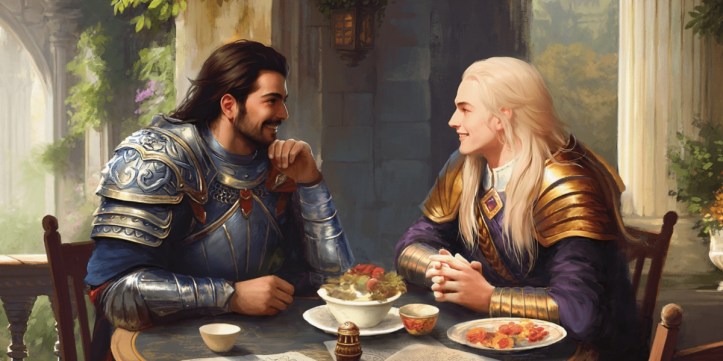
Many of these tips for DMing unexpected scenarios in D&D 5e, are about in-game solutions. How you deal with it at the table without letting players behind the screen. However, that’s really not the only way to approach it.
A key part of learning how to DM in D&D 5e is learning how to communicate with your players. If you’re truly stumped by what they’ve done, maybe you just need a break. You need time to look over your notes, consider the players’ actions, and plan new content to deal with what they’ve done.
There’s no shame in asking your players to take five, fifteen, or forty-five minutes off while you redo some prep work. Don’t disrespect their time, but make it clear the session will be worse unless you have some time to get things in order.
If it’s more extreme than that, there’s also nothing wrong with ending a session early. Sometimes, you simply need more prep than you can do and still have a game night. No D&D is better than bad D&D, as the saying goes, and that applies to ending a session early versus scrambling to hold it together while at the end of your tether.
It can suck if you don’t get to play as often as you’d like or if you’ve pencilled in a block of time with your group. However, it’s the perfect time to do something else, like play the shelf of board games you’ve been neglecting.
Communicating with your players about your D&D 5e DMing plans can go beyond taking time for yourself. Sometimes, if it feels like there’s genuinely a problem, you can address things in a more general sense.
Railroading in D&D 5e is a hot-button topic among players and DMs. Sometimes, you might need to explain that you’re not trying to shut down their decisions, just having trouble adapting to them.
If there’s a long-term issue of your players consistently jumping the rails, perhaps by avoiding your plot hooks, you can address that. They might not realise they’re doing it. Perhaps the story is failing to land and you can ask if there’s something in the world that holds their attention more.
Reading the room is an essential part of being a D&D 5e DM. However, it gets much easier when you realise you are allowed to just ask.
These have been six ways to help your DMing when things take a shock turn. From general DMing philosophy, to DM legerdemain, to simple conversation, they’re all better than freaking out or overt railroading.
If you’ve enjoyed this, please share it with your DM friends and check out other Artificial Twenty, like the suggestions below. Thank you!
For more tips on avoiding DM problems in D&D 5e, check out ‘Tropes That Don’t Work Well for D&D 5e DMs‘.
If your players are following your plotlines straight to the bad guys, ‘How to Make a Dungeon Crawl Adventure in D&D 5e‘ might be the article for you.

