There has never been more freedom in how to run a Dungeons & Dragons campaign. Homebrew DMs have more sourcebooks, tomes of monsters, and online inspiration for their worlds than ever. It’s even sweeter, however, for those who like to run premade D&D campaign books like Curse of Strahd or Vecna: Eve of Ruin.
D&D 5e has finished its swathe of official campaigns, with plenty to cater to any player or DM. On top of that, there are more fan-made and semi-official campaigns available in places like DriveThruRPG or DMsGuild than ever before.
For many DMs, running a premade D&D 5e campaign is a great way to save time, especially on preparation. It still carries the fun and essence of a D&D game but with the heavy lifting done ahead of time. On top of that, the content comes with an alleged assurance of quality, designed by professionals to suit almost any table.
However, there’s a limit. Even the best D&D books can’t run a perfect game the second the DM picks them up. There’s still plenty of work on the DM’s part if they want to run the best D&D 5e campaign possible.
Luckily, there are a few ways to make running a D&D campaign book a significantly better experience, all while saving on the effort of a complete homebrew campaign.
Research the Campaign Ahead of Time
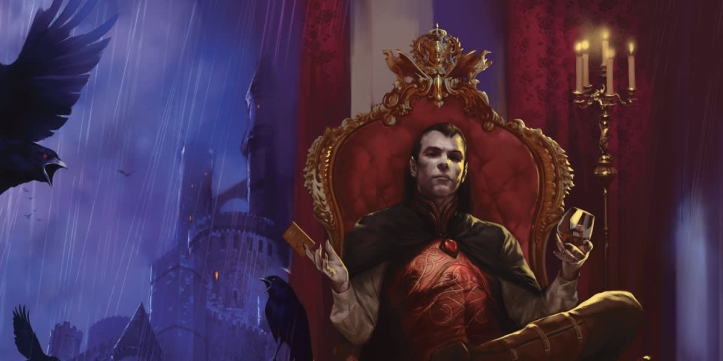
I would love to say that all D&D campaign books are equal in quality. However, that simply isn’t the case. Whether you’re looking at official D&D 5e campaign books, sourcebooks from older D&D editions, or the wealth of premade campaigns available online, they’re far from universally perfect.
Official campaigns run the full gamut from the beloved Curse of Strahd and Tomb of Annihilation to the far more contentious Baldur’s Gate: Descent Into Avernus or Hoard of the Dragon Queen. This variable quality is, if anything, even more pronounced in older editions. Semi-official or fan-made campaigns have the same lack of quality control as everything online.
Do some research before you set your heart on a D&D campaign book to run. If its players or the wider community have issues with it, learn why. They might be something you can live with, or they might be dealbreakers. This is particularly important seeing as D&D 5e books are not cheap. You don’t want to be out a lot of money on something nobody will enjoy.
Quality isn’t the only reason to read up before buying a D&D campaign book. The game’s wide range of styles means different campaigns appeal to different people. The best D&D campaigns still won’t suit your needs if you’re looking for something they can’t offer.
The Wild Beyond the Witchlight is very different to Icewind Dale: Rime of the Frostmaiden is very different to Storm King’s Thunder. They all have different strengths and different appeal. Read up on what they’re good at, how easy DMs find them to run, what sort of support is available online, and anything else that might impact how you run it.
Not only will your own DMed D&D games be better for it, but your wallet will thank you as well.
Read the Entire Campaign Through Before Running
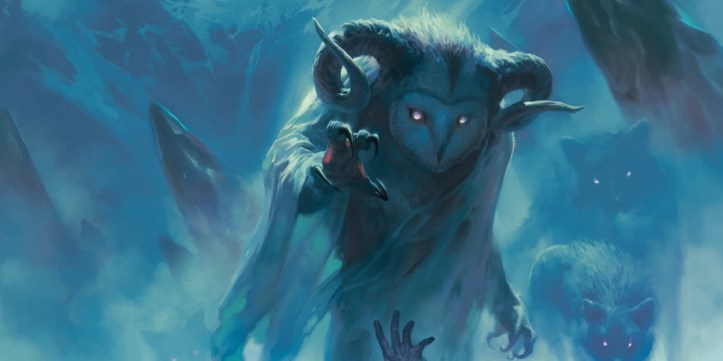
D&D campaign books are not, by their nature, page-turners. They’re part narrative, part rulebook, and often heavy on the minutiae. They’re designed to be used in chunks or chapters depending on where the player characters are.
That said, I recommend reading any D&D campaign book, however good or easy to run it is, all the way through before you DM a single session.
The events of Chapter 9 might not come up until you’re a year into the campaign. Nonetheless, you want to have a rough idea of what ought to happen long before anyone starts rolling d20s.
D&D campaigns are complex. Many of them have long-running storylines, key decision points throughout, and multiple possible outcomes. Reading the entire book lets you see how the pieces fit together, which lever affects which moving parts, and which details prove massively relevant later on.
You might get by fine reading your D&D campaign book chapter by chapter as it becomes relevant. However, you increase your chances of missing important details, overlooking vital foreshadowing, or simply getting things wrong.
This also gives you some freedom when the players flex their agency in D&D 5e. If you’ve only read the specific bits you think they’ll interact with, you’re left scrambling if they take an unexpected turn. Safe yourself the stress and have a baseline knowledge of where they might go.
I also recommend reading relevant chapters ahead of the session. If they’re moving into a D&D 5e dungeon crawl, refresh your memory of the entire thing in one go, rather than piecemeal while adjudicating fifty different rules questions and running evil villains.
You’re still saving on prep time compared to building your D&D campaign from scratch.
Match the Players’ Expectations to Your Campaign

This is similar to the reasons you research a D&D campaign book before buying it. There are so many different ways to play D&D, and so many players with different tastes. Premade campaigns typically cater to one style more than others, with limited provision outside of that scope.
Before running any D&D campaign, but especially a premade one, you should let your players know what they’re in for.
Take this at its most basic. If you’re running a diplomacy or intrigue-heavy campaign like The Wild Beyond the Witchlight or Waterdeep: Dragon Heist, your players might want to stay away from Sorcerers bursting with damage spells. If you’re doing Strixhaven: Curriculum of Chaos, someone playing a Barbarian will be in for a rough time.
Don’t tell your players what to play and don’t give them the ins and outs of every plot point ahead of time. Just let them know the broad strokes of what they can expect.
For instance, warn them before running the hardest D&D campaign possible. Let them know how much combat they can expect. How high-magic the setting is. Specific class or ability limitations. Whether they want to be chatty, sneaky, or violent. Anything that might radically affect playstyle, the PCs should probably get a heads-up about.
Give your players the ability to make informed decisions with their D&D 5e character creation. They’ll have more fun with it, and you won’t need to deal with the fallout of people struggling. If someone’s aware of the campaign’s nature and making something that doesn’t fit too well, check in and make sure they know the risks.
Even the best D&D campaign books can be improved by everyone being on the same page before starting. Nobody wants to be caught unawares and find themselves useless to the party.
Print Out Monster Statblocks and Maps
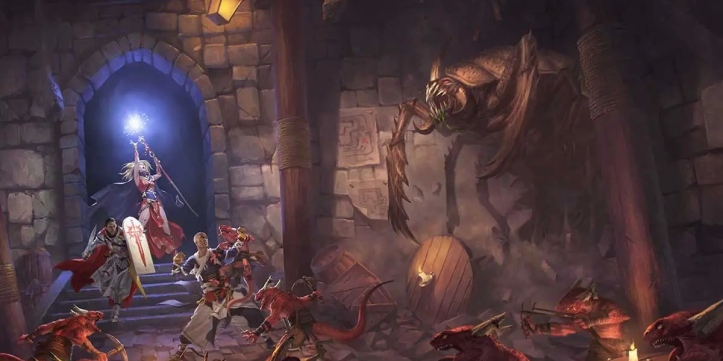
After many paragraphs of communication and research, have some sickeningly practical D&D tips instead.
A D&D campaign book contains everything you need. It has maps, descriptions, encounters, NPCs, statblocks, magic items, and more, all to help you run a fantastic game.
However, there are physical limitations to these all being contained in one book. The biggest is that you spend a lot of time flicking back and forth in that one book.
Take a combat encounter, in a dungeon, with unique rules, against two unique monsters. You suddenly need to flick between the rules for that room, two different areas in the Appendix with monster statblocks, and keep an eye on the map and how this combat affects the wider dungeon.
Even with bookmarks and sticky labels, this is a lot to keep track of with one book. You’ll lose your flow as you check rules, you’ll lose your place, and it’ll add downtime to D&D 5e‘s already slow combat.
You can make your life easier as a D&D DM by printing off some information ahead of time. Have hard copies of relevant monster statblocks behind your screen, and you can limit your book-flipping. It’s a small change, but it will really speed up combat.
Likewise, having the map to hand means you can track PC movement in the dungeon and keep an eye on which room is which, all while keeping the important descriptions and rules in front of you.
Physically scanning and printing isn’t the only way. If you run your D&D campaign in a shop, you might even be able to borrow a second copy of the book. This is also one area where digital D&D book owners have a clear advantage. If you DM with a laptop or phone, you can simply have multiple tabs to keep your information straight.
Don’t Be Afraid to Change Things

This point might be contentious among DMs who prefer D&D campaign books. After all, you’ve paid a lot of money for a product meant to guide your campaign. If you start deviating from its content, it might feel like you’ve defeated the point.
However, this is the best way to deal with the inherent weakness of the medium. Even the best D&D campaign books aren’t limitless. They’re 100-200 pages of text trying to constrain limitless possibility.
Your players might make a decision the writers never expected or simply take a hard right turn off the material altogether. Assuming you’re communicating, they should try and stick to the spirit of the adventure. At the same time, no DM wants to say “You can’t do that. It’s not in the book.”
Player agency isn’t the only reason you might change things from your prewritten D&D campaign. Certain plot points might not hit home with you. You might have a brilliant idea to expand on an NPC or encounter. You might spot logical consequences of the players’ actions that the book doesn’t account for.
If these situations come up, you shouldn’t feel bound to stick to the D&D campaign module by the letter. You’re the DM, it’s your game. You should feel willing to change things or explore territory the book doesn’t cover, as long as you’re comfortable with it.
You also rarely need to throw the whole book away. The changes might add up to a side adventure or something that slots in perfectly well with later events. You end up running more of an expanded version of the campaign than something new.
When I ran Curse of Strahd, I went full pelt with this. Strahd’s forces occupied Vallaki for the middle chunk of the campaign. Baba Lysaga stole the Sun Sword. Lake Zarovich had a Water Weird that possessed half the town. All of these felt like logical additions or outcomes, and my players enjoyed all of them.
Make Extensive Use of Online Resources

This is tied to, but not restricted by, the point above. The D&D community is more sprawling and more connected than ever thanks to the internet. You can find a wealth of discussion about any topic that would make a 1990s DM sob with gratitude.
If you’re running an official D&D 5e campaign, or even a popular unofficial one, people online are likely talking about it. Hell, Reddit might have an entire forum devoted to discussing it.
In many cases, these online communities suggest changes to the particular D&D campaign you’re running, as suggested above. These run from minor encounter or NPC tweaks to entire campaigns redesigned, such as The Alexandrian‘s beloved Waterdeep: Dragon Heist Remix.
It’s not always just changes. Plenty of online discussion about D&D campaigns focuses on advice or lived experience of running them. You might find tips on how to run challenging encounters without a TPK, which NPCs players are likely to be drawn to, areas the pre-written material doesn’t cover in enough detail, or an explanation of confusing plot points.
More popular campaigns, such as Curse of Strahd or Icewind Dale: Rime of the Frostmaiden typically have more discussion and advice to draw on, This, paradoxically, helps them become more popular and get more discussion, but such is life.
Most D&D adventure books nonetheless have some fantastic advice for any DM. You’re probably very good at running the game. That doesn’t mean advice from others can’t make the best campaigns in D&D 5e even better.
If you’re struggling to find advice, there’s nothing wrong with asking online. Other DMs might come out of the woodwork to discuss their time with that adventure. Others might offer hypothetical advice on what they’d do.
These have been six tips if you’re running a D&D campaign book, whether as written or making your own changes. As always, there are very few wrong ways to DM, but this advice will rarely make your campaign worse.
If you’ve enjoyed this article, please share it with your DM friends and check out other Artificial Twenty content, like the suggestions below. I really appreciate it!
DMs who want to make their prewritten D&D campaigns as fun as possible should check out ‘The Best Media to Help You Improve as a D&D DM‘.
Alternatively, if you’re more in the market for making your own D&D campaigns, try ‘How to DM D&D 5e Combat: Common Mistakes to Avoid‘ instead.
 Artificial Twenty
5e campaign books are 100% designed to be “page turners”. WotC understand that most people who buy these books will never use them to run a campaign. There’s far, far more information and exposition than you’ll ever actually need. It’s the main reason they’re so unwieldly to run. But they need a couple hundred pages if they’re going to charge 50, now 60, bucks.
I use the campaign books as campaign settings and throw away whatever, usually ridiculous, plot they’ve shoehorned in. Tomb of Annihilation is the prefect example. It’s an awesome setting book with additional resources available specifically for this module. No spoilers but the setup makes zero sense to the point of being emersion breaking. And there’s nothing to really drive the players towards the stated goal. But a campaign set in the Jungles of Chult is tons of fun and there’s enough in the book to make that work.
LikeLiked by 1 person
You raise a genuinely excellent point! It’d be ridiculous to assume that Hasbro/WotC don’t know how much of their target audience is people who love D&D but don’t get to play it often/at all. They almost certainly target that demographic ruthlessly with stuff like campaign books.
Interesting to hear about Tomb of Annihilation! It’s one that most people regard as almost holy for D&D 5e campaigns, with one of the more beloved mixtures of story and gameplay. But it does fit to some extent – I’ve heard nothing but adoration for Chult as an area to explore and play in.
It does make the campaigns that aren’t fun to read about or play even more wince-worthy, though (naming no names).
LikeLike