A new era of Dungeons & Dragons approaches. For many fans, this will be the first time they’ve seen a new D&D version come out, even if the upcoming D&D 2024 is more of an update than a wholly new game.
This often comes with disagreements and arguments on which edition of the D&D game is best. Debate still rages about D&D 5e vs D&D 4e, with there still being fans of D&D 3.5 and older versions sticking by their choice.
There is a reason for this. Every single D&D edition has had its own strengths and weaknesses, with its diehard fans being those who are most drawn to its upsides. Nobody, from fans of the original Dungeons & Dragons game to diehard D&D 4e lovers, is taking their stance just to be obstinate.
Every D&D edition has done something good for the game, even those with struggling reputations. As the D&D 2024 Player’s Handbook approaches, it’s worth looking back at what those things are before casting our eyes to what the new D&D edition can give us.
Original Dungeons & Dragons Started A Medium
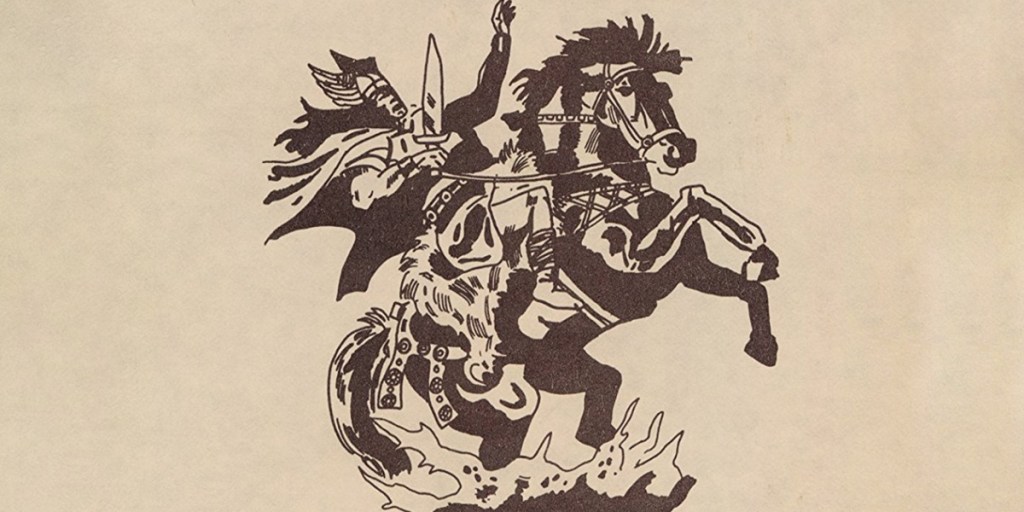
By modern standards, the very first Dungeons & Dragons game is arcane, clunky, and confusing. However, that’s like judging the very first moving picture by how it stacks up compared to The Martian. It’s just not fair.
There’s no denying that Dungeons & Dragons built on a tradition of wargames and narrative games, hence ongoing elements from other genres. However, it has a genuine claim to being the first TTRPG as we know it.
Ultimately, the original Dungeons & Dragons game is not intuitive, or elegant, or a well-supported storytelling experience of the sort you can find littering the TTRPG medium in this day and age. Why would it be? It didn’t have a crowded field to innovate on.
But without original Dungeons & Dragons, the medium would be very different – if it even existed in a recognisable form. The game’s biggest strengths, viewed retroactively, come from putting together the right combination of ingredients to inspire an entire generation of nerds and gamers to make everything that came after.
Basic Dungeons & Dragons Provides Perfect Guidance

Basic Dungeons & Dragons is one of two gamelines the very first Dungeons & Dragons edition split into. Of those two, it’s not the forebear of the modern D&D game. However, it is more than worth casting an eye back to.
The biggest strength of Basic Dungeons & Dragons comes from its unique presentation. It did not come in a comprehensive set of thick tomes that could take a game from first level to endgame – once you got to grips with them.
Instead, Basic D&D came in a series of thin booklets, divided by level. As they went up through these increments, they introduced more complex and expansive game mechanics.
The Basic rules, covering levels 1-3, introduced the foundational elements of dungeon crawling. Expert provided rules for levels 4-14 and took adventures outside, bringing the wilderness and overland travel to expand the game while providing new combat techniques. Companion upped things to level 25, while centering the game around running a stronghold or feudal dominion, rather than just running around dungeons.
Master went up to the highest level, 36, and focused on the quest for immortality. Immortal then provided a wholly new system for gaining power as a god and interacting with other divinities.
This gradual increase in the rules isn’t just an excellent way to ease players into the game. It also provides guidance for the structure of D&D campaigns in a way few other editions ever have. You know when the game expects more of you. You always have an upward goal and a use for your resources. Later editions, including D&D 5e, can be too aimless in their ‘you do you’ approach, leaving players and DMs struggling for what to do next.
The more structured play of Basic D&D isn’t for everyone. However, it is the best D&D edition for a guided play experience that has delighted many gamers for years.
Advanced Dungeons & Dragons Built a Beloved Cosmos
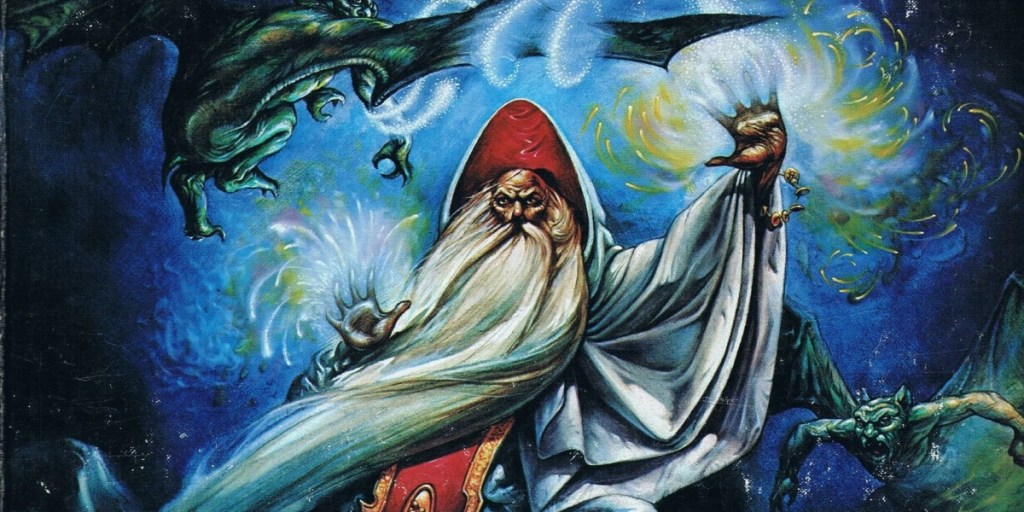
Advanced Dungeons & Dragons and its follow-up edition, AD&D 2e, are so linked and backwards-compatible that I’m going to discuss them together, particularly as they’re both tied into the same success.
Of course, AD&D is the direct ancestor of D&D 5e and its D&D 5e 2024 permutation, despite the vast differences. However, it’s in the fictional side of things, particularly its settings, that AD&D most triumphs.
Gary Gygax and his contemporaries used A&D to truly nail the feel, tone, and lore of D&D from what were scattered settings and throwaway references to their favourite works. Even where the rules were archaic and arcane, its storytelling began to take on a more coherent form.
Never is this beloved era of D&D worldbuilding more clear than in the game’s settings. AD&D is the era of Planescape and Spelljammer to unify its cosmos. It’s also responsible for Dark Sun, Dragonlance, Ravenloft, and the time that both Greyhawk and The Forgotten Realms attained truly legendary status.
Almost every D&D setting fans admire and enjoy (with the notable exception of 3e‘s Eberron) has its roots in AD&D 2e. It’s through this, and beloved D&D video games like Baldur’s Gate and Planescape: Torment that this D&D edition maintains its hold on fantasy fans.
D&D 3e Brought Player Options to the Forefront
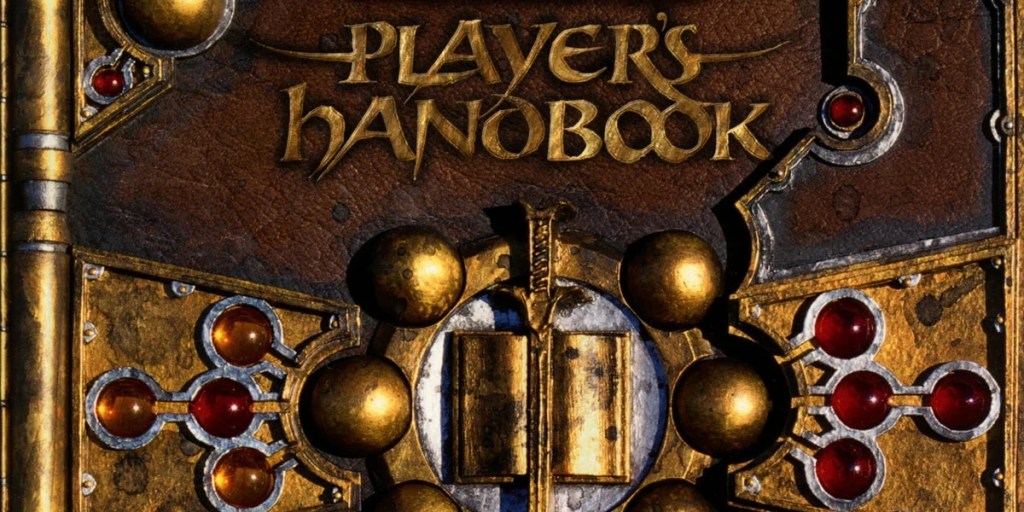
D&D 3e was the first edition of Advanced Dungeons & Dragons to be built by Wizards of the Coast and the first where the modern design of more recent D&D editions makes itself known.
For a long time, D&D 3e, more specifically its D&D 3.5 update, was the go-to favourite of diehard players. Apart from its more unified design and slight streamlining, this was because D&D 3.5 remains the best, most expansive, and most inventive edition for character options.
D&D 3.5 was built around customisability. Even with the basic Player’s Handbook, players had to carefully weave their way through hundreds of feats as a normal part of play to make the best (or simply most functional) character possible.
This was exaggerated many times over as new books were released. D&D 3.5 saw dozens of expansion books, each of which came with several new classes, a handful of feats, and a few new spells.
There were even prestige classes to reward D&D players for achieving certain builds and help take them in a new direction. Want to inflict spells on people by hitting them with a sword? There’s a Prestige class. Want to focus on killing people just by drawing your sword? There’s a Prestige class. Want to be Jesus in D&D? Prestige class.
D&D character creation for 3.5 is an arduous process of online databases, cross-referencing books, and planning your twentieth-level choices before you start the game.
It’s not for everyone, but it holds massive appeal for fans of this D&D edition. There’s a reason new revelations and combinations are still found. Compared to the relatively fixed levelling and progression of D&D 5e (where multiclassing is the main way to create new builds), it’s many hundreds of times deeper and broader as a form of D&D character creation.
Of course, this does come with drawbacks for the D&D game. D&D 3.5 is famously unbalanced, with players able to break a given campaign in two easily. Alternatively, it’s very easy to create a character who flat-out doesn’t function, even with official, playtested, approved classes.
That said, 3.5 is still the best D&D edition for players who enjoy character customisation, even rivalling beloved present-day games like Pathfinder Second Edition for its wealth of options.
D&D 4e Has Beloved Tactical, Balanced Combat

Even with many fans coming to praise its good qualities, D&D 4e is still, to a certain extent, the black sheep of D&D editions. Fans take issue with the presentation of its rules and radical changes from previous versions of the D&D game.
Everything, from the short-rest-long-rest dynamic to the removal of spell slots to the dividing of classes into power sources and roles, served to draw long-time fans’ ire. Others still were put off by a perceived increase in ‘gameness’ and similarities to MMO titles.
However, these changes – some of which were exaggerated – build to the greatest strength of D&D 4e. Among every D&D edition, it has the best tactical, balanced combat, with most character classes being built from the ground up to fill a unique niche in a drag-out fight.
D&D 4e encouraged players to work together with their unique selections of powers, leaning into the strengths of Strikers (damage), Defenders (tanking), Controllers (debuffs and movement) and Leaders (support). The result was a depth few D&D games have managed since.
This was compounded with D&D 4e‘s celebrated DMing tools for running combat. Monsters were also split into roles to fill tactical and narrative niches in combat, with detailed advice for how to combine different monsters of different roles to create unique fights.
On top of that, D&D 4e was more than the combat simulator it gets painted as. It has about as many rules governing things like social interactions as other D&D editions, and even has out-of-combat situations gamified in Skill Challenges.
Combat in D&D 4e wasn’t perfect, with complexity and length being two notorious challenges, as well as some broken maths. Nonetheless, it was a unique and deep system that remains the best D&D edition for players who want a fight.
Dungeons & Dragons 5e Has Made the Game Accessible
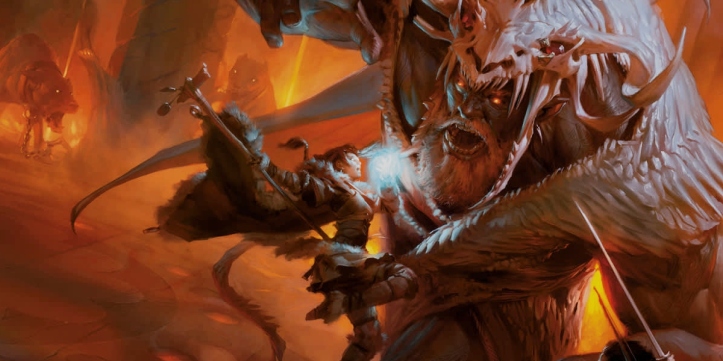
Lots of adjectives get flung at D&D 5e. Fans have called it rules-light (it’s not). Detractors have called it dumbed-down (it’s about middle-of-the-road for complexity) and stripped-back.
Overall, what both camps get at is that D&D 5e is accessible, far more than any prior edition of D&D. It combines unified and coherent rules (not present in older D&D editions) with streamlined options that stop character creation being a day-long exercise, and an end to countless variables to observe in all situations (something both D&D 3.5 and D&D 4e run into).
This has come at the perfect time for the game as well. It’s a D&D edition that, while not easy to learn, is fairly reasonable to just pick up and learn as you go. The gulf between an experienced player and a newbie is large, but not nearly insurmountable.
Conveniently, this new player-friendly version of D&D came at the same time as the game’s explosion in popularity thanks to fantasy’s increasing status, D&D episodes in shows like Community, and the popularity of web series like Critical Role. Not only was there an influx of people looking to try the game, but there was a plug-and-play-friendly edition of the game for them to try.
D&D 5e isn’t perfectly accessible, but then few TTRPGs are. It still has some archaic holdovers from previous editions, a few edge cases that can baffle players, and a daunting-looking rulebook that might turn off newcomers.
At the same time, it’s the D&D edition that I and countless other DMs feel most comfortable introducing players to D&D with. The result has been an enormous net boom for D&D, but also for the TTRPG industry as a whole.
Hopefully, the new D&D 2024 Player’s Handbook retains this accessibility whole coming with some positive changes that account for D&D‘s handful of weaknesses.
We can dream, at least.
These have been the greatest strengths of broad strokes versions of D&D, ranging from the archaic to the modern. They’re all great games and all have left their impact on the industry. Honestly, most of them are worth giving a cursory try, even if they’re not for you.
For a loving article penned about another beloved fantasy TTRPG, check out the Artificial Twenty Guest Article ‘Why DnD 5e Fans Should Try Warhammer Fantasy Roleplay‘.
If you want some DMing advice that will almost certainly apply to the new D&D 2024 edition coming soon, read ‘Tropes That Don’t Work Well for D&D 5e DMs‘.
 Artificial Twenty
I think you summed each edition up very fairly. Broad strokes or not, I think you really hit on the key points well for having a limited space to do it in. That’s a nice summary.
LikeLike
Thank you very much, mate! I’ve also not had as much chance to play them all as I’d like, and writing this only reminded me of that fact.
LikeLike